01
Consultation
Technical needs assessment


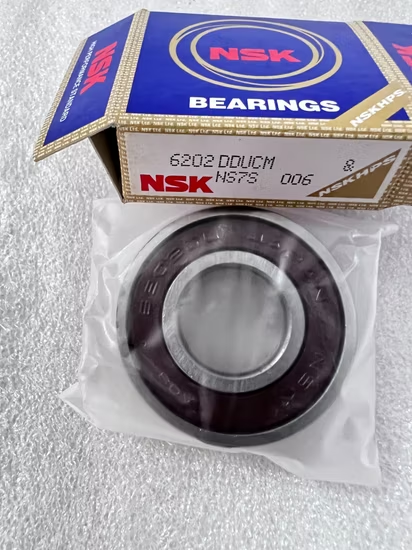
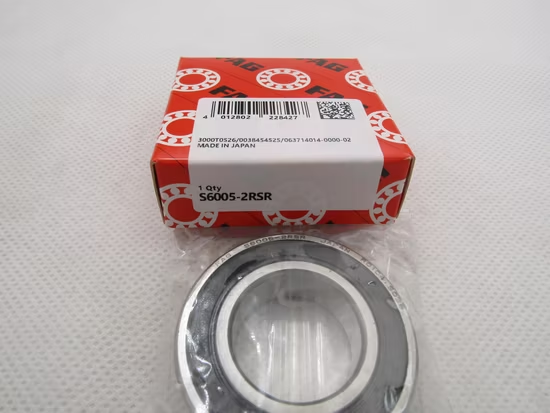


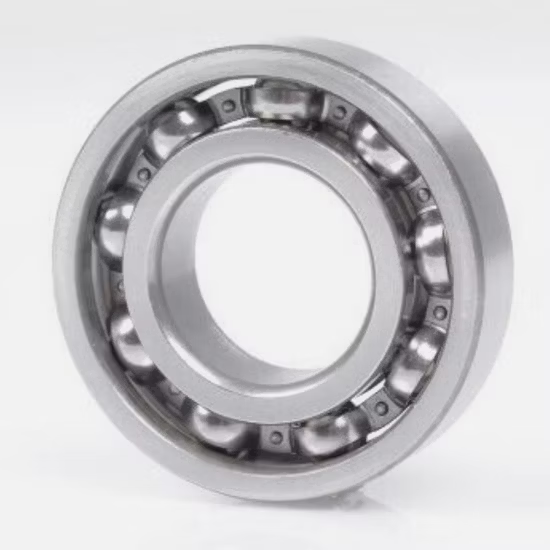
6201 P5 P4 Deep Groove Ball Bearing — P5 and P4 precision grades ensure tight dimensional and running accuracy for high-speed electric motors and machine tool spindles.
Multi-brand authorized distribution — securing P5 and P4 precision grades across major global manufacturers in a single consolidated shipment eliminates the friction of coordinating multiple vendors for your critical motor rebuilds.
| Parameter | Value |
|---|---|
| Designation | 6201 |
| Bearing Type | Deep Groove Ball Bearing |
| Precision Class | P5, P4 |
| Seal or Shield Type | Open, Rubber Seals, Iron Shields |
| Noise and Vibration Level | Z1V1, Z2V2, Z3V3, Z4V4 |
| Origin | Germany, Japan, Sweden, Malaysia, China |
| HS Code | 848210 |
| Industry | Typical Applications |
|---|---|
| Industrial Manufacturing | High-speed electric motor rotors and stator supports |
| Fluid Management | Centrifugal pump impeller shafts and seals |
| Material Handling | Conveyor drive pulley bearings and tensioner rolls |
| Power Transmission | Precision gearbox input shafts and high-speed stages |
Precision suffixes dictate thermal survival, not just rotational smoothness.
In equatorial mining camps and cement plants, I have dismantled countless "precision" motors that seized within weeks. The root cause is rarely the load; it is the thermal expansion mismatch. When procurement teams cross-reference base numbers but overlook the transition from P0 to P5 or P4, the internal clearance vanishes as the shaft heats up. This results in catastrophic cage failure and raceway smearing . Sourcing a genuine 6201 high precision deep groove ball bearing requires verifying the exact tolerance class to ensure the internal geometry survives the operational temperature delta.
Upgrading to P5 or P4 tolerances fundamentally changes how the bearing handles high-RPM vibration. Our technical review ensures the selected 6201 high precision deep groove ball bearing aligns with your specific spindle or motor requirements, preventing the premature fatigue that occurs when standard-grade components are pushed beyond their kinematic limits.
High-speed applications generate significant internal heat. Selecting rubber seals provides excellent dust exclusion in harsh environments but introduces contact friction that elevates operating temperatures. Conversely, iron shields or open designs reduce thermal buildup but demand pristine external sealing. Balancing the Z-level vibration limits with the appropriate sealing configuration is critical to prevent lubricant degradation and subsequent raceway scoring .
The distinction between P5 and P4 lies in the strictness of dimensional and running accuracy. A P4 designation enforces tighter limits on inner and outer ring thickness variation, which is vital for applications where shaft deflection must be minimized. Furthermore, the Z1V1 through Z4V4 noise and vibration classifications indicate the surface finish quality of the raceways. Specifying Z3V3 or Z4V4 ensures the microscopic waviness is controlled, directly reducing the high-frequency vibration that degrades motor winding insulation over time.
Ignoring the precision and clearance suffixes during cross-referencing leads to severe operational penalties. Installing a standard clearance bearing in a high-temperature motor causes thermal binding, resulting in unplanned downtime and catastrophic damage to the shaft journal. According to ISO 281 fatigue life calculation frameworks, operating a bearing under unintended preload conditions drastically reduces its L10 life, voiding equipment warranties and forcing emergency air-freight replacements .
We do not just ship boxes; we validate the engineering parameters. Counterfeit high-precision bearings often feature soft inner rings that fail under dynamic loads. Our cross-reference protocol checks the base designation, the P5/P4 precision class, and the exact seal type to ensure complete alignment with your OEM specifications. Every 6201 high precision deep groove ball bearing we supply is backed by batch traceability to the manufacturer, ensuring the metallurgical integrity matches the tolerance claims.
To ensure optimal performance, provide your radial and axial load profiles, operating speeds, and ambient temperature ranges. Our engineering team will perform a comprehensive L10 life calculation and cross-reference review. Supplying the OEM equipment number or the exact dimensional envelope allows us to verify the required precision class and sealing configuration, delivering a technically validated solution rather than a simple parts swap.
Q: What is the practical difference between P5 and P4 precision for this designation?
A: P4 enforces stricter limits on dimensional variation and running accuracy compared to P5. This tighter control minimizes high-frequency vibration and heat generation, making P4 essential for ultra-high-speed electric motors and precision spindles where shaft deflection and thermal expansion must be strictly managed.
Q: How do I choose between rubber seals and iron shields for high-speed applications?
A: Rubber seals offer superior protection against dust and moisture but generate contact friction, which increases operating temperatures. Iron shields provide non-contact protection, reducing friction and heat buildup, making them preferable for high-RPM applications where external housing seals are already adequate.
Q: Why must the Z-level vibration rating be specified alongside the precision class?
A: While the precision class defines dimensional accuracy, the Z-level rating certifies the surface finish and noise characteristics. A high-precision bearing with a poor surface finish will still generate destructive high-frequency vibrations, degrading motor performance and accelerating lubricant breakdown.
Q: How can I verify the authenticity of the precision claims before installation?
A: Every unit we supply includes batch traceability documentation and a QR code. You can scan this code using the manufacturer's official mobile application to instantly verify the origin, production date, and authenticity of the bearing, protecting your equipment from counterfeit components.
Our 5-step process ensures every order is engineered, validated, and supported for optimal performance.
Technical needs assessment
Custom specifications
Free samples for $50k+
Pre-shipment inspection
On-site & predictive
Our certified engineers respond within 24 hours with detailed technical specifications, pricing, and lead time information.