01
Consultation
Technical needs assessment


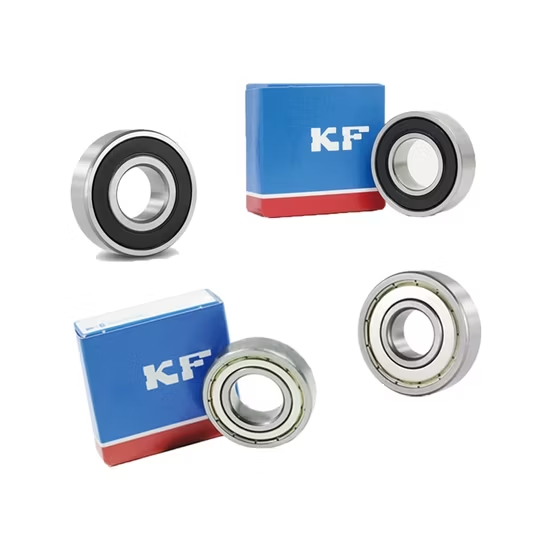


604 603 605 607 608 609 Deep Groove Ball Bearings — offered in open, 2RS rubber contact seal, and 2ZZ steel shield variants. The 2RS design ensures maintenance-free contamination protection, while 2ZZ suits medium-speed dust prevention. Graded Z1V1 to Z4V4, they deliver strict vibration control for electric motors.
Cross-Reference Suffix Alignment — verifying that seal variants like 2RS and iron shields match the exact equipment environment, not just the base number.
| Parameter | Value |
|---|---|
| Designation | 604 603 605 607 608 609 |
| Bearing Type | Deep Groove Ball Bearing |
| Seal or Shield Type | Open, 2RS (Double-sided contact seal), 2zz (Double-sided steel shields) |
| Noise and Vibration Level | Z1V1, Z2V2, Z3V3, Z4V4 |
| Origin | Germany, Japan, Sweden, Malaysia, China |
| HS Code | 848210 |
| Industry | Typical Applications |
|---|---|
| Electric Motors | High-speed small machinery drive shafts, household appliance spindle motors |
| Industrial Gearboxes | Conveyor drive pulley supports, small pump impeller shafts |
| General MRO | Textile machine bobbin carriers, automated assembly line rollers |
Matching the basic designation is only the first step; ignoring the seal type or precision suffix is where most field failures begin.
In my years sourcing for textile plants across Southeast Asia, I witnessed entire production lines halt because a batch of miniature bearings was supplied with steel shields instead of the required rubber contact seals. Dust infiltrated the raceways, leading to early motor burnout. This happens when cross-referencing focuses solely on the base number while overlooking critical suffixes. A significant share of premature failures in high-speed small machinery stems directly from these subtle specification mismatches .
Selecting the right 604 603 605 607 608 609 deep groove ball bearing requires looking beyond the catalog number to the actual operating environment. We review your specific contamination risks and speed requirements to ensure the chosen seal configuration and Z/V vibration class align perfectly with your machinery, preventing the costly downtime caused by generic replacements.
Miniature bearings in electric motors and textile machinery face a constant battle between friction heat and environmental contamination. Open designs allow for superior heat dissipation and higher limiting speeds but offer zero protection against debris. Conversely, 2RS rubber seals provide excellent exclusion of dust and moisture, yet the contact friction generates internal heat that can degrade standard greases at elevated speeds. Selecting the correct noise and vibration grading, from Z1V1 up to Z4V4, is equally critical to prevent resonance issues in precision spindle applications .
The distinction between a 2RS contact seal and a 2zz non-contact steel shield dictates the thermal and contamination limits of the bearing. While 2zz shields handle higher speeds due to zero lip friction, they cannot stop fine textile dust or liquid ingress. Furthermore, the Z1V1 through Z4V4 classifications define the strict dimensional and running accuracy tolerances required for quiet, smooth operation in household appliances and high-speed small machinery. Ignoring these suffixes means installing a component that is mechanically dimensionally correct but functionally incompatible with the thermal and environmental realities of the application.
Installing an open bearing in a dusty conveyor environment or a high-friction 2RS seal in an ultra-high-speed spindle leads to predictable, catastrophic damage. According to failure analysis frameworks like ISO 15243, contamination and thermal degradation of lubricants are primary drivers of premature raceway spalling and cage failure. These misalignments result in unplanned downtime, voided equipment warranties, and a continuous cycle of emergency MRO purchasing that disrupts broader production schedules .
We do not just pick items from a shelf; our cross-reference process strictly aligns the base designation, seal type, and precision suffixes simultaneously. Having transitioned from factory procurement to technical sales, I personally verify that a request for a 608 2RS is never accidentally fulfilled with a 2zz variant. We provide authorized coverage across major global brands, ensuring your mixed-brand orders maintain consistent Z/V precision levels and exact sealing configurations without the risk of soft inner rings found in counterfeit batches.
To ensure accurate selection and cross-reference verification, please provide the specific radial and axial loads, operating speeds, and ambient temperatures of your application. If you are replacing existing units, share the exact OEM equipment number and the full designation currently printed on the bearing shield, including all seal and clearance suffixes. This data allows our engineering team to confirm the optimal Z/V class and seal configuration for your machinery.
Q: Why is matching the base number insufficient when replacing these miniature bearings?
A: Base numbers only define the physical dimensions. If you replace a 2RS rubber-sealed bearing with a 2zz steel-shielded variant, fine dust will bypass the non-contact shields and destroy the raceway. We verify that the seal type, internal clearance, and precision suffixes perfectly match your original equipment requirements to prevent premature failure.
Q: How do I choose between Z1V1 and Z4V4 precision levels for electric motors?
A: The Z/V classification dictates the strictness of the vibration and noise limits. While Z1V1 is adequate for general household appliances or basic conveyors, high-speed spindle motors and precision textile machinery demand Z3V3 or Z4V4 grades to prevent destructive resonance and ensure smooth, quiet operation at elevated rotational speeds.
Q: What is the operational difference between 2RS and 2zz seals in high-speed applications?
A: The 2RS designation indicates a double-sided rubber contact seal, offering superior protection against dust and moisture but generating friction heat at high speeds. The 2zz variant uses non-contact steel shields, allowing for higher limiting speeds and lower friction, but it cannot completely exclude fine particulate contamination or liquid ingress from the bearing interior.
Q: How can I verify the authenticity of the supplied bearings?
A: Counterfeit miniature bearings often feature soft inner rings and cloned QR codes that fail under load. We supply genuine products with full batch traceability. You can verify authenticity by scanning the packaging QR code directly through the manufacturer's official mobile application and reviewing the accompanying Certificate of Conformity and dimensional inspection reports.
Our 5-step process ensures every order is engineered, validated, and supported for optimal performance.
Technical needs assessment
Custom specifications
Free samples for $50k+
Pre-shipment inspection
On-site & predictive
Our certified engineers respond within 24 hours with detailed technical specifications, pricing, and lead time information.