01
Consultation
Technical needs assessment

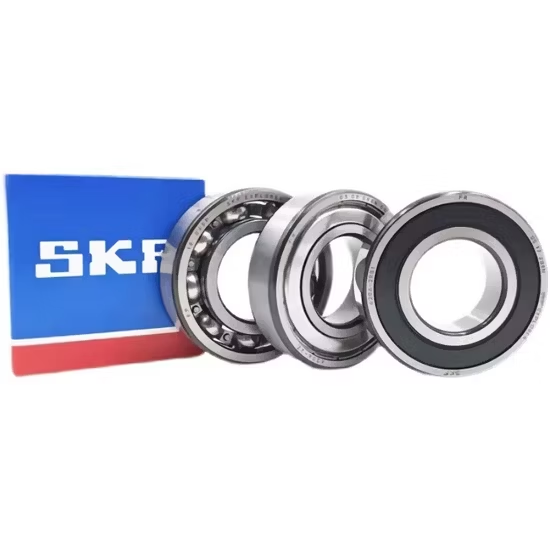
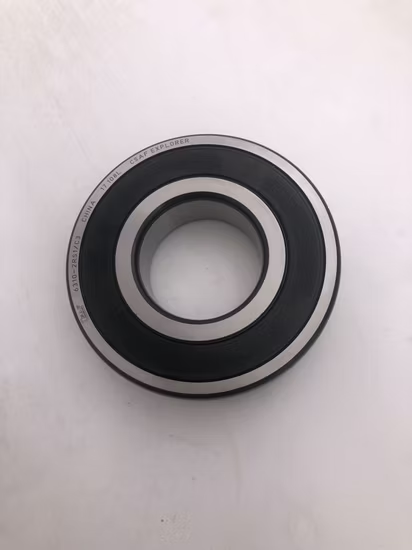
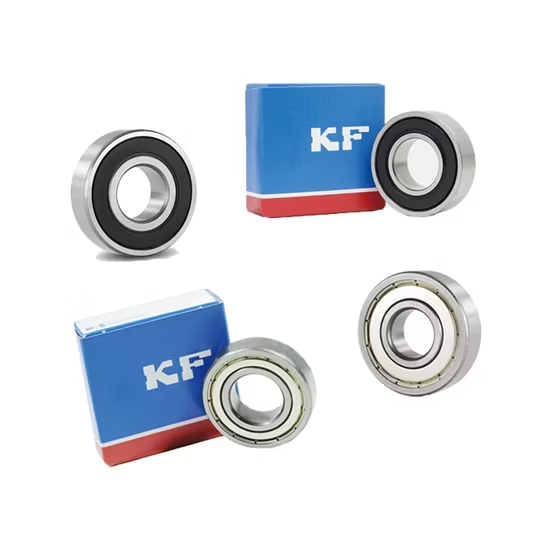


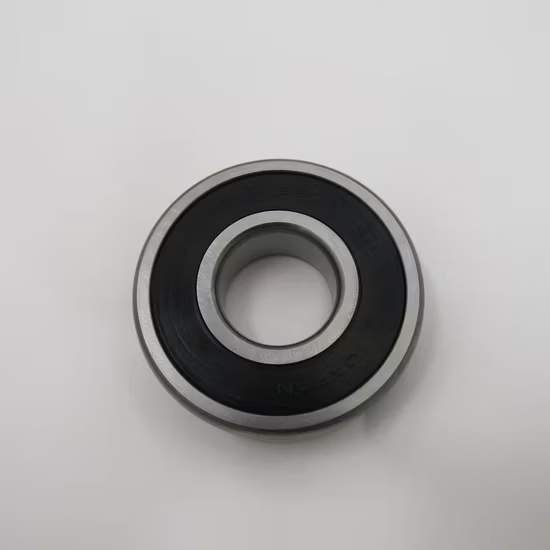
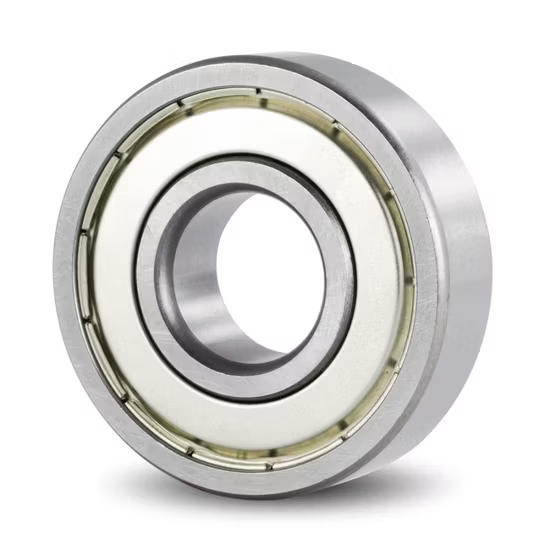
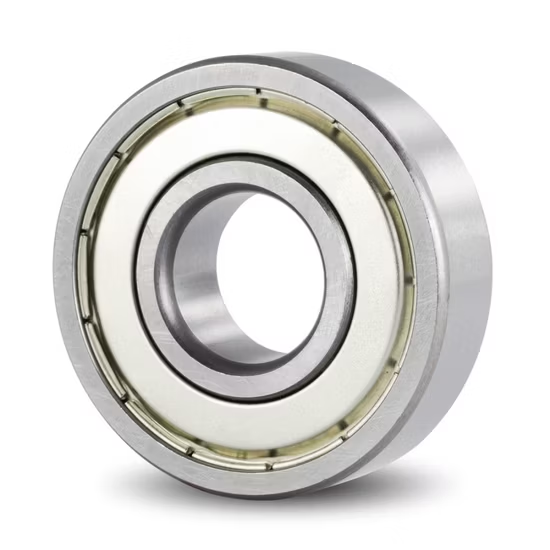
6002 Deep Groove Ball Bearing 15×32×9 mm P4/P5/P6 — Available in open, ZZ steel shields for medium-speed dust protection, and 2RS rubber contact seals for maintenance-free contamination resistance. Precision options from P6 to P4 ensure strict dimensional accuracy for electric motors.
Unified Multi-Brand Sourcing — procure SKF, FAG, and NSK 6002 variants in a single consolidated shipment without juggling multiple vendors.
| Parameter | Value |
|---|---|
| Designation | 6002 |
| Bearing Type | Deep Groove Ball Bearing |
| Bore Diameter (d) | 15 mm |
| Outside Diameter (D) | 32 mm |
| Width (B) | 9 mm |
| Material | Chrome Steel |
| Seal or Shield Type | Open, Iron Seals (ZZ), Rubber Seals (2RS) |
| Precision Class | P4, P5, P6 |
| Quality Level | Z1V1, Z2V2, Z3V3, Z4V4 |
| Origin | Germany, Japan, Sweden, Malaysia, China |
| Industry | Typical Applications |
|---|---|
| Electric Motors | Rotor shaft support in fractional horsepower motors |
| Industrial Gearboxes | High-speed input shaft positioning |
| Material Handling | Conveyor roller drive pulleys |
| Pumps | Centrifugal pump impeller shaft support |
Matching the base 6002 number while ignoring clearance and suffix details guarantees premature thermal binding in continuous-duty motors.
During my early years in quality inspection in Shenzhen, I witnessed an entire batch of motors seize on the test bench. The procurement team had sourced standard clearance units for a high-temperature winding application, completely missing the required C3 thermal expansion allowance. This exact scenario remains a frequent point of failure in industrial purchasing . When cross-referencing only checks the base 15x32x9mm dimensions but overlooks internal design variations, the resulting friction heat destroys the cage long before the steel races show any fatigue.
Selecting the correct 6002 deep groove ball bearing requires balancing environmental protection against internal heat generation. Our technical review process evaluates the exact operating temperature and contamination level of your equipment to recommend the optimal seal configuration. We prevent the common mistake of installing high-friction contact seals in high-speed applications where non-contact shields would maintain lower operating temperatures.
Electric motor rotors generate substantial radial loads while spinning at elevated speeds, demanding strict control over internal friction and heat dissipation. The choice between open, shielded, and sealed configurations directly dictates the lubrication lifecycle and contamination resistance. Furthermore, thermal expansion within the motor housing alters the internal clearance dynamically, meaning a standard clearance selection will easily transition into a destructive preload state as the stator heats up .
The distinction between P6, P5, and P4 precision classes governs the dimensional and running accuracy of the inner and outer rings, directly influencing the rotational stability of precision spindles. Equally critical are the Z1V1 through Z4V4 vibration and noise quality levels, which dictate the acceptable amplitude of structural vibrations during high-speed rotation. Selecting a lower vibration grade for a noise-sensitive household appliance motor introduces audible hum, while over-specifying precision for a basic conveyor pulley unnecessarily inflates procurement costs.
Overlooking critical suffixes during the procurement phase routinely triggers unplanned downtime and catastrophic damage to adjacent machinery components. When a standard clearance unit is forced into a high-thermal environment, the resulting seizure can destroy the motor shaft and housing, leading to extensive secondary repairs. According to failure analysis frameworks, a significant share of premature failures stems directly from application mismatch rather than manufacturing defects . This cascade of mechanical destruction ultimately voids equipment warranties and halts production lines.
We eliminate the risk of receiving counterfeits with soft inner rings by strictly sourcing through authorized distribution channels for every major brand. Our cross-reference alignment verifies the base designation, internal clearance, cage material, and precision suffixes simultaneously, preventing the thermal binding caused by mismatched internal geometries. Every shipment includes comprehensive batch traceability, ensuring you receive the exact P4 or P5 tolerance class requested rather than a downgraded substitute. We also provide application-based selection reviews that account for your specific load, speed, and temperature conditions to validate the 2RS or ZZ seal choice.
To ensure the selected configuration perfectly matches your machinery, please share your specific radial and axial load profiles, operating speeds, and thermal conditions. Providing these parameters allows our engineering team to conduct a thorough L10 life calculation and verify the required internal clearance class. If you are replacing an existing component, supply the original OEM equipment number so we can perform a comprehensive cross-reference check to confirm the exact seal and precision suffix requirements.
Q: How do I verify the authenticity of the 6002 bearings using official brand apps?
A: Scan the QR code located on the individual box or outer packaging using the specific manufacturer's official mobile application. This digital verification confirms the batch origin, production date, and authenticates the chrome steel material certification, effectively filtering out counterfeits with cloned labels and soft inner rings that fail under operational loads.
Q: Why must clearance and precision suffixes be matched together during cross-referencing?
A: Matching only the base 15x32x9mm dimensions while ignoring suffixes leads to severe operational failures. A standard clearance unit installed in a high-temperature motor will thermally bind, while a P0 grade used in a precision spindle causes excessive vibration. Simultaneous alignment of clearance, cage material, and precision ensures the internal geometry survives the specific application environment.
Q: What are the operational differences between ZZ and 2RS seals for this designation?
A: The ZZ iron shields provide non-contact protection against large dust particles while maintaining low friction, making them ideal for high-speed electric motors. The 2RS rubber contact seals offer superior defense against moisture and fine contaminants but generate higher friction heat, making them better suited for slower-speed conveyors or pumps exposed to harsh washing environments.
Q: How do I select the correct vibration level like Z1V1 versus Z4V4 for electric motors?
A: The Z and V suffixes denote the strictness of vibration and noise limits during high-speed rotation. Standard industrial gearboxes typically operate fine with Z1V1 or Z2V2 grades. However, noise-sensitive applications like household appliances or precision medical equipment require Z3V3 or Z4V4 grades to eliminate audible hum and ensure smooth, quiet rotor shaft support.
Q: What is the difference between ISO and ABEC standards when specifying P4, P5, or P6?
A: ISO 492 and ABEC standards both define the dimensional and running accuracy tolerances for bearing rings. P6 corresponds to ABEC 3, P5 to ABEC 5, and P4 to ABEC 7. Specifying the correct ISO class ensures the inner and outer ring tolerances match the tight fit requirements of high-speed spindles, preventing excessive internal play or restrictive preloads.
Our 5-step process ensures every order is engineered, validated, and supported for optimal performance.
Technical needs assessment
Custom specifications
Free samples for $50k+
Pre-shipment inspection
On-site & predictive
Our certified engineers respond within 24 hours with detailed technical specifications, pricing, and lead time information.