01
Consultation
Technical needs assessment

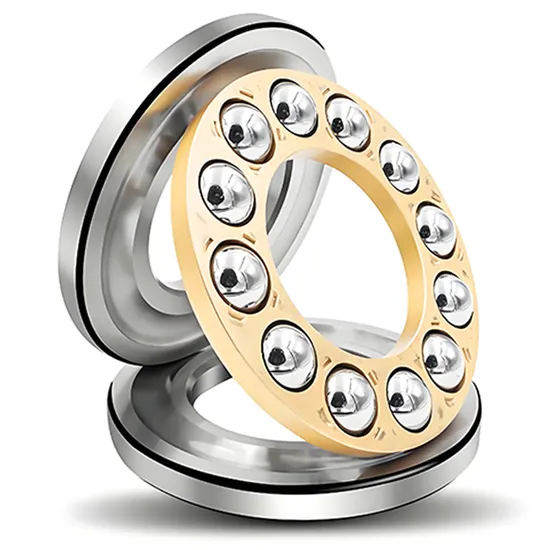
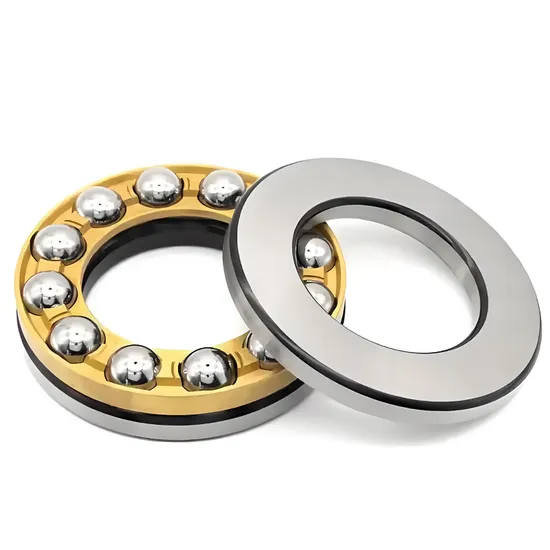
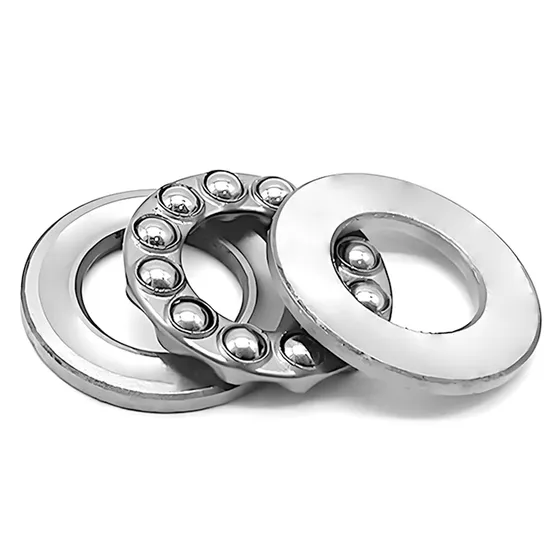
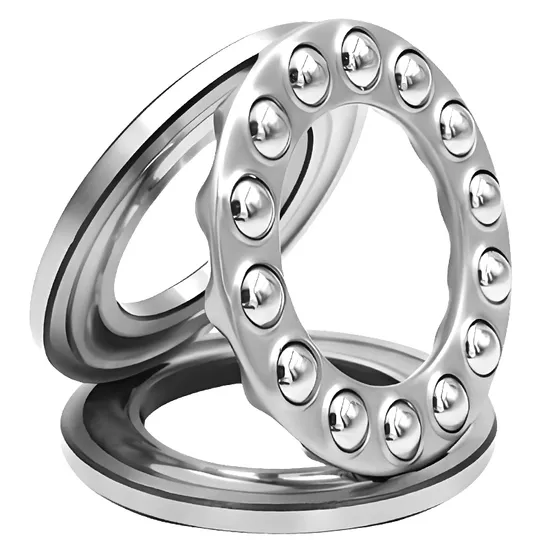
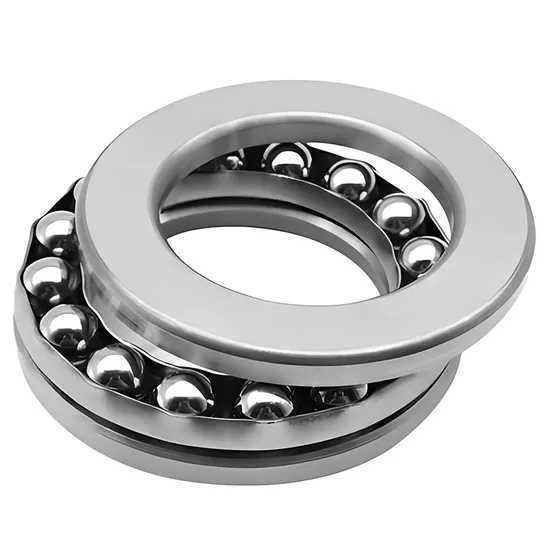
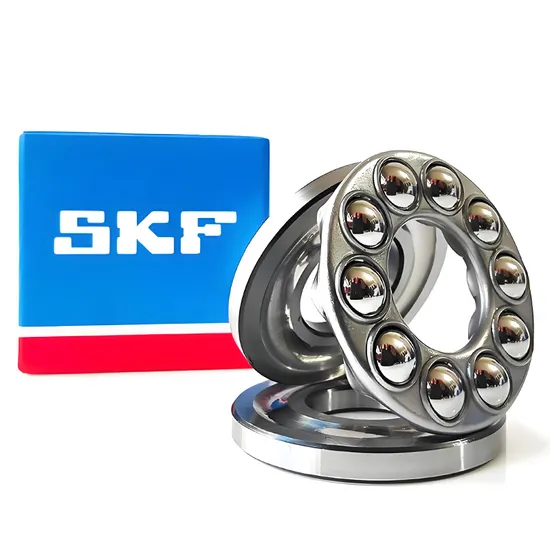
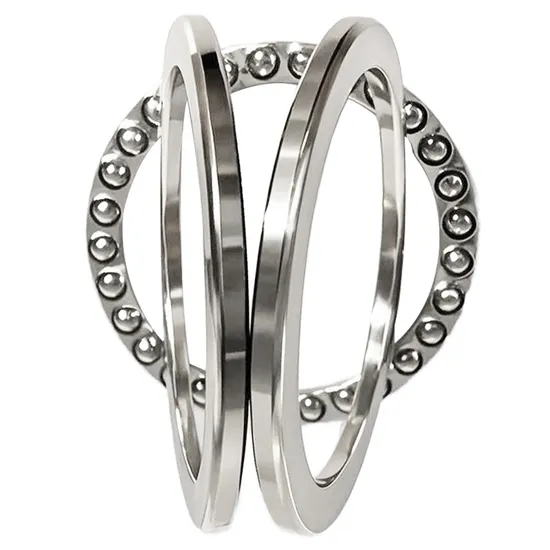
51212 Thrust Ball Bearing 60×95×26 mm — designed for pure axial load service in crane hooks and vertical water pumps, with precision-ground raceways and hardened rings ensuring stable operation under sustained thrust conditions.
Traceable Batch Origin — Every unit ships with manufacturer lot documentation to verify authentic steel grades and heat treatment records.
| Parameter | Value |
|---|---|
| Designation | 51212 |
| Bearing Type | Thrust Ball Bearing |
| Bore Diameter (d) | 60 mm |
| Outside Diameter (D) | 95 mm |
| Width (T) | 26 mm |
| Cage Material | Pressed steel or machined brass options |
| Precision Class | P0 to P6 options |
| Clearance Class | Standard to C3 options |
| Industry | Typical Applications |
|---|---|
| Material Handling | Crane hook thrust blocks and swivel joints |
| Fluid Management | Vertical water pump shaft axial locating positions |
| Heavy Machinery | Heavy-duty lifting equipment load-bearing pivots |
| Precision Machining | Machine tool rotary table axial support bases |
Even minor misalignment concentrates stress on a single rolling element, causing immediate raceway spalling.
In vertical pumps and crane hooks, the axial load is rarely perfectly centered. When procurement teams source replacements based solely on the base number, they often receive standard variants that lack the internal geometry required for slight shaft deflections. This mismatch forces the rolling elements to slide rather than roll under heavy axial loads, generating excessive friction heat. I have personally inspected failed units from lifting equipment where the cage fractured within weeks because the replacement part was never evaluated for the actual operational misalignment .
Sourcing the correct 51212 thrust ball bearing 8212 requires looking past the basic dimensions to evaluate the internal component options. For vertical water pumps handling continuous axial thrust, the cage material and precision class dictate whether the assembly survives the initial run-in period. Our technical review process cross-references the OEM equipment number to ensure the supplied unit matches the original internal design, preventing the premature cage wear that plagues generic substitutions.
Pure axial loads in crane hooks and lifting mechanisms subject the shaft and housing washers to immense compressive stress without the stabilizing effect of radial forces. If the operating temperature rises due to friction or ambient conditions, a standard clearance setup might bind, while an excessively loose fit causes damaging vibration. Proper lubrication is equally critical; open variants require precise grease application intervals to prevent washout in humid pump environments, whereas sealed options must be verified for adequate thermal dissipation .
The 60 mm bore, 95 mm outside diameter, and 26 mm width define the physical envelope, but the internal execution determines field survival. Pressed steel cages offer low mass and are suitable for standard speed applications, while machined brass variants provide superior strength and vibration damping for heavy-duty lifting equipment with shock loads. Selecting the appropriate precision class ensures the shaft washer sits perfectly square against the shaft shoulder, preventing the localized edge loading that rapidly degrades the raceway finish.
Overlooking the specific internal design variants when ordering a replacement leads to catastrophic damage in critical lifting applications. A standard precision unit installed in a high-speed machine tool rotary table will generate excessive runout and noise, ultimately voiding the equipment warranty. According to failure analysis frameworks, installing a component with inadequate dynamic load capacity for the specific shock load profile results in unplanned downtime that far exceeds the initial savings of buying a cheaper, unverified alternative .
Mixed-brand requirements are handled through our authorized channels, ensuring every 51212 unit is fully traceable to the manufacturer's production facilities. Cross-reference errors are eliminated by verifying not just the 8212 equivalent, but the exact cage material and precision suffix required by your specific crane or pump. We reject cloned QR codes by providing batch-level documentation, ensuring the steel hardness and dimensional accuracy meet the strict demands of heavy-duty axial applications.
To ensure the selected thrust bearing survives your specific operating conditions, please provide the exact axial load magnitude, rotational speed, and operating temperature range. Sharing the OEM equipment designation allows our engineering team to perform a precise cross-reference check and L10 life calculation. This technical validation ensures the internal geometry and cage material perfectly match the demands of your crane hook or vertical pump.
Q: What is the difference between the 51212 and 8212 designations?
A: The 8212 is the older designation for the same 60x95x26mm thrust ball bearing. While the base dimensions remain identical, modern equivalents may feature updated internal geometries or cage materials. Always verify the exact suffix requirements for your application rather than assuming direct interchangeability without technical review.
Q: How can I verify the authenticity of the thrust bearing I receive?
A: Every unit we supply includes batch traceability documentation and a unique QR code. You can scan this code using the manufacturer's official mobile application to confirm the origin, production date, and material specifications, effectively eliminating the risk of installing counterfeit parts with soft inner rings.
Q: Why did my previous thrust bearing cage fail in a vertical pump?
A: Cage failure in vertical pumps often stems from selecting a standard pressed steel cage for an application requiring the vibration damping of a machined brass variant, or from inadequate lubrication. Providing your exact operational parameters allows us to recommend the correct cage material and clearance class to prevent early fracture.
Q: How do I distinguish the shaft washer from the housing washer during installation?
A: The shaft washer has a slightly smaller bore and is designed for a tight interference fit on the rotating shaft, while the housing washer has a larger outside diameter for a loose fit in the stationary housing. Installing them backward causes the bearing to bind and fail rapidly under axial load.
Our 5-step process ensures every order is engineered, validated, and supported for optimal performance.
Technical needs assessment
Custom specifications
Free samples for $50k+
Pre-shipment inspection
On-site & predictive
Our certified engineers respond within 24 hours with detailed technical specifications, pricing, and lead time information.