01
Consultation
Technical needs assessment




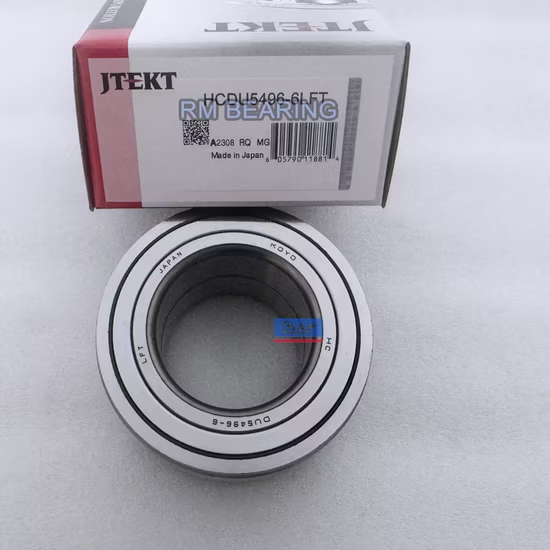
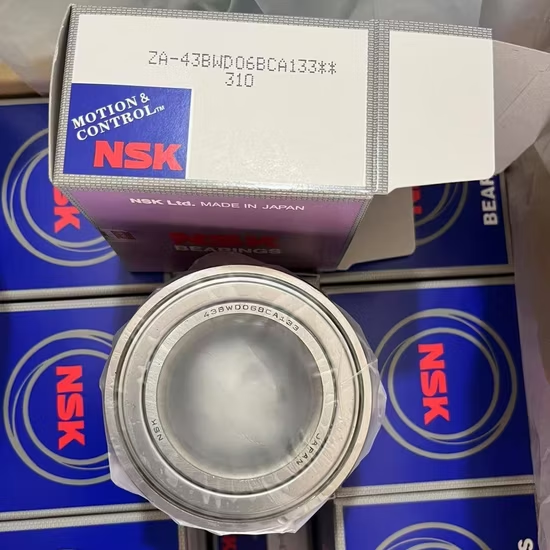
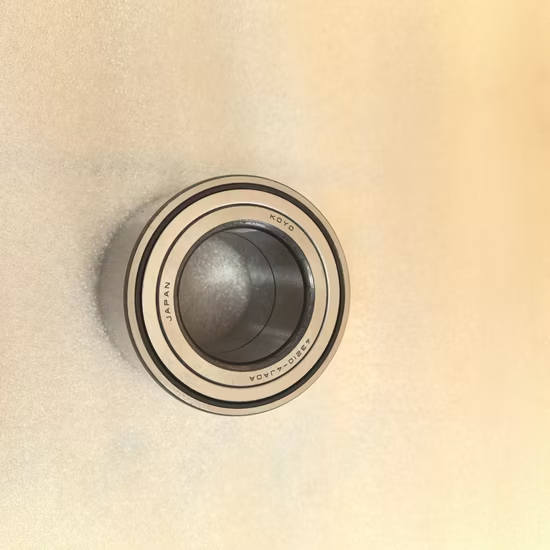
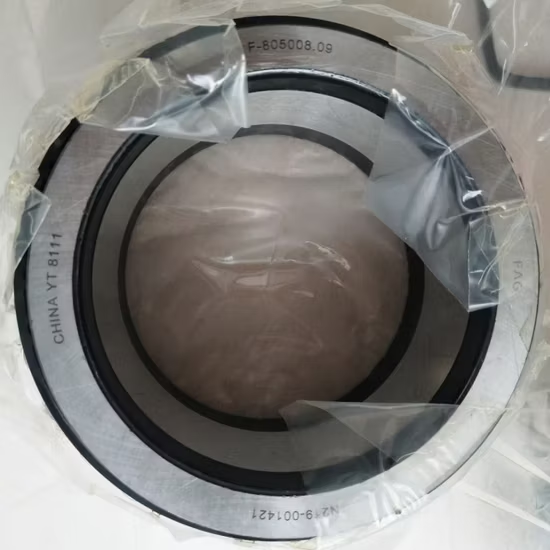
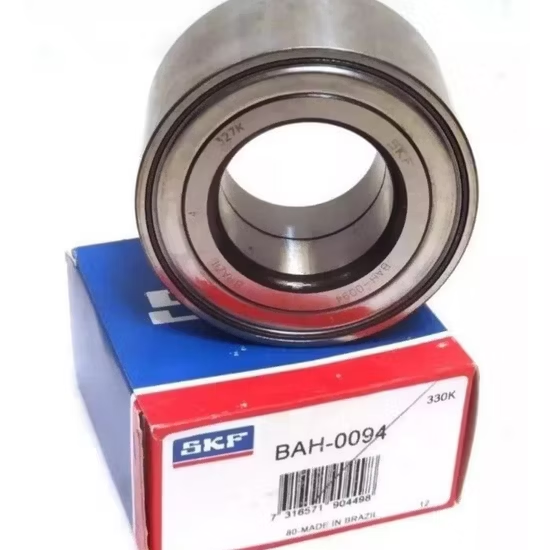
42410-58020 Wheel Hub Bearing — double row chrome steel unit with integrated ABS sensor for accurate wheel speed signal transmission. P4 precision and C0 clearance ensure rotational accuracy under complex radial and axial loads in automotive wheel hub applications.
Exact Cross-Reference Alignment — We validate the 42410-58020 wheel hub bearing against OEM flange dimensions, ABS tone ring tooth counts, and seal profiles rather than just matching the base part number.
| Parameter | Value |
|---|---|
| Designation | 42410-58020 |
| Bearing Type | Wheel Hub Bearing |
| Number of Rows | Double Row |
| Material | Chrome Steel |
| Precision Class | P4 |
| Clearance Class | C0 |
| ABS Sensor | Integrated (With ABS) |
| Seal Type | Nylon / Brass / Iron Seal |
| Certification | ISO9001 |
| Origin | Shanghai |
| Industry | Typical Applications |
|---|---|
| Automotive Repair | Passenger vehicle wheel hub assemblies requiring integrated ABS signal transmission |
| Heavy Machinery | Tractor steering axles and construction equipment wheel ends subjected to shock loads |
| Agricultural Equipment | Combine harvester wheel hubs and rolling equipment axles operating in dusty environments |
Matching the OEM stamp is never enough when the internal tone ring or sensor air gap deviates from factory tolerances.
I have seen repair shops install replacement units that look identical on the outside, only to have the dashboard light up the moment the vehicle moves. A 42410-58020 wheel hub bearing might share the exact same bolt pattern and outer dimensions, but if the magnetic encoder ring has a different tooth count or the sensor mounting depth is off by a fraction of a millimeter, the ECU will reject the signal. This cross-reference error forces the mechanic to pull the hub off the knuckle and start the diagnostic process all over again . Sourcing the correct unit requires verifying the internal electronic architecture, not just the external casting numbers.
Procurement engineers often focus purely on mechanical fitment, overlooking the electronic handshake required by modern braking systems. The 42410-58020 wheel hub bearing integrates a precision encoder that must perfectly align with the vehicle's specific knuckle-mounted sensor. Our technical review process cross-checks the tone ring specifications and signal output requirements against the target vehicle's ECU parameters. This ensures the replacement unit communicates seamlessly with the anti-lock braking system, preventing the frustrating return rates associated with generic aftermarket hubs that ignore electronic compatibility.
Wheel hubs endure a brutal combination of radial vehicle weight and axial cornering forces, compounded by road debris and moisture intrusion. The double row configuration manages these complex combined loads, while the P4 precision class ensures smooth rotation without excessive heat generation at highway speeds. Seal selection is critical here; depending on the operating environment, nylon, brass, or iron seal variants are available to balance friction and contamination exclusion. When a seal fails, water washes out the grease and accelerates raceway spalling, making the initial seal specification just as vital as the steel quality .
Unlike standard industrial bearings defined by ISO suffixes, this component relies on strict adherence to original equipment engineering parameters. The P4 precision class guarantees the tight dimensional tolerances needed to maintain the precise air gap between the ABS sensor and the magnetic ring. A C0 clearance class is specified to handle the thermal expansion generated during sustained highway driving without causing the internal rolling elements to bind. The chrome steel construction provides the necessary core hardness to resist brinelling from pothole impacts, while the integrated ABS design eliminates the need for separate sensor press-fits that often damage the encoder during installation.
Installing a hub with the wrong internal clearance or an incompatible ABS ring leads directly to unplanned vehicle downtime and compromised safety systems. If the bearing runs too tight, thermal expansion will cause premature seizure and catastrophic wheel end failure. Conversely, an incorrect tone ring triggers persistent dashboard warnings, potentially disabling the anti-lock braking system entirely and voiding the vehicle's operational warranty. These field failures destroy the repair shop's reputation and result in costly warranty claims that far exceed the initial savings of buying an unverified, cheaper alternative .
We eliminate the guesswork in automotive cross-referencing by validating the 42410-58020 against exact OEM flange profiles and electronic sensor requirements. Every batch is traced back to the manufacturer's production facilities, ensuring the metallurgical integrity of the chrome steel and the accuracy of the magnetic encoders. Our engineering team reviews the application parameters to confirm the C0 clearance and P4 precision are appropriate for the specific vehicle weight and braking system. We supply mixed-brand orders with unified documentation, allowing global distributors to consolidate their wheel hub inventory without sacrificing traceability or technical support.
To ensure complete compatibility, please provide the specific vehicle make, model year, and VIN when requesting a cross-reference check. Sharing the exact OEM part number stamped on the original knuckle or hub assembly allows our engineering team to verify the ABS tone ring configuration and flange dimensions. If you are sourcing for a fleet or repair network, detailing your typical operating environments helps us recommend the most appropriate seal type variant. In return, you receive a comprehensive technical validation report and confirmed lead times for your required batch quantities.
Q: How do we ensure the ABS sensor and tone ring match the vehicle's ECU during cross-referencing?
A: We validate the 42410-58020 wheel hub bearing by cross-checking the magnetic encoder tooth count and signal output against the specific vehicle manufacturer's electronic requirements. This goes beyond matching the base OEM number, ensuring the sensor air gap and pulse width perfectly align with the ECU to prevent dashboard warning lights and braking system faults.
Q: What are the critical installation steps to prevent flange distortion and premature failure?
A: Installers must strictly follow the vehicle manufacturer's torque specifications for the axle nut to maintain the designed C0 internal clearance. Over-torquing compresses the double row elements, generating excessive heat, while under-torquing allows destructive micro-movements. The hub flange must also be seated squarely against the steering knuckle without using excessive force that could warp the mounting surface.
Q: How do we verify the authenticity and batch traceability of the wheel hub units upon delivery?
A: Each unit is supplied with batch and lot traceability documentation linking back to the manufacturer's production facilities. Buyers can scan the provided QR codes using official brand applications to verify authenticity. We also include a Certificate of Conformity and dimensional inspection reports confirming the P4 precision class and material specifications before the shipment leaves our facility.
Q: Why is it crucial to match the exact seal type rather than just the base OEM number?
A: The base number often covers multiple seal configurations designed for different operating environments. Selecting the correct nylon, brass, or iron seal variant ensures optimal friction levels and contamination exclusion for the specific application. Installing an incorrect seal type leads to either excessive rotational drag or rapid grease washout from water and road debris ingress.
Q: What diagnostic steps should be taken if the ABS warning light remains on after installation?
A: First, verify the sensor wiring harness is undamaged and securely connected to the hub's integrated pigtail. Next, use a diagnostic scan tool to read the live wheel speed sensor data while rotating the wheel by hand to check for a consistent signal. If the signal is erratic, inspect the mounting surface for debris that might be altering the critical air gap between the sensor and the magnetic encoder ring.
Our 5-step process ensures every order is engineered, validated, and supported for optimal performance.
Technical needs assessment
Custom specifications
Free samples for $50k+
Pre-shipment inspection
On-site & predictive
Our certified engineers respond within 24 hours with detailed technical specifications, pricing, and lead time information.