01
Consultation
Technical needs assessment


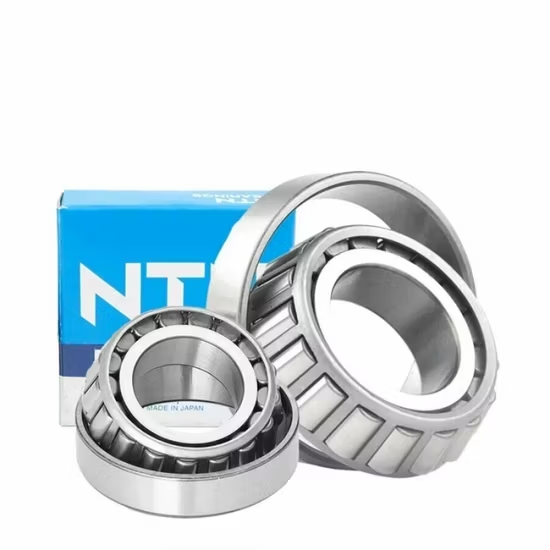
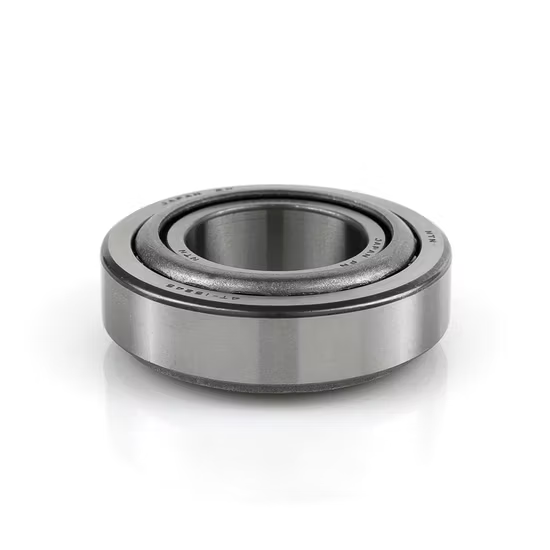
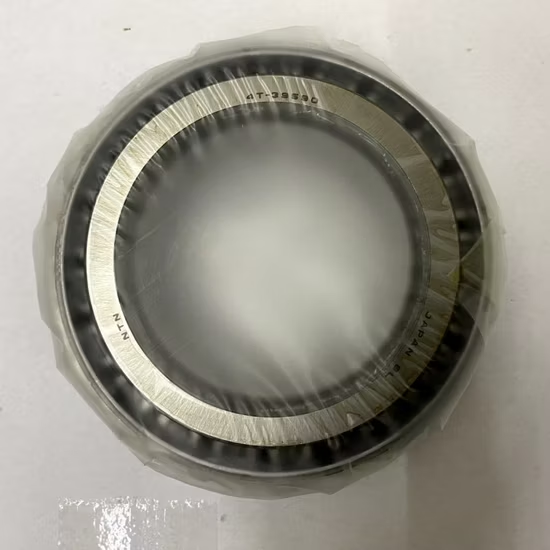
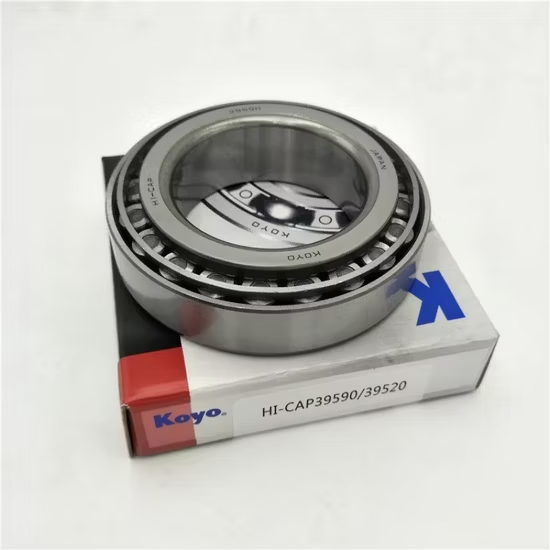

39590/39520 Inch Tapered Roller Bearing P4 — engineered with GCr15 steel for heavy-duty gearboxes and truck axles.
Traceable Batch Origins — Every 39590/39520 set ships with manufacturer lot documentation to guarantee authentic metallurgy and precise internal geometry.
| Parameter | Value |
|---|---|
| Designation | 39590/39520 |
| Bearing Type | Tapered Roller Bearing |
| Precision Class | P4 |
| Material | GCr15 bearing steel |
| Cage Material Options | Nylon, Brass, or Iron |
| Origin Options | Germany, Japan, Sweden, Malaysia, or China |
| Bore Type | Cylindrical (Inch series) |
| Arrangement | Single row (Cone 39590 / Cup 39520) |
| Industry | Typical Applications |
|---|---|
| Heavy Vehicle Repair | Truck axles and trailer wheel hub assemblies |
| Industrial Gearboxes | Reduction gear shafts in mining conveyors |
| Manufacturing Plants | Drive rolls in building material processing lines |
| Machinery Repair Shops | Replacement spindles for heavy-duty crushing equipment |
Matching the inch designation is only the first step; ignoring cage material and precision suffixes invites catastrophic field failure.
Sourcing a 39590/39520 tapered roller bearing based solely on the base inch number often leads to severe operational issues. I have seen mining crushers in Latin America suffer early shaft lockups because a standard stamped steel cage was substituted where a high-strength brass or specialized polymer cage was required for heavy shock loads. When procurement teams overlook the internal design, the components might physically fit the housing, but they cannot survive the thermal expansion and dynamic stresses of the actual application . This mismatch routinely results in thermal binding, cage fracture, and unplanned downtime that far exceeds the initial savings of a cheaper alternative.
Selecting the correct 39590/39520 tapered roller bearing requires a thorough review of the combined radial and axial loads typical in heavy vehicle axles and industrial gearboxes. Our technical team cross-references your specific equipment parameters to ensure the internal geometry matches the operational demands. We verify that the cone and cup pairing, along with the chosen cage material, will withstand the specific shock loads and rotational speeds of your machinery, preventing premature wear and extending service intervals.
Heavy-duty environments subject inch-series tapered roller bearings to intense combined loading and significant temperature fluctuations. In applications like mining conveyors or truck axles, the lubrication film must remain stable under high pressure, while the internal clearance must accommodate thermal expansion without causing the rollers to skew or bind. Contamination from dust and slurry further complicates the operational environment, demanding robust sealing solutions at the housing level to protect the precision-ground raceways . Proper mounting practices, including precise adjustment of the axial clearance during assembly, are critical to ensuring the bearing operates within its optimal design parameters.
The designation 39590 refers specifically to the inner ring (cone), while 39520 designates the outer ring (cup) in this inch-series configuration. Upgrading to P4 precision ensures noticeably tighter dimensional and running accuracy compared to standard commercial grades, which is vital for minimizing vibration in high-speed gearbox applications. The GCr15 bearing steel provides the necessary core toughness and raceway hardness to resist surface fatigue under heavy loads. Furthermore, the availability of nylon, brass, or iron cage options allows engineers to optimize the bearing for specific speed and temperature thresholds; for instance, brass cages offer superior durability under high-vibration conditions, while polymer cages reduce friction and noise in lighter, higher-speed setups.
Substituting a bearing with incorrect internal clearances or incompatible cage materials inevitably leads to premature failure and catastrophic damage to adjacent shaft and housing components. When a bearing seizes due to thermal binding, the resulting downtime halts entire production lines, voiding equipment warranties and inflating maintenance budgets. According to industry failure analysis frameworks, a significant share of premature bearing failures stems directly from improper selection rather than manufacturing defects . Ensuring exact alignment of all design parameters during the cross-reference phase is the only reliable method to protect capital assets from these hidden operational costs.
We maintain authorized distribution channels across all major international brands, allowing us to fulfill mixed-brand requirements in a single shipment while ensuring full batch traceability. Our cross-reference process goes beyond matching the base 39590/39520 number; we meticulously verify the cage material, precision class, and internal geometry against your specific application data. Every shipment includes verifiable documentation, eliminating the risk of receiving counterfeit components with soft inner rings that pass casual visual inspections. By providing application-based selection reviews, we address the unique load, speed, and temperature challenges of your equipment, ensuring the supplied bearing performs reliably in the field.
To ensure the selected bearing perfectly matches your operational requirements, please provide detailed equipment parameters, including radial and axial loads, operating speeds, and ambient temperature ranges. Sharing the specific OEM equipment number or existing housing dimensions allows our engineering team to perform a precise cross-reference and L10 life calculation. If the application involves severe contamination or extreme shock loads, detailing these environmental factors helps us recommend the most suitable cage material and sealing arrangement for your machinery.
Q: How can I verify the authenticity of the 39590/39520 bearings upon delivery?
A: Every set is supplied with batch traceability documentation and a scannable QR code. You can verify the authenticity directly through the official manufacturer applications, ensuring the GCr15 material and P4 precision match the original factory specifications and protecting your equipment from counterfeit components with compromised metallurgy.
Q: Why is it critical to align cage material during cross-referencing?
A: Matching only the base inch designation while ignoring the cage material can lead to rapid failure under specific loads. For example, installing a standard cage in a high-vibration mining crusher may cause early fracture, whereas a brass or specialized polymer cage ensures structural integrity and proper roller guidance under severe shock conditions.
Q: What are the selection boundaries between Nylon, Brass, and Iron cages?
A: Brass cages offer superior durability and heat dissipation for heavy-load, high-vibration environments like industrial gearboxes. Nylon cages reduce friction and weight, making them ideal for higher-speed applications with moderate loads. Iron or steel cages provide maximum structural strength for extreme shock loads but require robust lubrication to prevent wear.
Q: How do P4 precision tolerances benefit heavy vehicle repair applications?
A: P4 precision provides noticeably tighter dimensional and running accuracy than standard grades. In truck axles and wheel hubs, this reduces operational vibration, ensures even load distribution across the tapered rollers, and minimizes heat generation, ultimately extending the service life of the hub assembly and reducing maintenance frequency.
Our 5-step process ensures every order is engineered, validated, and supported for optimal performance.
Technical needs assessment
Custom specifications
Free samples for $50k+
Pre-shipment inspection
On-site & predictive
Our certified engineers respond within 24 hours with detailed technical specifications, pricing, and lead time information.