01
Consultation
Technical needs assessment

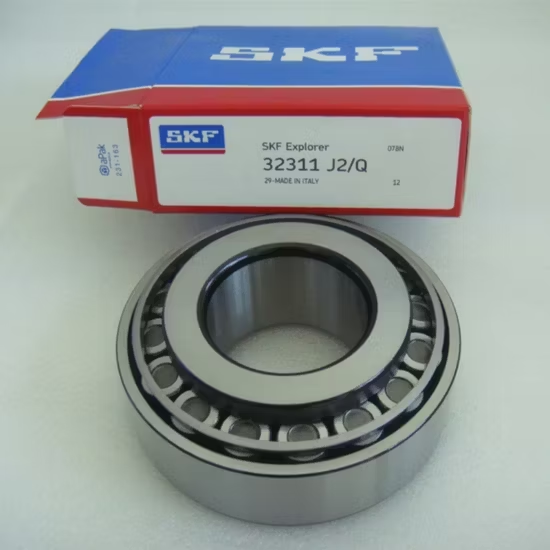
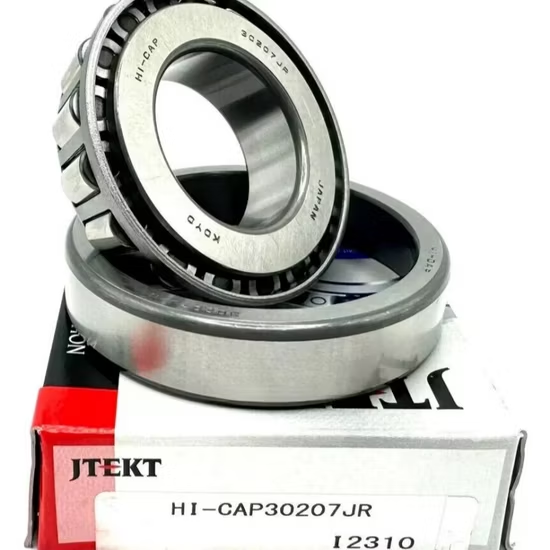
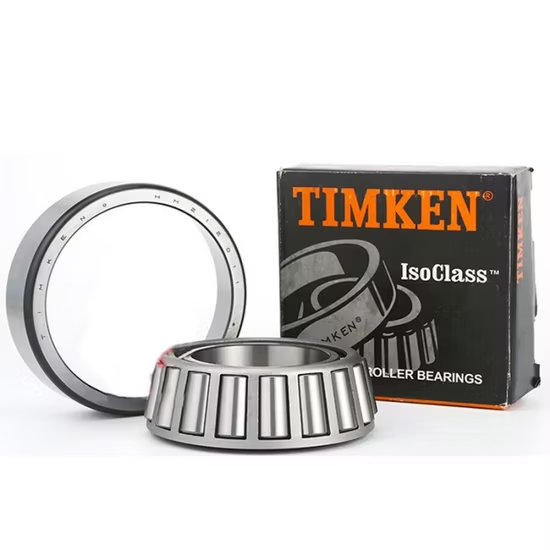
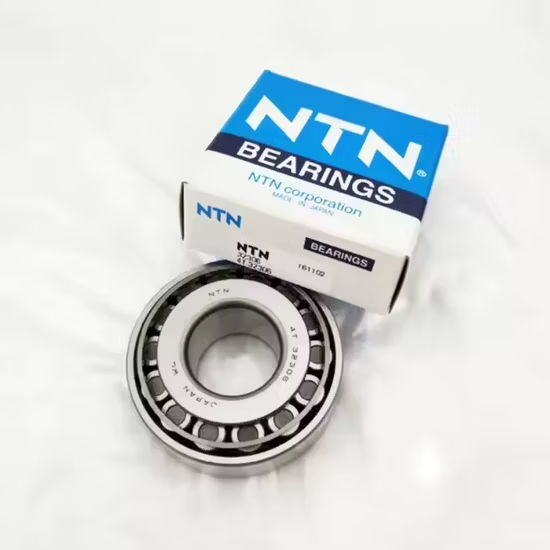
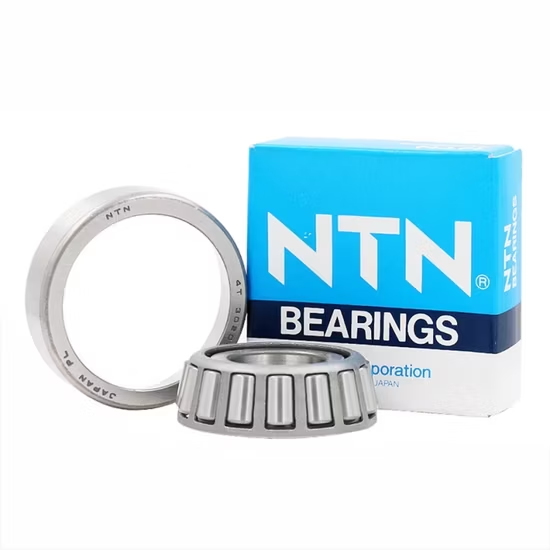
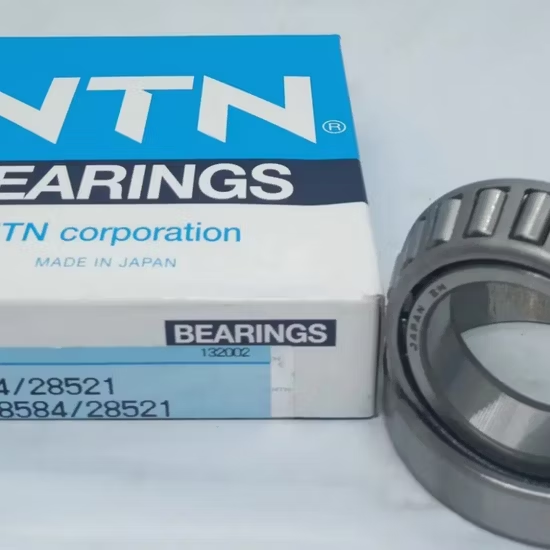
33217 33218 Single Row Tapered Roller Bearing P4 — manufactured from Gcr15 steel to handle combined radial and axial loads.
Original Batch Traceability — Every 33217 33218 single row tapered roller bearing ships with verifiable lot documentation directly from the manufacturer's production facilities.
| Parameter | Value |
|---|---|
| Designation | 33217 33218 |
| Bearing Type | Single Row Tapered Roller Bearing |
| Number of Rows | Single Row |
| Structure | Taper |
| Precision Class | P4 |
| Material | GCr15 Bearing Steel |
| Cage Material Options | Nylon / Brass / Iron |
| Origin Options | Germany / Japan / Sweden / Malaysia / China |
| HS Code | 8482500090 |
| Industry | Typical Applications |
|---|---|
| Industrial Gearboxes | Heavy-duty reduction gear shafts and output stages |
| Automotive & Heavy Vehicles | Commercial truck axles and wheel hub assemblies |
| Manufacturing Plants | Conveyor drive pulleys and material handling rollers |
| General Machinery | Crushing equipment eccentric shafts and vibrating screens |
Matching the base designation without verifying internal precision and cage construction invites premature field failure.
Procurement teams often source the 33217 33218 single row tapered roller bearing by matching the basic numeric identifier, assuming internal components are standardized across all manufacturers. In reality, substituting a standard P0 precision unit or an incorrect cage material into a high-load industrial gearbox leads to rapid thermal binding. When a nylon cage is mistakenly installed in a high-temperature axle application instead of a machined brass alternative, the cage pockets deform under combined radial and axial loads . This oversight causes the rolling elements to skew, resulting in catastrophic damage to the raceways and unplanned downtime that halts the entire production line.
Selecting the correct configuration for the 33217 33218 single row tapered roller bearing requires evaluating the specific operational environment rather than relying on generic catalog data. Our engineering team reviews the exact load spectra, operating temperatures, and rotational speeds of your gearboxes or truck axles to recommend the optimal cage material and precision class. This application-based selection review ensures the internal geometry and component materials perfectly match your equipment's mechanical demands, eliminating the guesswork that leads to cross-reference errors.
Truck axles and industrial gearboxes subject tapered roller bearings to intense combined loads and significant thermal gradients. As operating temperatures rise, the inner ring expands, which can eliminate internal clearance and cause severe friction if the initial clearance class was not specified for thermal growth. Proper lubrication is equally critical; oil bath systems in gearboxes require different cage designs compared to grease-lubricated wheel hubs to prevent churning losses and overheating . Furthermore, heavy shock loads from uneven terrain or crushing machinery demand a cage material that resists fragmentation under sudden stress spikes.
The designation 33217 33218 represents the base geometry, but the P4 precision class dictates the tight dimensional and running accuracy required for high-speed or high-rigidity shafts. This elevated precision minimizes vibration and ensures uniform load distribution across the tapered rollers. Equally important is the cage material selection, which is available in nylon, brass, or iron variants. Machined brass cages offer superior durability and heat dissipation in high-load, high-temperature gearbox environments, while polymer cages provide lower friction and noise in lighter, high-speed applications. Choosing the wrong cage type for the specific speed and temperature envelope is a primary driver of early mechanical failure.
Overlooking critical internal design parameters when sourcing replacement bearings inevitably leads to severe financial consequences beyond the cost of the component itself. An incorrectly matched bearing that suffers from thermal binding or cage fragmentation will destroy adjacent seals, shafts, and housing bores. This cascading damage results in extensive unplanned downtime, expensive secondary repairs, and potential warranty voidance on the primary equipment . Relying solely on the base number without verifying the exact precision and material specifications transforms a minor procurement task into a major operational liability.
We eliminate the risk of receiving counterfeit units with soft inner rings by providing authorized coverage across all major international brands, ensuring every 33217 33218 single row tapered roller bearing is genuine. Our cross-brand interchange process strictly aligns the precision class, cage material, and internal geometry, rather than just matching the base numeric designation. We supply full batch traceability to the manufacturer, allowing you to verify authenticity directly through official brand applications. Furthermore, our technical team conducts an application-based selection review to confirm that the chosen bearing configuration can withstand your specific load, speed, and temperature conditions.
To ensure the selected configuration perfectly matches your machinery, please provide the specific radial and axial load values, operating speeds, and expected temperature ranges. Sharing the OEM equipment number or the exact dimensional constraints of the housing allows our engineering team to perform a precise cross-reference check and L10 life calculation. This technical data enables us to recommend the optimal cage material and confirm the suitability of the P4 precision class for your specific application environment.
Q: How do I verify the authenticity of the 33217 33218 single row tapered roller bearing upon delivery?
A: Every unit we supply includes batch traceability documentation and a unique QR code. You can scan this code using the manufacturer's official mobile application to instantly verify the origin, production date, and technical specifications, ensuring the bearing is genuine and protecting your equipment from the severe risks associated with counterfeit components.
Q: Why is cross-referencing more than just matching the base number 33217 or 33218?
A: Matching only the base number ignores critical internal variations such as the P4 precision class, specific cage materials, and internal clearance. A base-match error might result in installing a standard precision or incorrect cage variant, leading to thermal binding, excessive vibration, or cage fragmentation under heavy combined loads in your gearboxes or axles.
Q: What is the practical difference between P4 and standard P0 precision in these tapered applications?
A: P4 precision offers significantly tighter dimensional and running accuracy compared to standard P0 grades. In high-speed industrial gearboxes or precision truck axles, this enhanced accuracy ensures uniform load distribution across the tapered rollers, minimizes operational vibration, reduces heat generation, and noticeably extends the overall fatigue life of the bearing assembly.
Q: How do I choose between nylon, brass, and iron cages for my specific application?
A: Cage selection depends heavily on your operating temperature and load profile. Machined brass cages are ideal for heavy-load, high-temperature gearbox environments due to their superior strength and heat dissipation. Nylon cages offer lower friction and weight for high-speed, moderate-temperature applications, while iron cages serve standard industrial duties where cost and basic durability are the primary concerns.
Q: What mounting practices are recommended to maintain the P4 precision of these bearings?
A: To preserve the tight P4 tolerances, avoid direct mechanical impact on the rings or cage during installation. We strongly recommend using controlled induction heating for the inner rings to achieve the necessary interference fit on the shaft without damaging the rolling elements or raceways, ensuring optimal operational performance and longevity.
Our 5-step process ensures every order is engineered, validated, and supported for optimal performance.
Technical needs assessment
Custom specifications
Free samples for $50k+
Pre-shipment inspection
On-site & predictive
Our certified engineers respond within 24 hours with detailed technical specifications, pricing, and lead time information.