01
Consultation
Technical needs assessment

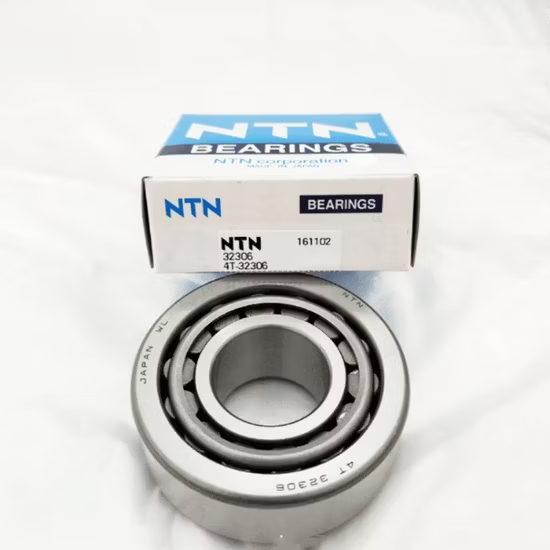
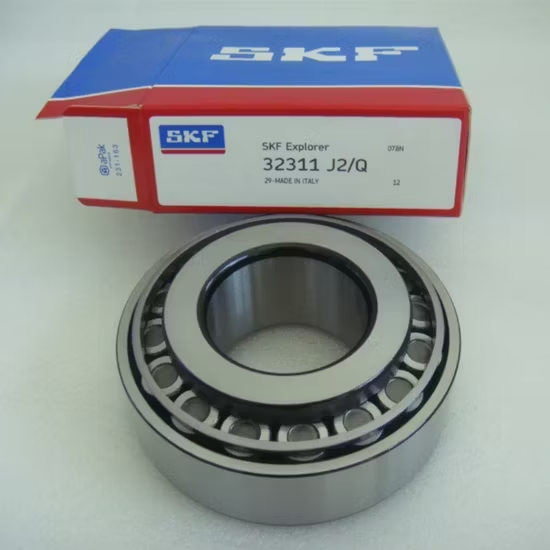
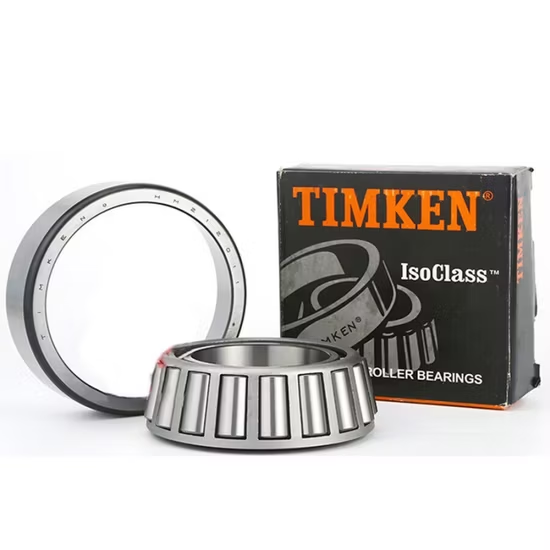


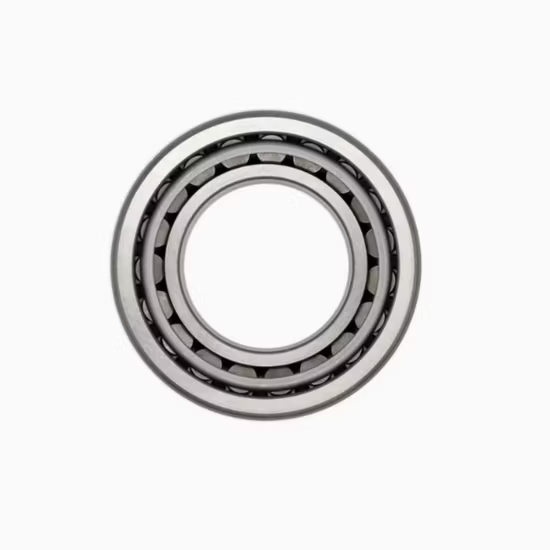
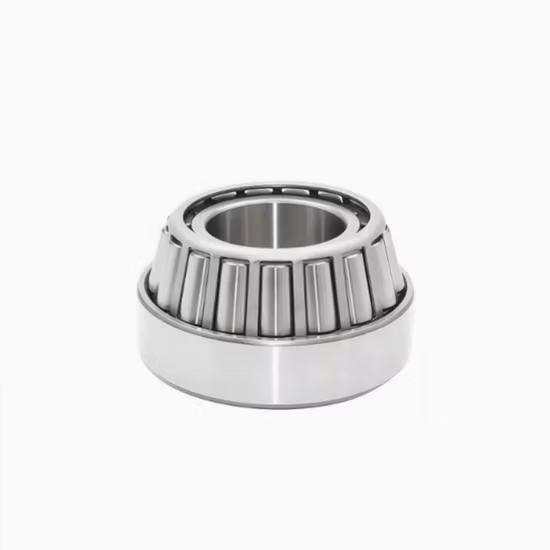
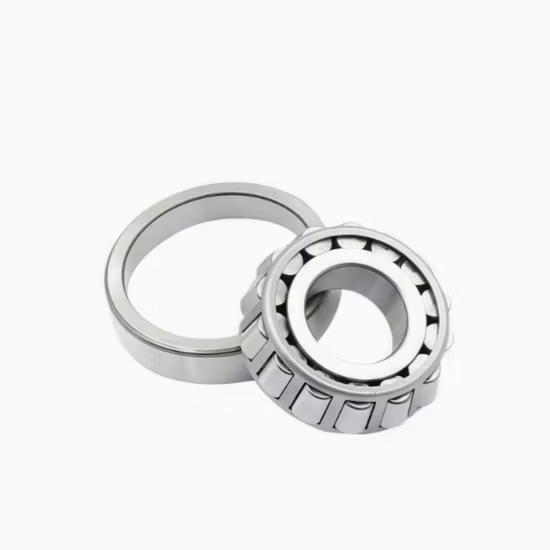
33213 33214 Single Row Tapered Roller Bearing P4 — manufactured from GCr15 steel for automotive wheel hubs and gearboxes.
Exact Cross-Reference Alignment — We verify the base designation, P4 precision class, and specific cage material to prevent field failures caused by partial matching.
| Parameter | Value |
|---|---|
| Designation | 33213 33214 |
| Bearing Type | Tapered Roller Bearing |
| Number of Rows | Single Row |
| Precision Class | P4 |
| Material | GCr15 high-carbon chromium bearing steel |
| Cage Material | Available in nylon, brass, or pressed steel options |
| Origin | Sourced from authorized facilities in Germany, Japan, Sweden, Malaysia, or China |
| Industry | Typical Applications |
|---|---|
| Commercial Vehicles | Heavy-duty truck wheel hubs and drive axles |
| Industrial Power Transmission | Heavy-load industrial gearbox shaft supports |
| Construction & Mining | Building material machinery conveyors and crushers |
| General Manufacturing | Automated assembly line rotary tables |
Partial matching causes thermal binding and premature cage failure in the field.
Sourcing components for heavy-duty truck axles often involves matching a base designation, but ignoring internal design variations leads to catastrophic results. I once inspected a commercial vehicle in Latin America where the wheel hub burned out completely on a highway descent. The root cause was not a lack of lubrication, but a standard clearance bearing installed where a specific internal geometry was required to handle the thermal expansion of the axle assembly under heavy braking. When the 33213 33214 tapered roller bearing is cross-referenced without verifying the exact precision class and cage material, the internal friction generates excessive heat, eventually seizing the inner ring .
Selecting the correct internal configuration for a 33213 33214 tapered roller bearing requires looking beyond the catalog number. Our engineering review ensures that the selected P4 precision variant and cage material align pe*ur wheel hub or gearbox application, eliminating the guesswork that leads to early wear.
Truck axles and industrial gearboxes subject components to intense combined loading, where sudden shock loads from road irregularities or gear meshing intersect with continuous rotational forces. At elevated temperatures generated by prolonged operation, standard clearance can disappear, causing the rollers to skid and the cage to fracture. Proper lubrication flow and precise internal geometry are mandatory to maintain the oil film thickness and prevent metal-to-metal contact under these extreme thermal and mechanical stresses .
The P4 precision class dictates significantly tighter dimensional and running accuracy tolerances compared to standard commercial grades, which is vital for minimizing vibration in high-speed gearbox shafts. The GCr15 high-carbon chromium bearing steel provides the necessary core toughness and raceway hardness to resist spalling under heavy axle loads. Furthermore, the cage material must be strictly matched to the operating environment: nylon cages offer low friction and quiet operation for moderate temperatures, brass cages provide superior durability under high vibration and shock loads, while pressed steel cages serve as a reliable baseline for standard industrial applications.
Installing a component that matches the base number but lacks the required precision or cage strength inevitably leads to unplanned downtime and catastrophic damage to the surrounding housing. According to ISO 281 framework principles, even minor deviations in internal geometry or material quality drastically reduce the calculated fatigue life under combined loading conditions. The resulting warranty voidance and emergency freight costs for replacement parts far exceed the initial savings of purchasing an unverified, partially matched unit .
Our authorization across major international brands allows us to consolidate mixed-brand requirements into a single, fully traceable shipment, eliminating the coordination burden of multiple vendors. We specifically target the high-risk areas of the 33213 33214 tapered roller bearing market by verifying that the P4 precision and cage material match the OEM requirements, not just the base number. Every batch is traced back to the manufacturer's production facilities, ensuring that the metallurgical integrity and dimensional accuracy meet the exact specifications needed for critical automotive and industrial applications.
To ensure the selected configuration meets your exact operational demands, please provide the specific radial and axial loads, operating speeds, and expected temperature ranges for your wheel hub or gearbox application. Supplying the OEM equipment number or the exact dimensional constraints allows our engineering team to perform a thorough cross-reference review and L10 life calculation, guaranteeing that the delivered components match your mechanical requirements perfectly.
Q: How can I verify the authenticity of the delivered components?
A: Every unit we supply features a unique traceability code that can be scanned using the official mobile applications provided by the original manufacturers. This digital verification confirms the production batch, the specific P4 precision grade, and the exact cage material, ensuring the product is genuine and fully supported by the factory's warranty network.
Q: Why is it critical to match the cage material during cross-referencing?
A: The cage controls roller spacing and handles significant dynamic forces. A nylon cage might fail under the high shock loads of a mining conveyor, while a brass cage is necessary for high-vibration environments. Matching the exact cage material ensures the component survives the specific thermal and mechanical stresses of your application without premature fracture.
Q: What is the operational advantage of P4 precision over standard grades?
A: P4 precision guarantees significantly tighter tolerances in bore diameter, outer diameter, and running accuracy. In high-speed gearboxes or precision automotive hubs, this reduces vibration, minimizes heat generation from internal friction, and ensures a more uniform load distribution across the rollers, ultimately extending the operational lifespan of the assembly.
Q: How do I determine the correct internal clearance for my axle application?
A: Internal clearance must account for the interference fit during mounting and the thermal expansion of the shaft and housing during operation. By sharing your specific operating temperatures and mounting tolerances, our technical team can calculate the required initial clearance to ensure the component operates with the optimal internal geometry under actual working conditions.
Our 5-step process ensures every order is engineered, validated, and supported for optimal performance.
Technical needs assessment
Custom specifications
Free samples for $50k+
Pre-shipment inspection
On-site & predictive
Our certified engineers respond within 24 hours with detailed technical specifications, pricing, and lead time information.