01
Consultation
Technical needs assessment

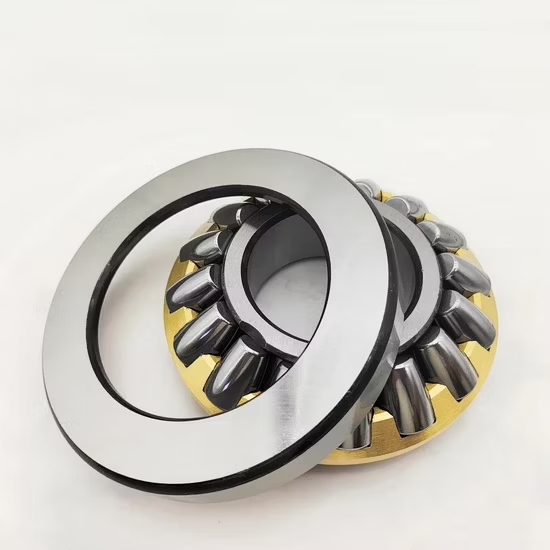
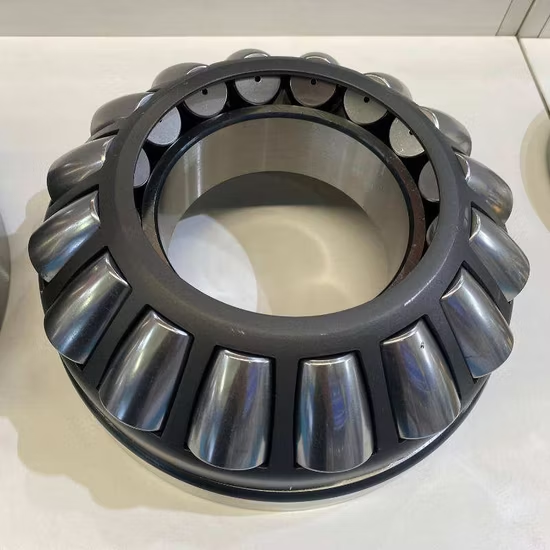
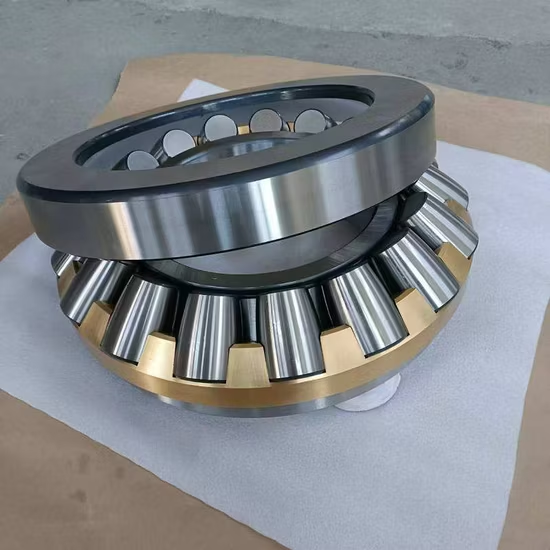
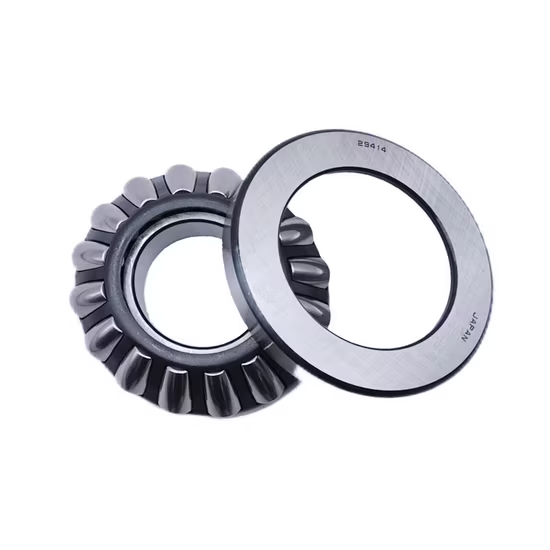
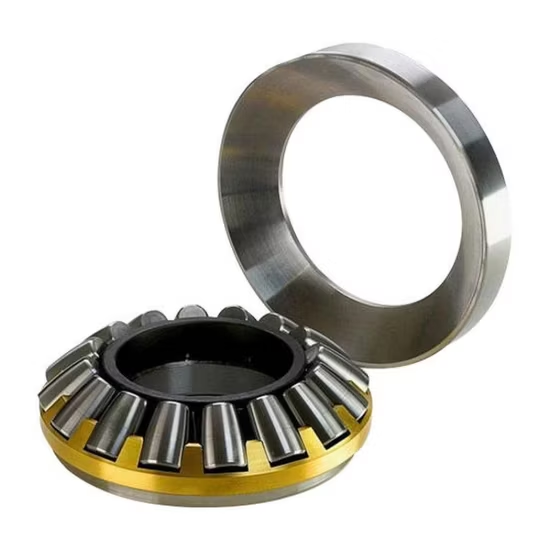
29428 Spherical Thrust Roller Bearing — engineered to accommodate heavy axial loads and shaft misalignment in demanding industrial gearboxes and mining equipment.
Full Batch Traceability — Every 29428 spherical thrust roller bearing ships with manufacturer lot documentation linking directly to the original production run.
| Parameter | Value |
|---|---|
| Designation | 29428 |
| Bearing Type | Spherical Thrust Roller Bearing |
| Cage Material | Machined brass (M suffix) or standard pressed steel |
| Internal Design | Enhanced capacity (E suffix) |
| Origin | Germany / Japan / Sweden / Malaysia / China |
| HS Code | 8482500090 |
| Customization | Available in various clearance and precision classes |
| Industry | Typical Applications |
|---|---|
| Mining and Crushing | Gyratory crusher main shaft thrust arrangements |
| Industrial Gearboxes | Heavy-duty extruder gearbox thrust support |
| Material Handling | Bucket wheel excavator slewing mechanism thrust loads |
| Marine Drives | Marine propulsion shaft thrust bearing housings |
Matching the base number without verifying the cage and internal design suffixes guarantees premature failure under extreme axial loads.
In heavy-duty mining and extrusion applications, procurement teams often approve a 29428 spherical thrust roller bearing based solely on the basic designation. This oversight ignores critical internal geometry and cage material differences. When a standard pressed steel cage is installed in a high-vibration crusher where a machined brass variant was required, the cage pockets wear rapidly, leading to roller skewing and sudden thermal seizure . I have personally investigated multiple site shutdowns in the Middle East where ignoring the distinction between an E and E1 internal profile caused the roller*ousing in a matter of hours.
Selecting the correct variant for heavy axial environments requires looking past the basic dimensions. The 29428 spherical thrust roller bearing must be configured to handle not just the static thrust load, but the dynamic shock loads inherent in crushing and marine propulsion. By reviewing the exact operational parameters, we ensure the supplied unit features the correct enhanced capacity design and cage material to survive continuous heavy loading without structural fatigue.
Equipment operating in mining and heavy material handling faces severe axial shock loads combined with intense vibration. These conditions demand a robust cage design capable of retaining roller alignment when the load fluctuates violently. Elevated ambient temperatures and heavy contamination further complicate the lubrication regime, requiring adequate internal clearance to accommodate thermal expansion of the shaft and housing. Without the correct internal geometry and cage strength, the rolling elements will slide rather than roll, generating excessive friction heat that quickly degrades the lubricant and compromises the bearing steel .
The internal geometry and cage material dictate the operational boundaries of this component. The E suffix indicates an enhanced capacity design, optimizing the roller profile and raceway curvature to distribute heavy axial loads across a larger contact area. Equally critical is the M suffix, which designates a machined brass cage. Unlike pressed steel alternatives, a machined brass cage provides superior structural integrity and wear resistance in high-vibration environments, maintaining precise roller guidance even when shock loads threaten to dislodge the rolling elements from their optimal tracking path.
Accepting a replacement unit that matches the basic bore and outside diameter but lacks the correct internal design suffix leads to devastating financial consequences. A mismatched cage or unoptimized roller profile results in unplanned downtime, catastrophic damage to adjacent shaft components, and immediate warranty voidance. The cost of the replacement part is negligible compared to the lost production revenue and heavy rigging expenses required to dismantle a gyratory crusher or marine drive for emergency repairs .
Our technical review process specifically targets the suffix vulnerabilities common in heavy thrust applications. We verify that the requested 29428 spherical thrust roller bearing matches the original equipment manufacturer's exact cage and internal design requirements, preventing the installation of under-specified variants. Because we maintain authorized distribution channels across all major international brands, we source the precise configuration with full batch traceability, eliminating the risk of receiving visually identical but internally deficient counterfeits that fail under peak axial stress.
To guarantee the selected unit meets your exact operational demands, provide your engineering team's specific axial and radial load calculations, operating speeds, and continuous temperature profiles. Sharing the original equipment manufacturer part number allows us to perform a rigorous cross-reference check, ensuring the supplied bearing aligns perfectly with your machinery's internal clearances and cage requirements.
Q: What is the practical difference between the E and M suffixes on this bearing?
A: The E suffix denotes an enhanced internal capacity design, optimizing the roller and raceway geometry to handle heavier axial loads. The M suffix specifies a machined brass cage, which offers significantly higher structural strength and vibration resistance compared to standard pressed steel cages, making it essential for severe shock-load environments like crushers.
Q: Why do cross-reference failures happen even when the basic 29428 number matches?
A: Basic numbers only define the outer dimensions. If the replacement lacks the correct internal design or cage suffix, it will fail under load. A standard variant cannot survive the extreme vibration and thermal expansion of heavy-duty applications where an enhanced, brass-caged version was originally specified by the equipment builder.
Q: How do I verify the authenticity of the supplied thrust bearing?
A: Every unit we supply includes manufacturer lot traceability and a Certificate of Conformity. You can independently verify the bearing's authenticity by scanning the product packaging QR code using the official mobile application provided by the specific manufacturing brand.
Q: Can I use a standard clearance bearing if the original required a specific clearance class?
A: No. Thrust bearings in heavy machinery generate significant friction heat. If a standard clearance is used where a larger clearance was specified, the thermal expansion of the shaft and housing will eliminate the internal play, causing the rollers to bind, overheat, and ultimately seize the entire thrust arrangement.
Our 5-step process ensures every order is engineered, validated, and supported for optimal performance.
Technical needs assessment
Custom specifications
Free samples for $50k+
Pre-shipment inspection
On-site & predictive
Our certified engineers respond within 24 hours with detailed technical specifications, pricing, and lead time information.


