01
Consultation
Technical needs assessment



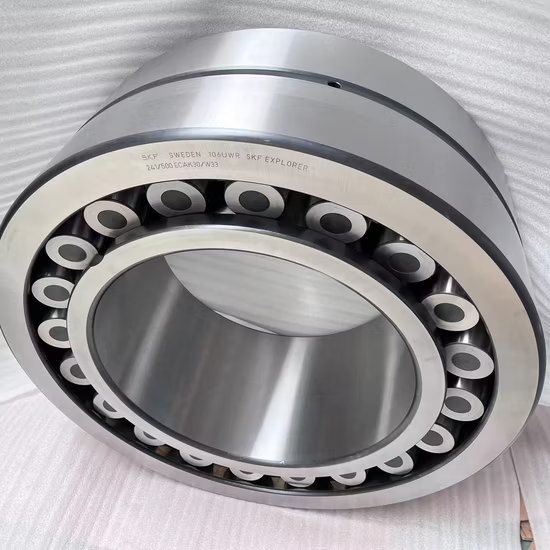
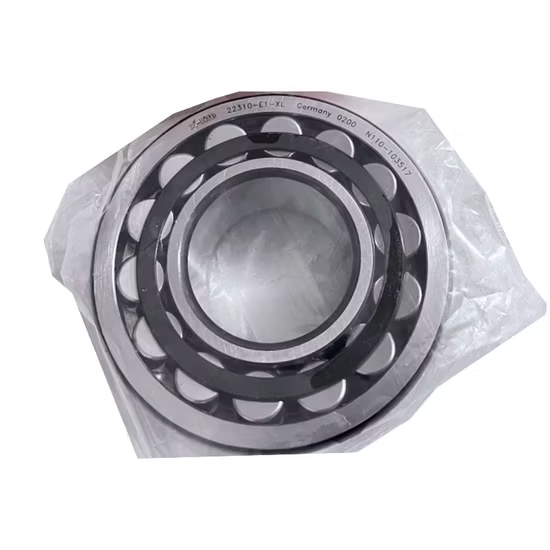
22320 Spherical Roller Bearing — spherical roller design accommodates heavy radial loads and shaft misalignment typical in chemical machinery and vibrating screens.
Batch-Level Traceability — Every 22320 spherical roller bearing ships with unbroken manufacturer lot documentation, allowing you to verify the exact production run through official brand applications.
| Parameter | Value |
|---|---|
| Designation | 22320 |
| Bearing Type | Spherical Roller Bearing |
| Origin | Germany, Japan, Sweden, Malaysia, or China |
| HS Code | 8482500090 |
| Feature | Low Noise, High Speed, Long Service Life |
| Certification | Certificate of Conformity, Material Test Report |
| Industry | Typical Applications |
|---|---|
| Chemical Processing | Agitator drives, reactor stirrer shafts, centrifuge bowls |
| Mining and Crushing | Vibrating screen exciters, jaw crusher pitman bearings |
| Steel Mill Equipment | Continuous caster roll guides, rolling mill work rolls |
Matching the base designation without confirming internal clearance and cage material guarantees premature failure under thermal stress.
Procurement teams frequently source a 22320 spherical roller bearing based solely on the base number, assuming internal variations are standardized. In chemical processing and heavy crushing environments, this oversight leads to catastrophic thermal binding when standard clearance cannot accommodate operational heat expansion. I have investigated sites across Brazil and Chile where equipment seized simply because the installed bearing lacked the necessary internal clearance to handle the ambient and frictional heat . The resulting unplanned downtime far exceeds the initial component savings.
Selecting the correct 22320 spherical roller bearing requires looking beyond the catalog number to evaluate the specific operational envelope of your chemical or mining equipment. Our engineering review ensures that the internal geometry, cage design, and clearance class align perfectly with your radial loads and misalignment tolerances. We cross-reference your OEM equipment requirements against available multi-brand inventory to secure the exact configuration needed for continuous operation.
Chemical agitators and vibrating screens subject bearings to heavy radial loads combined with significant shaft deflection and elevated process temperatures. Standard internal clearance quickly disappears as the inner ring expands from heat, causing the rolling elements to skid and the cage to fracture. Proper lubrication selection and verifying the correct clearance class are mandatory to prevent the rolling elements from binding. Sealed variants must also be evaluated against the specific chemical exposure and washdown protocols of the facility .
The base designation 22320 identifies the dimensional series and bore size, but the internal configuration dictates survival in harsh environments. For high-vibration applications like crushers, a solid brass cage is typically required to withstand the shock loads that would fracture a pressed steel cage. Similarly, specifying an increased internal clearance class is essential when operating at elevated temperatures to compensate for thermal expansion. Without explicitly defining these internal parameters during the inquiry stage, the supplied bearing may physically fit but will fail rapidly under load.
Installing a bearing with incorrect internal clearance or an unsuitable cage material inevitably leads to premature failure and voided equipment warranties. Under ISO 281 guidelines, the calculated rating life drops drastically when operational conditions deviate from the bearing's internal design parameters. This mismatch generates excessive friction, degrading the lubricant and causing severe damage to the shaft and housing. The financial impact of replacing damaged surrounding components heavily outweighs the cost of specifying the correct bearing initially .
Our distribution network provides authorized access to major international brands, ensuring every order is backed by verifiable manufacturer documentation. We actively prevent cross-reference errors by validating that the clearance, cage material, and precision suffixes match your exact application, not just the base number. Our batch traceability protocols allow you to scan official QR codes to confirm the origin and authenticity of the product. This rigorous verification eliminates the risk of receiving counterfeit components with soft inner rings that pass superficial visual inspections but fail under operational loads.
To ensure the selected configuration meets your operational demands, please provide detailed application parameters including radial and axial loads, operating speeds, and ambient temperatures. Supplying the OEM equipment designation or existing part numbers allows our technical team to perform a precise cross-reference and L10 life calculation. This data enables us to recommend the optimal internal clearance and cage material for your specific chemical or crushing machinery.
Q: How can I verify the authenticity of the 22320 spherical roller bearing upon delivery?
A: Every bearing we supply includes batch traceability documentation and a manufacturer-applied QR code. You can scan this code using the official brand application on your smartphone to instantly verify the production lot, origin, and authenticity, effectively eliminating the risk of installing counterfeit components with compromised metallurgy.
Q: Why is it critical to specify internal clearance beyond the base 22320 designation?
A: The base number only defines dimensions. In high-temperature chemical applications, standard clearance will vanish as the inner ring expands, leading to thermal binding and catastrophic failure. Specifying an increased clearance class ensures the bearing maintains the necessary internal operating gap under thermal stress.
Q: What information is required to cross-reference the 22320 to other major brands?
A: We require the complete original designation, including all suffixes indicating clearance, cage material, and internal design. Simply matching the base number across brands often results in configuration mismatches that cause premature failure in demanding vibrating screen or crusher applications.
Q: Which cage material is recommended for high-vibration crushing equipment?
A: For heavy shock loads and high-vibration environments, a one-piece solid brass cage is generally recommended over pressed steel. The brass construction provides superior resistance to vibration-induced fatigue and ensures reliable guidance of the rolling elements under extreme operational stress.
Our 5-step process ensures every order is engineered, validated, and supported for optimal performance.
Technical needs assessment
Custom specifications
Free samples for $50k+
Pre-shipment inspection
On-site & predictive
Our certified engineers respond within 24 hours with detailed technical specifications, pricing, and lead time information.