01
Consultation
Technical needs assessment



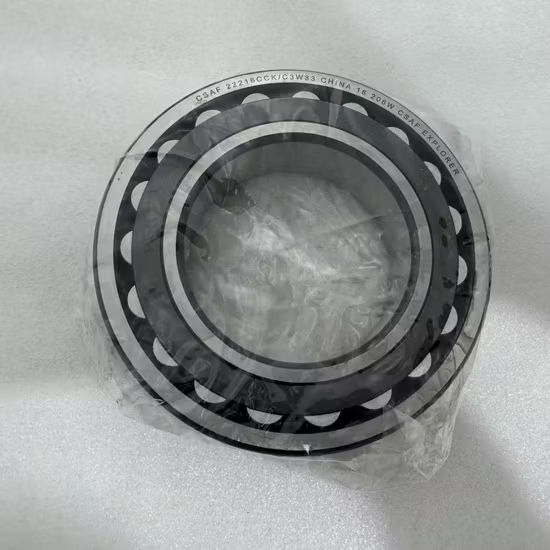
22218/22219/22220/22222/22224 Spherical Roller Bearings — featuring standard CN clearance and P0 precision for general heavy-duty operations, with an open design requiring external sealing.
Traceable Batch Origins — Every 22218/22219/22220/22222/22224 spherical roller bearing ships with manufacturer lot documentation for official app QR verification.
| Parameter | Value |
|---|---|
| Designation | 22218/22219/22220/22222/22224 |
| Bearing Type | Spherical Roller Bearing |
| Dimension Series | 22 |
| Bore Diameter Size Codes | 18, 19, 20, 22, 24 |
| Clearance Class | Normal (CN) when no suffix is specified |
| Precision Class | P0 (Standard) when no suffix is specified |
| Seal or Shield Type | Open type or standard manufacturer default |
| Cage Material | Pressed steel or machined brass options available |
| Origin | Germany / Japan / Sweden / Malaysia / China |
| HS Code | 8482500090 |
| Customization | Available |
| Industry | Typical Applications |
|---|---|
| Mining and Crushing | Jaw crusher eccentric shafts, vibrating screen exciters |
| Steel and Metallurgy | Continuous casting machine guide rolls, rolling mill gear drives |
| Heavy-duty Gearboxes | Industrial reducer low-speed shafts, agitator drives |
| Material Handling | Bucket elevator head pulleys, heavy-duty conveyor drive shafts |
A matching basic designation does not guarantee internal design compatibility.
In mining and crushing environments, replacing a failed unit with a basic number match often leads to rapid secondary failures. I have seen 22220 spherical roller bearings seize on vibrating screens simply because the replacement had a standard CN clearance instead of the required C3 or C4 for thermal expansion. When the 22218 22219 22220 22222 22224 spherical roller bearing operates under heavy shock loads and elevated temperatures, ignoring suffix details like cage material or internal clearance causes the inner ring to expand and bind against the rolling elements . Procurement teams frequently overlook these critical suffixes, resulting in catastrophic thermal locking and unplanned downtime.
Supplying the correct 22218 22219 22220 22222 22224 spherical roller bearing requires looking past the basic dimension series. We review the specific application parameters to ensure the internal geometry, cage design, and clearance class align perfectly with the equipment's operational demands, preventing premature fatigue.
These applications subject the bearing to intense radial loads combined with severe shock impacts and moderate axial guidance. The operating temperature frequently rises due to friction and ambient mill heat, which directly affects the internal clearance and lubricant film thickness. Proper lubrication intervals and the correct choice between open or sealed variants are critical to prevent contaminant ingress from crushing dust. Misalignment between the shaft and housing is common, making the self-aligning capability essential, but only if the internal clearance allows for the necessary thermal expansion without binding .
The "222" prefix identifies the dimension series for these spherical roller bearings, balancing cross-section width with load capacity, while 18, 19, 20, 22, and 24 denote the specific bore diameter size codes. When no additional suffix is present, the default is typically Normal clearance (CN) and standard P0 precision. However, in heavy-duty vibrating equipment, a C3 or C4 clearance is often mandatory to accommodate shaft expansion and prevent internal preload. The cage material is equally critical; machined brass cages are generally preferred over pressed steel in high-vibration environments to resist fatigue cracking and maintain rolling element guidance under shock loads.
Installing a standard clearance bearing in a high-temperature crusher application inevitably leads to thermal binding, resulting in catastrophic damage to the shaft and housing. This triggers extensive unplanned downtime and voids equipment warranties due to improper maintenance practices. According to ISO 281 guidelines, failing to account for operational temperature and load conditions drastically reduces the calculated L10 life, turning a minor component replacement into a major structural repair .
We provide authorized coverage across major brands, ensuring a single order fulfills mixed-brand site requirements without coordinating multiple vendors. Cross-referencing is executed by matching internal clearance, cage material, and precision suffixes, not just the base designation. Application-based selection reviews prevent the dangerous substitution of CN clearance where C3 is required for thermal expansion. Batch traceability to the manufacturer is guaranteed, with QR verification supported through official brand applications. Technical support extends to post-delivery mounting guidance and failure analysis for complex load and temperature conditions.
To ensure precise cross-referencing and L10 life verification, please provide the specific radial and axial loads, operating speeds, and ambient temperature ranges. Sharing the OEM equipment number or the exact suffix requirements from the original nameplate allows our engineering team to validate the internal design and clearance class. This technical review ensures the proposed replacement perfectly matches the mechanical and thermal demands of your application.
Q: Why is it critical to align clearance and cage suffixes during cross-referencing?
A: Matching only the base number ignores internal design variations. A standard CN clearance will thermally bind in high-heat applications requiring C3, while a pressed steel cage may fracture under the severe shock loads that a machined brass cage handles easily. Precise suffix alignment ensures the replacement survives the specific operational stresses.
Q: How do CN and C3/C4 clearances differ in high-temperature crushing applications?
A: CN is the standard internal clearance for normal operating temperatures. In crushers or vibrating screens where friction and ambient heat cause the inner ring to expand significantly, C3 or C4 greater clearances are required. This extra space prevents the rolling elements from binding and seizing as the bearing reaches its thermal equilibrium.
Q: What is the most reliable method to verify the authenticity of these bearings?
A: The most secure method is scanning the QR code on the packaging or bearing label using the manufacturer's official mobile application. This digital verification links the physical item to the factory's production database, confirming the batch origin and exposing counterfeits that rely on cloned visual markings.
Q: Which cage material is recommended for vibrating screens and high-impact loads?
A: Machined brass cages are generally specified for vibrating screens and heavy crushing equipment. The solid brass construction provides superior structural integrity and fatigue resistance under continuous high-frequency vibrations and shock loads, maintaining precise rolling element guidance where stamped steel cages might deform.
Q: How should we proceed if the original OEM suffix is discontinued or has long lead times?
A: Provide the exact OEM designation and application parameters to our technical team. We will identify an authorized cross-brand equivalent that strictly matches the internal geometry, clearance class, and cage material, ensuring the alternative performs reliably without compromising the equipment's operational safety or lifespan.
Our 5-step process ensures every order is engineered, validated, and supported for optimal performance.
Technical needs assessment
Custom specifications
Free samples for $50k+
Pre-shipment inspection
On-site & predictive
Our certified engineers respond within 24 hours with detailed technical specifications, pricing, and lead time information.