01
Consultation
Technical needs assessment

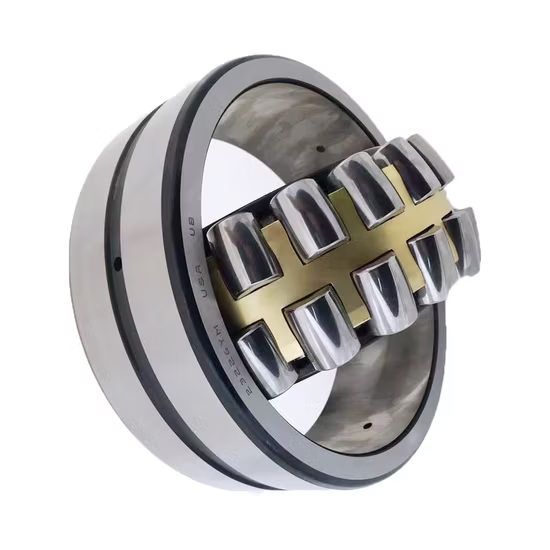
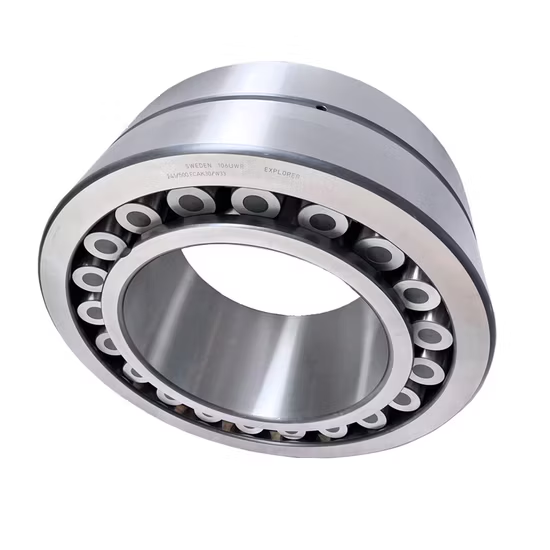
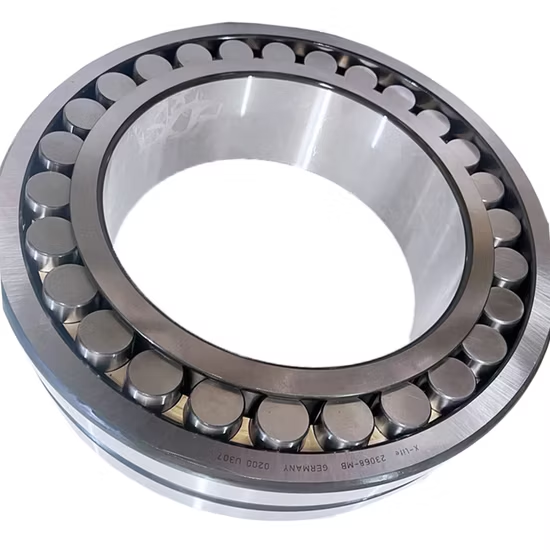
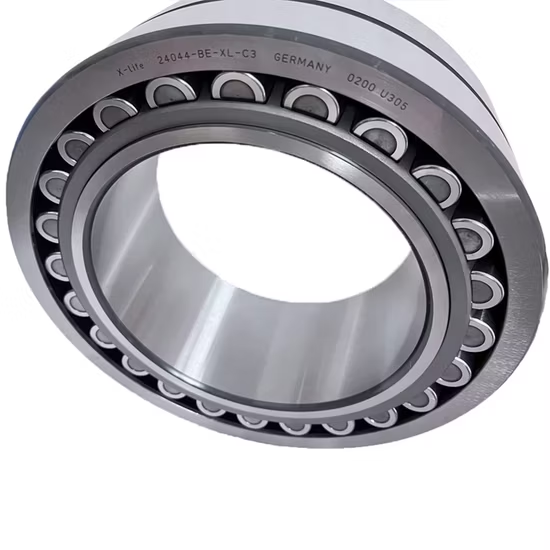


21321cc/W33 Spherical Roller Bearing — featuring W33 outer ring lubrication grooves and three holes for optimal grease distribution in vibrating screens and crushers.
Verify via official apps — Scan the manufacturer's QR code on every 21321cc/W33 packaging to confirm batch authenticity and traceability before installation.
| Parameter | Value |
|---|---|
| Designation | 21321cc/W33 |
| Bearing Type | Spherical Roller Bearing |
| Lubrication Feature | Outer ring groove with three lubrication holes (W33) |
| Cage Design | CC stamped steel cage (unverified suffix — requires manufacturer catalog confirmation) |
| Cross-Reference Equivalents | 21321ca/W33, 21321 |
| Industry | Typical Applications |
|---|---|
| Mining and Crushing | Vibrating screen eccentric shafts and jaw crusher pitman assemblies |
| Steel and Metallurgy | Continuous caster roll supports and rolling mill guide rollers |
| Pulp and Paper | Paper machine dryer cylinders and press section felt rolls |
Matching the base designation while ignoring the cage and lubrication suffixes guarantees premature failure under heavy shock loads.
In the harsh environment of Middle Eastern mining sites, I have witnessed entire crushing lines shut down because a maintenance team swapped a CC stamped steel cage for a CA machined brass variant without checking the internal design clearance. The resulting cage fragmentation under high-impact radial loads turns a simple replacement into a catastrophic rebuild. Procurement teams often assume a 21321cc/W33 spherical roller bearing is universally interchangeable with any 21321 variant, overlooking how specific cage geometries handle the extreme vibration of screening equipment .
Selecting the correct internal arrangement for a 21321cc/W33 spherical roller bearing ensures the rolling elements maintain proper alignment when the shaft deflects under uneven ore loads. Our technical review process cross-checks the exact cage type and internal clearance against your OEM equipment manual, preventing the thermal binding that occurs when a standard clearance part is forced into a high-temperature vibrating application.
Mining and crushing operations generate abrasive particulate matter that easily penetrates standard seals, making the W33 outer ring lubrication groove essential for survival. This specific feature allows maintenance crews to flush out contaminated grease and replenish the raceway without dismantling the housing, significantly extending the service interval. When combined with heavy radial and axial shock loads, the continuous supply of fresh lubricant prevents the microscopic scoring that eventually leads to spalling .
The W33 suffix dictates the presence of an annular groove and three lubrication holes in the outer ring, a non-negotiable requirement for vibrating screens that rely on continuous relubrication to dissipate heat. The CC design indicates a stamped steel window-type cage, which offers high fatigue strength and accommodates the severe accelerations typical of eccentric shafts. While the CC designation is noted as an unverified suffix requiring manufacturer catalog confirmation, ensuring this exact cage topology matches the original equipment prevents the roller skewing that plagues mismatched assemblies.
Installing a bearing that matches the basic dimensions but lacks the correct cage design or lubrication features inevitably leads to unplanned downtime and severe collateral damage to the shaft and housing. A lubrication-starved bearing in a jaw crusher will rapidly overheat, welding the rollers to the raceway and destroying the entire pitman assembly. These cascading failures void equipment warranties and transform a routine maintenance task into a multi-week production halt .
We maintain authorized distribution channels that allow us to source the precise 21321cc/W33 configuration, eliminating the guesswork of cross-brand substitutions. Every shipment is verified against the manufacturer's production facilities to ensure the internal clearance and cage materials align perfectly with your heavy-duty requirements. Our engineering team actively intercepts orders where the requested suffix conflicts with the stated application parameters, protecting your operation from the devastating consequences of a simple catalog misread.
To ensure the selected bearing survives your specific operating conditions, please provide the radial and axial load profiles, operating speeds, and ambient temperature ranges. If you are replacing an existing component, sharing the OEM equipment number allows our technical team to perform a comprehensive cross-reference check, verifying that the cage design and internal clearance perfectly match the original engineering intent.
Q: Why can't I freely interchange the CC and CA suffixes on a 21321 base number?
A: The CC and CA suffixes denote fundamentally different cage designs and internal geometries. A CC stamped steel cage handles high-speed vibration differently than a CA machined brass cage. Swapping them in a vibrating screen alters the roller guidance, leading to cage fracture and premature failure under heavy shock loads.
Q: How does the W33 feature benefit maintenance in dusty mining environments?
A: The W33 suffix indicates an annular groove and three holes in the outer ring. This allows maintenance crews to pump fresh grease directly into the center of the bearing, effectively flushing out abrasive mining dust and preventing lubrication starvation without dismantling the heavy crusher housing.
Q: How do you verify the authenticity of the QR codes on the packaging?
A: Counterfeiters often clone standard QR codes that link to fake websites. We provide bearings with batch traceability that must be scanned using the specific brand's official mobile application. This direct database check confirms the exact manufacturing origin and rejects cloned labels.
Q: What is the difference in vibration resistance between stamped steel and machined brass cages?
A: Stamped steel cages are generally lighter and offer excellent fatigue strength for high-frequency vibrating screens, while machined brass cages provide superior durability under extreme shock loads and boundary lubrication conditions. The correct choice depends entirely on the specific vibration frequency and load profile of your equipment.
Q: How should I determine the correct internal clearance for my vibrating screen?
A: Vibrating screens generate significant friction heat, requiring a larger internal clearance like C3 or C4 to compensate for thermal expansion. If a standard CN clearance is installed, the bearing will thermally bind as it reaches operating temperature, causing rapid seizure and catastrophic shaft damage.
Our 5-step process ensures every order is engineered, validated, and supported for optimal performance.
Technical needs assessment
Custom specifications
Free samples for $50k+
Pre-shipment inspection
On-site & predictive
Our certified engineers respond within 24 hours with detailed technical specifications, pricing, and lead time information.


