01
Consultation
Technical needs assessment



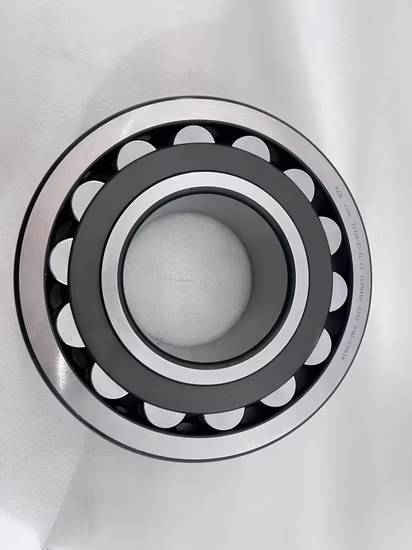


21310 Spherical Roller Bearing — engineered for mining machinery and oil pumps, accommodating heavy radial loads and shaft misalignment in demanding environments.
Batch Traceability Guaranteed — Every 21310 spherical roller bearing we supply includes manufacturer lot tracking to verify its authentic origin.
| Parameter | Value |
|---|---|
| Designation | 21310 |
| Bearing Type | Spherical Roller Bearing |
| Origin | Germany / Japan / Sweden / Malaysia / China |
| Feature | Low Noise, High Speed, Long Service Life |
| HS Code | 8482500090 |
| Industry | Typical Applications |
|---|---|
| Mining Machinery | Vibrating screens, jaw crushers, and heavy-duty material handling conveyors |
| Oil & Gas | Truck-mounted oil pumps and high-pressure fluid transfer systems |
| Steel & Metallurgy | Continuous casting equipment and rolling mill roller tables |
Matching the base designation without verifying internal clearances and cage materials leads to rapid thermal binding.
I have seen entire crushing lines shut down in Ethiopian mining sites because a standard clearance variant was installed where a C3 was required for thermal expansion. When operating in high-ambient-temperature environments, ignoring the specific suffix requirements causes the internal components to expand and seize under load. A significant share of premature failures stems from these exact cross-reference errors, where the base number aligns but the internal design fails the application .
Selecting the correct 21310 spherical roller bearing requires looking beyond the catalog number to evaluate the actual operating conditions. Our technical team reviews your specific load profiles and rotational speeds to ensure the internal geometry and cage design align with the equipment's demands. This application-based selection review prevents the mismatched installations that typically lead to early cage fatigue or roller skidding in vibrating screens and truck-mounted pumps.
Heavy machinery in mining and oil extraction faces severe shock loads combined with extreme temperature fluctuations. These conditions demand careful attention to radial internal clearance, as thermal expansion from the shaft and housing can eliminate internal play, leading to destructive friction. Proper lubrication routing is equally critical to flush out abrasive dust and maintain a stable oil film . Without the correct clearance class and lubrication features, the bearing will rapidly overheat and fail.
The base identifier 21310 defines the fundamental boundary dimensions and spherical roller geometry, but the operational success depends on the specific variant deployed. In high-vibration crushers, a machined brass cage is often necessary to withstand the intense shaking that would quickly fracture a standard pressed steel cage. Similarly, when shaft deflection or thermal growth is expected, upgrading from a normal clearance to a C3 or C4 class prevents the rollers from binding. Tapered bore variants, often indicated by a K suffix in related series, allow for precise clearance adjustment during mounting on adapter sleeves.
Installing a bearing that matches the base number but lacks the correct internal design inevitably results in unplanned downtime. When a standard clearance bearing seizes in a high-temperature pump, it often causes catastrophic damage to the shaft and housing, voiding equipment warranties. These secondary damages far exceed the initial component cost, turning a simple maintenance task into a major rebuild project .
Procuring genuine components requires more than just matching the part number on a quote. We supply the 21310 spherical roller bearing with full batch traceability, ensuring you receive authentic products directly from the manufacturer's production facilities. Our cross-reference alignment checks guarantee that the clearance class and cage material match your exact requirements, eliminating the guesswork. Furthermore, we provide comprehensive documentation to verify the metallurgical integrity and dimensional accuracy before the parts ever reach your site.
To ensure the selected variant perfectly matches your machinery, please provide the specific radial and axial loads, operating speeds, and ambient temperature ranges. Sharing the OEM equipment number allows our engineering team to perform a precise cross-reference check against the original factory specifications. This technical review guarantees that the clearance, cage material, and sealing arrangement are optimized for your exact application.
Q: How do cross-reference errors in clearance cause field failures in spherical roller bearings?
A: Matching only the base number often overlooks the required internal clearance. If a normal clearance bearing is installed in a high-temperature application, thermal expansion eliminates the internal play, causing the rollers to bind and seize. This rapid thermal binding leads to catastrophic cage failure and unplanned downtime.
Q: What are the authorized verification methods to detect cloned QR codes?
A: Counterfeiters often clone visual QR codes that pass casual inspection. To verify authenticity, scan the code using the official brand application, which cross-references the unique batch and lot numbers against the manufacturer's secure database. We provide original traceability documentation to support this verification process.
Q: How to choose the correct radial internal clearance for high-temperature mining applications?
A: High-temperature environments cause the inner ring and shaft to expand more than the outer ring and housing. Selecting a C3 or C4 clearance class provides the necessary extra internal play to accommodate this thermal growth. Our technical team reviews your specific operating temperatures to recommend the exact clearance class.
Q: What is the difference between standard cylindrical bore and tapered bore in these bearings?
A: A standard cylindrical bore is typically pressed onto a shaft, while a tapered bore is mounted on an adapter sleeve or tapered shaft seat. The tapered design allows maintenance crews to precisely adjust the radial internal clearance during installation by controlling the drive-up distance, which is critical for heavy-duty applications.
Q: Which cage materials are recommended for high-vibration crushing equipment?
A: High-vibration environments like vibrating screens and crushers subject the cage to intense accelerations. A machined brass cage is generally recommended for these applications, as it offers superior strength and wear resistance compared to standard pressed steel cages, significantly extending the service life under severe shaking conditions.
Our 5-step process ensures every order is engineered, validated, and supported for optimal performance.
Technical needs assessment
Custom specifications
Free samples for $50k+
Pre-shipment inspection
On-site & predictive
Our certified engineers respond within 24 hours with detailed technical specifications, pricing, and lead time information.


