01
Consultation
Technical needs assessment

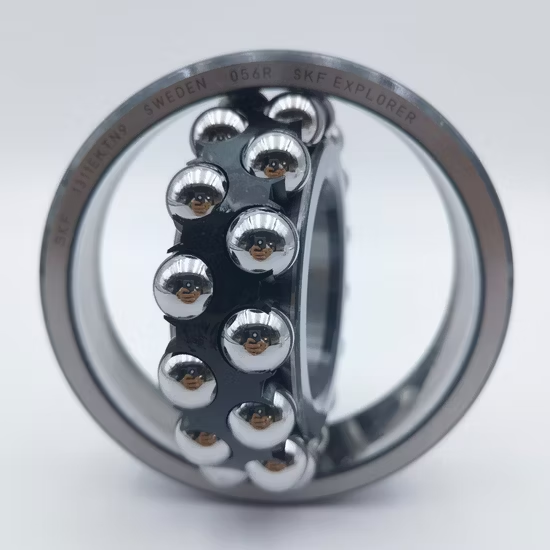
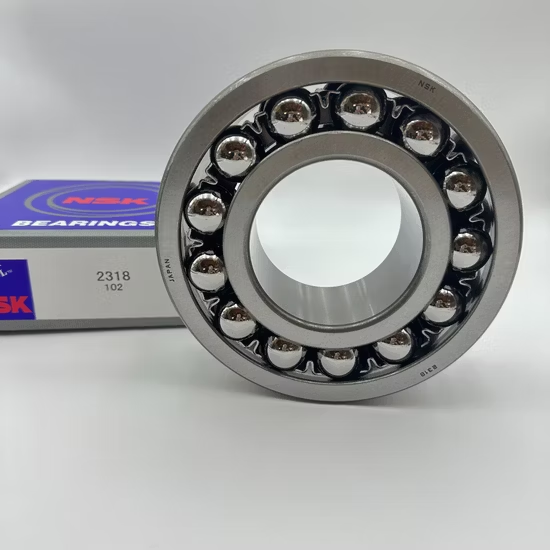


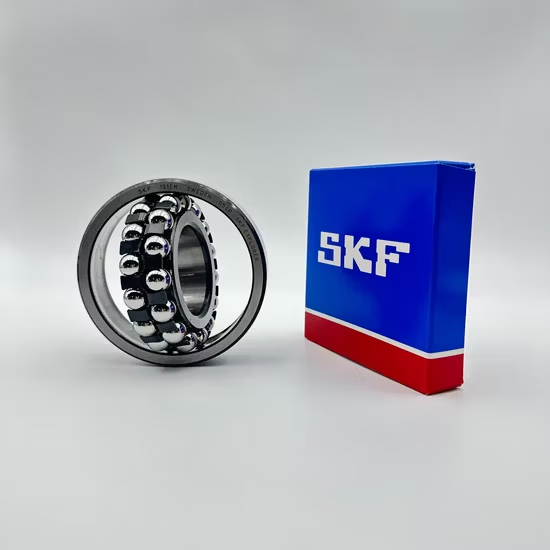

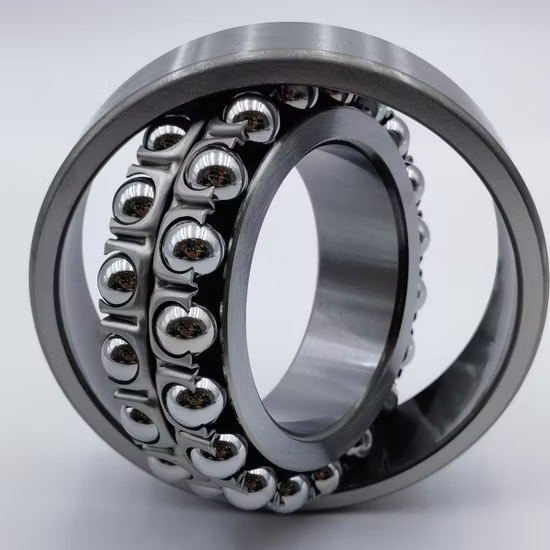
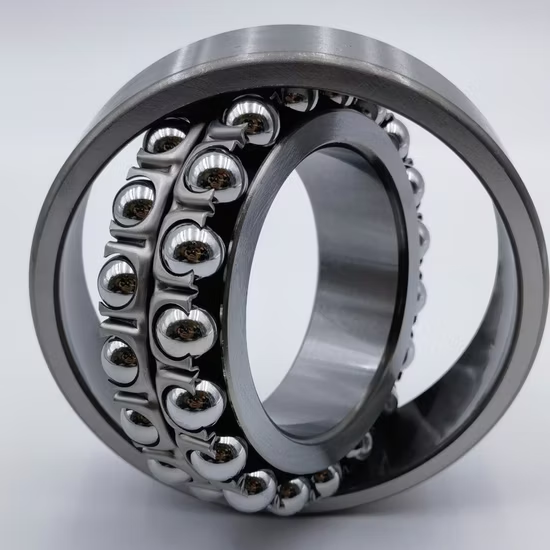
1215K Self-Aligning Ball Bearing integrates a 1:12 tapered bore for precise clearance adjustment on adapter sleeves, effectively accommodating angular misalignment in conveyors and agricultural machinery.
Traceable Batch Origins — Every 1215K unit ships with manufacturer lot documentation linking directly to the production facility.
| Parameter | Value |
|---|---|
| Designation | 1215K |
| Bearing Type | Self-Aligning Ball Bearing |
| Bore Type | 1:12 Tapered Bore |
| Seal or Shield Type | Open, Rubber Seals, Iron Seals options |
| Origin | Germany, Japan, Sweden, Malaysia, China options |
| Industry | Typical Applications |
|---|---|
| Material Handling | Conveyor drive shafts subject to frame deflection |
| Agriculture | Harvester gearboxes operating in high-dust environments |
| Textile Manufacturing | Spinning machine rollers requiring misalignment compensation |
| General Industrial | Pump motor assemblies and industrial gearbox shafts |
Base number matching is never enough when thermal expansion and shaft deflection are in play.
Sourcing teams frequently approve replacements based solely on the 1215 prefix, overlooking the critical K suffix or the required internal clearance. In high-ambient-temperature regions like the Middle East, installing a standard clearance variant where a C3 was specified leads to rapid thermal binding. The inner ring expands against the tapered shaft, eliminating the operational clearance and causing catastrophic seizure within hours of startup . Cross-reference errors that ignore seal variants also allow abrasive dust to *inding paste.
The 1215K self-aligning ball bearing is engineered specifically to handle angular misalignment between the shaft and the housing. This capability is vital for conveyor systems and agricultural equipment where structural frames flex under dynamic loads. By allowing the inner ring and ball assembly to swivel freely within the spherical outer ring raceway, it prevents edge loading that would otherwise fracture standard deep groove alternatives.
Operating in harsh environments demands careful consideration of thermal gradients and contamination. High ambient temperatures dictate the need for expanded internal clearance to accommodate the differential expansion between the shaft and the bearing rings. Furthermore, the 1:12 tapered bore requires precise locknut tightening during installation to achieve the correct residual clearance. Selecting the appropriate seal—whether non-contact iron shields for higher speeds or rubber seals for maximum dust exclusion—directly dictates the relubrication interval and overall service life .
The K suffix designates the 1:12 tapered bore, a feature that allows the bearing to be mounted directly onto a tapered shaft or, more commonly, paired with a tight-fitting adapter sleeve. This setup enables precise adjustment of the radial internal clearance during mounting. The available sealing configurations offer distinct operational boundaries: open designs rely on external housing seals and regular regreasing, iron seals provide non-contact protection against large particulates with minimal friction, and rubber seals offer contact-type exclusion for highly contaminated, lower-speed applications. Choosing the correct internal clearance class is equally critical; while CN suits standard temperatures, C3 or C4 variants are mandatory when the shaft operates at elevated temperatures to prevent the clearance from closing entirely under thermal load.
Substituting a cylindrical bore variant or ignoring the required clearance class inevitably leads to unplanned downtime. When the residual clearance is consumed by thermal expansion or excessive sleeve tightening, the rolling elements skid rather than roll, generating intense localized heat. According to the failure classification frameworks outlined in ISO 15243, this smearing and subsequent cage failure often destroy the shaft journal and housing bore, escalating a simple component replacement into a major mechanical rebuild .
Procuring mixed-brand requirements from a single authorized source eliminates the coordination delays of managing multiple vendors. We verify cross-references not just on the base 1215 number, but by strictly aligning the K tapered bore suffix, the specific seal type, and the internal clearance class to your OEM specifications. Every shipment includes batch traceability to the manufacturer, ensuring that the metallurgical quality and dimensional tolerances match the original design intent without relying on unverified secondary market stock.
To ensure the selected configuration perfectly matches your operational demands, provide the radial and axial load profiles, operating speeds, and ambient temperature ranges. Sharing the OEM equipment number or the exact adapter sleeve designation allows our technical team to verify the cross-reference alignment and confirm the L10 life calculation for your specific application.
Q: How does the 1215K tapered bore differ from the standard cylindrical bore during installation?
A: The 1:12 tapered bore requires mounting via an adapter sleeve or a tapered shaft journal. This allows the installer to mechanically adjust the radial internal clearance by controlling the drive-up distance of the locknut, whereas the cylindrical bore relies entirely on the factory-set clearance and press-fit tolerances.
Q: What boundaries dictate the choice between rubber and iron seals for this bearing?
A: Iron seals provide non-contact protection ideal for higher-speed applications where friction heat must be minimized, though they allow fine dust ingress. Rubber seals offer superior contact-type exclusion for high-dust environments but generate more friction, making them better suited for moderate-speed agricultural or conveyor applications.
Q: How do you ensure cross-referenced brands match the original equipment requirements?
A: We perform a three-point alignment check that goes beyond the base 1215 number. We verify the K tapered bore suffix, the exact seal configuration, and the internal clearance class to ensure the alternative brand matches the thermal and mechanical demands of your specific machinery.
Our 5-step process ensures every order is engineered, validated, and supported for optimal performance.
Technical needs assessment
Custom specifications
Free samples for $50k+
Pre-shipment inspection
On-site & predictive
Our certified engineers respond within 24 hours with detailed technical specifications, pricing, and lead time information.