01
Consultation
Technical needs assessment



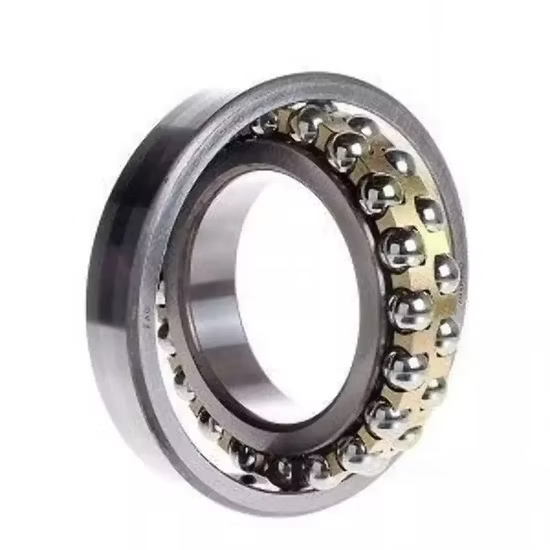
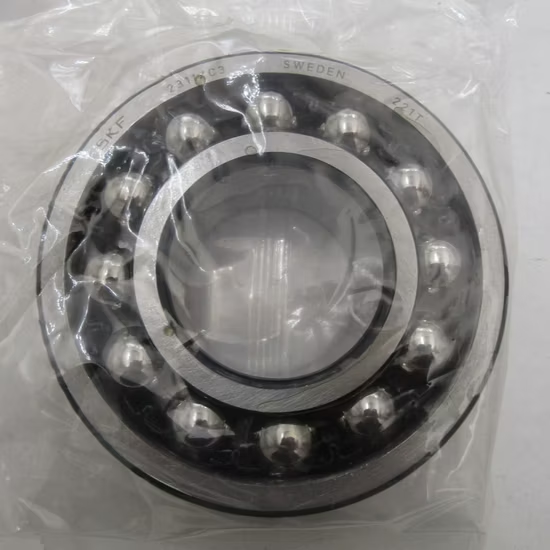
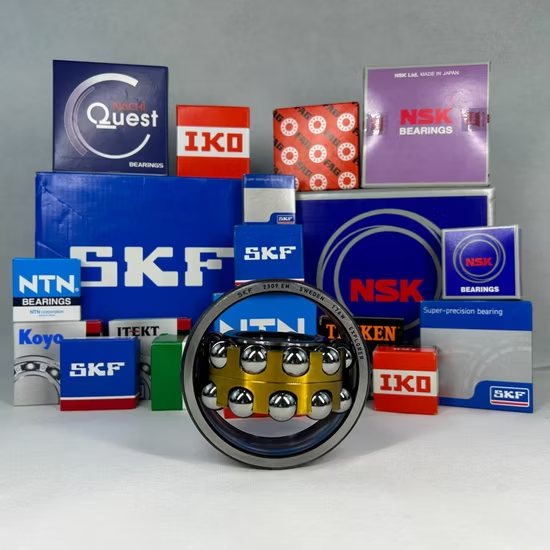
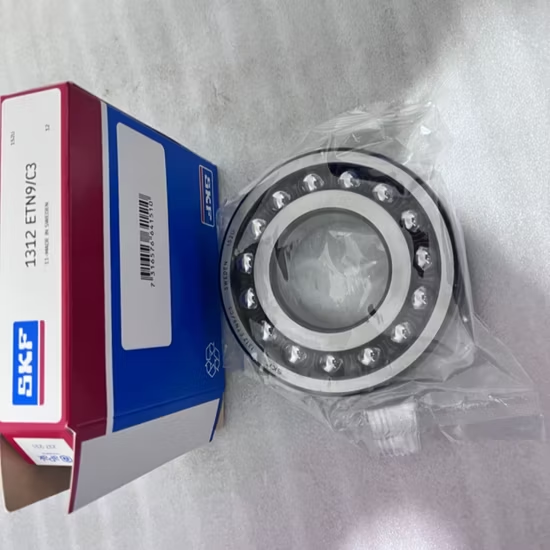
1213 Double Row Self-Aligning Ball Bearing P0/P5/P6
Unified Multi-Brand Sourcing — Consolidate your 1213 self-aligning ball bearing requirements across major international manufacturers through a single authorized distribution channel.
| Parameter | Value |
|---|---|
| Designation | 1213 |
| Bearing Type | Self-Aligning Ball Bearing |
| Number of Rows | Double Row |
| Precision Class | P0, P5, P6 |
| Seal or Shield Type | Open, Rubber Seals, Iron Seals |
| Origin | Germany, Japan, Sweden, Malaysia, China |
| Industry | Typical Applications |
|---|---|
| Electric Motors | Rotor shaft support accommodating minor housing misalignment |
| Industrial Gearboxes | Intermediate shaft mounting subjected to continuous vibration |
| Agricultural Machinery | Conveyor drive rollers operating in high-dust environments |
| Material Handling | Belt pulley shafts experiencing structural frame deflection |
| Textile Machines | Spindle drive shafts requiring smooth, low-noise rotation |
Matching the base designation alone ignores critical internal clearance and cage material differences that trigger thermal binding.
During a field investigation in Foshan, I saw a high-temperature fan lock up completely because a standard clearance variant was installed where thermal expansion demanded a looser internal fit. The cage deformed under extreme heat, proving that ignoring suffix details leads to catastrophic downtime . Procurement teams often focus solely on the base number, overlooking how internal design variations dictate operational survival in demanding machinery.
The 1213 self-aligning ball bearing accommodates angular misalignment between the shaft and housing, protecting the equipment from destructive edge loading. Its double-row configuration distributes radial loads evenly across the raceway, ensuring stable operation in electric motors and gearboxes. By verifying the exact internal geometry, we ensure the selected variant matches the specific deflection characteristics of your machinery.
Operating environments dictate whether an open, rubber-sealed, or iron-shielded configuration is required to balance friction and contamination ingress. In agricultural or material handling applications, airborne dust necessitates robust sealing, yet rubber seals introduce friction that elevates operating temperatures. Selecting the appropriate seal type prevents lubricant degradation while maintaining the thermal stability required for high-speed rotation . Furthermore, precision class selection directly influences the running accuracy and vibration levels critical for textile machine spindles.
The availability of P0, P5, and P6 precision classes allows engineers to match the running accuracy to the specific vibration and noise constraints of the application. While P0 suffices for general material handling pulleys, P5 or P6 grades are essential for high-speed electric motors where rotational stability is paramount. The double-row self-aligning design inherently compensates for shaft deflection, but the internal clearance must be carefully matched to the operating temperature to prevent the rolling elements from binding under thermal expansion.
Deploying a variant with incorrect internal clearance or an incompatible cage material inevitably results in unplanned downtime and premature failure. When thermal expansion eliminates the internal clearance, the resulting friction generates excessive heat, leading to catastrophic damage to the raceway and rolling elements. Such failures not only halt production but often result in warranty voidance due to improper specification selection .
We execute cross-reference matching based on internal clearance, cage material, and precision suffixes, rather than relying solely on the base designation. Our technical team reviews application parameters to prevent the exact thermal binding scenarios that destroy high-temperature fans. Every shipment includes batch traceability to the manufacturer, ensuring authenticity and eliminating the risk of counterfeit components with soft inner rings. We consolidate mixed-brand requirements into single orders, supported by official QR verification for complete supply chain transparency.
Share your radial and axial load profiles, operating speeds, and thermal conditions to facilitate precise internal clearance selection. Providing the original OEM equipment number allows our engineering team to perform a comprehensive cross-reference review. This technical validation ensures the selected variant aligns perfectly with your operational requirements and prevents premature field failures.
Q: Why is cross-referencing suffixes critical when replacing a 1213 bearing?
A: Base numbers only define the external dimensions. Internal clearance, cage material, and precision grades dictate how the bearing handles thermal expansion and load. Replacing a high-clearance variant with a standard one in a hot environment causes thermal binding and rapid failure. We verify all suffixes to ensure exact operational equivalence.
Q: How do P0, P5, and P6 precision classes differ in practical applications?
A: P0 is the standard class suitable for general industrial gearboxes and material handling where minor vibration is acceptable. P5 and P6 offer tighter dimensional and running accuracy tolerances, which are mandatory for high-speed electric motors and textile machinery to minimize vibration, reduce noise, and ensure smooth rotational stability.
Q: What is the selection boundary between rubber seals and iron shields?
A: Rubber seals provide superior protection against dust and moisture ingress, making them ideal for agricultural machinery, but they generate higher friction heat. Iron shields offer non-contact protection with lower friction, suiting high-speed electric motors where temperature control is critical but contamination levels are relatively low.
Q: How can I verify the authenticity and batch traceability of the bearings?
A: Every unit we supply features batch traceability linked to the manufacturer. You can verify authenticity by scanning the QR codes using the brand's official mobile application. We also provide a Certificate of Conformity and dimensional inspection reports to confirm the exact precision grade and origin.
Our 5-step process ensures every order is engineered, validated, and supported for optimal performance.
Technical needs assessment
Custom specifications
Free samples for $50k+
Pre-shipment inspection
On-site & predictive
Our certified engineers respond within 24 hours with detailed technical specifications, pricing, and lead time information.