01
Consultation
Technical needs assessment


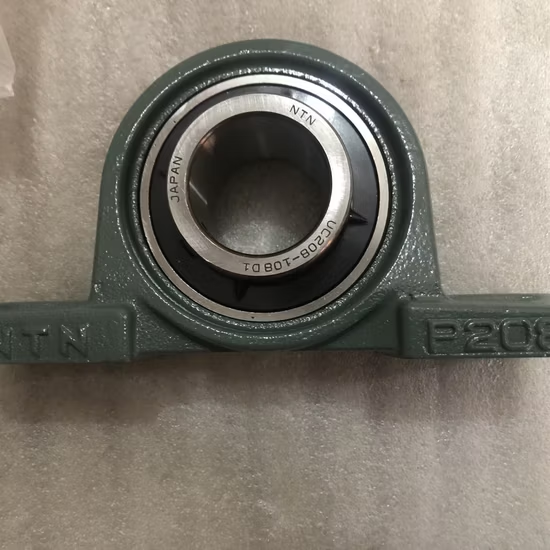
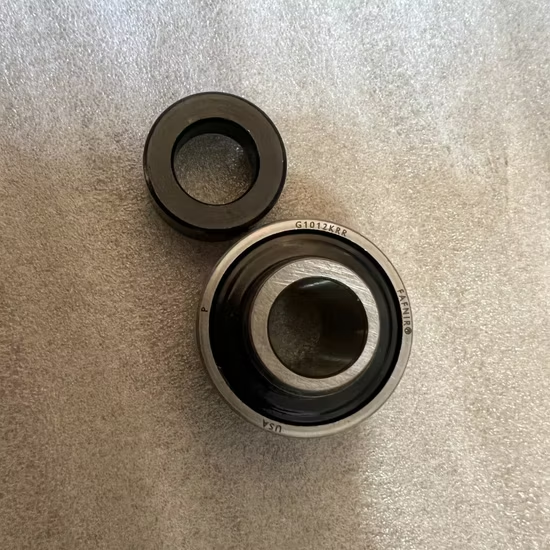
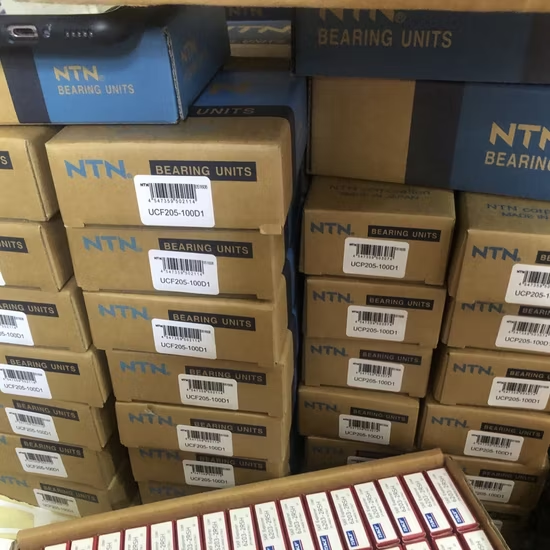
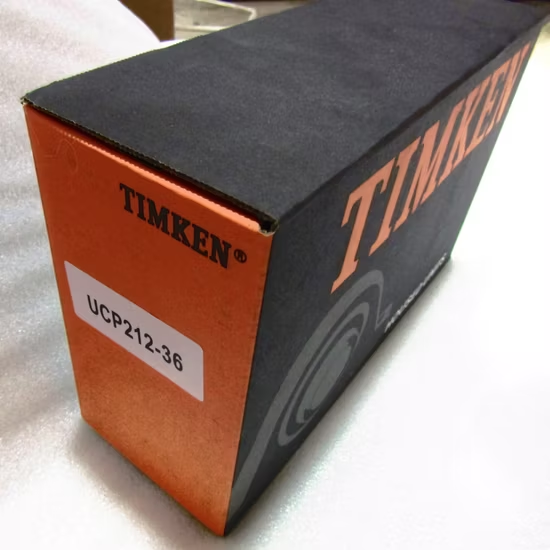
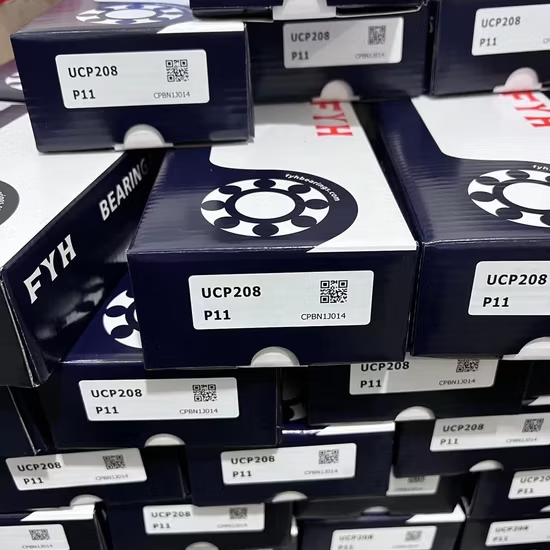
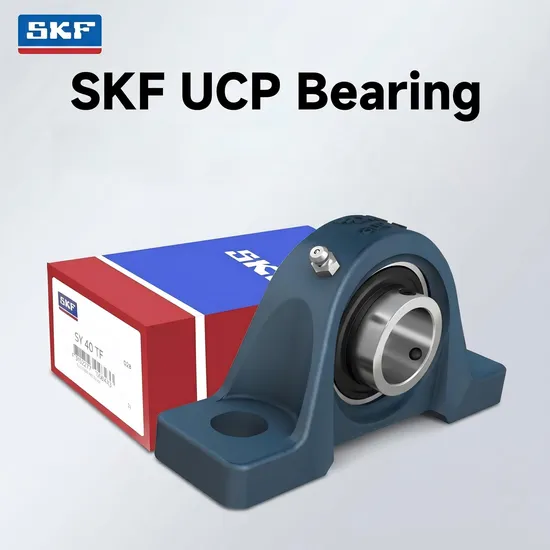
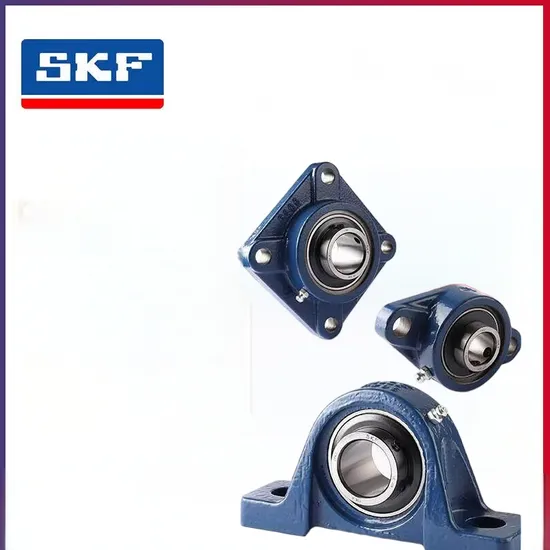
UCT212-36 Take-up Unit Bearing
Multi-brand authorized coverage — Source genuine UCT212-36 take-up units from SKF, FAG, or NSK in a single consolidated shipment without juggling multiple vendors.
| Parameter | Value |
|---|---|
| Designation | UCT212-36 |
| Bearing Type | Pillow Block Bearing (Take-up Unit) |
| Rows Number | Single |
| Raceway | Deep Groove Raceway |
| Housing Material | Cast Iron |
| Locking Mechanism | Set Screw (UC series) |
| Housing Style | Take-up Unit (T series) |
| Duty Series | Standard / Wide Inner Ring (2 series) |
| Feature | Corrosion Resistant, High Temperature, High Speed |
| Origin | Germany, Japan, Sweden, Malaysia, China |
Note: The "-36" suffix is an unverified designation requiring manufacturer catalog confirmation for exact inch-series bore dimensions or specific shaft tolerances.
| Industry | Typical Applications |
|---|---|
| Material Handling | Conveyor belt tensioning and tracking mechanisms |
| Agriculture | Harvester drive chain adjusters and elevator sprockets |
| Textile | Yarn guide rail tensioners and loom take-up rollers |
Sourcing from a verified UCT212-36 pillow block bearing supplier is only the first step; preventing premature thermal binding requires strict suffix and clearance verification.
Matching the base designation while ignoring internal clearance and seal variants guarantees field failure under heavy agricultural dust or continuous conveyor loads.
Procurement teams often assume that an identical UCT212 prefix means direct interchangeability across different manufacturers. However, installing a standard CN clearance unit where a C3 equivalent was specified for thermal expansion leads to rapid cage disintegration and shaft seizing . Having investigated sugar mill conveyors that halted production due to misapplied insert bearings, I know that cross-referencing must account for the exact operating temperature and shock load profile. A base number match is meaningless if the internal geometry and sealing arrangements do not align with the physical demands of the take-up frame.
Selecting the correct UCT212-36 pillow block bearing supplier ensures that the deep groove raceway and cast iron housing are optimized for continuous radial loads and axial displacement. Take-up units are specifically designed to maintain belt or chain tension, meaning the bearing must accommodate constant radial stress while sliding within the guide frame. Our technical review process verifies that the wide inner ring and set screw locking mechanism provide sufficient clamping force to prevent shaft fretting, even when the equipment experiences sudden start-stop cycles typical in bulk material handling.
Agricultural and material handling environments introduce severe contamination risks that compromise standard bearing life. High volumes of particulate matter can infiltrate the raceway if the seal type is inadequate, while outdoor temperature fluctuations dictate the necessary internal clearance to prevent thermal binding . Proper lubrication is equally critical; while sealed variants retain factory grease, open or shielded configurations require strict regreasing intervals to purge abrasive particles. Furthermore, the cast iron housing must withstand corrosive exposure from fertilizers or washdown procedures without degrading the mounting surface precision.
The UCT212-36 designation reveals critical structural and dimensional parameters essential for proper fitment. The "UC" prefix identifies an insert bearing with a set screw locking mechanism, ensuring secure shaft attachment without complex adapters. The "T" designates the take-up unit housing, engineered with guide flanges for linear movement along a tensioning frame. The "212" series indicates a standard duty wide inner ring configuration, providing balanced load distribution for moderate to heavy radial forces. While the basic size code points to specific metric dimensions, the exact shaft bore requirements tied to the "-36" suffix must be validated against the OEM equipment manual to avoid misalignment.
Overlooking minor suffix discrepancies during cross-referencing frequently results in catastrophic equipment damage and unplanned downtime. When a replacement unit lacks the correct internal clearance for high-temperature conveyor ovens, the rolling elements skid rather than roll, destroying the raceway within hours . This premature failure not only voids manufacturer warranties but also forces emergency maintenance shutdowns that halt entire production lines. Relying on superficial catalog matches rather than comprehensive application-based selection inevitably shifts the financial burden of lost output onto the end user.
Our authorized multi-brand coverage allows you to consolidate mixed-brand requirements for UCT212-38, UCT212-39, or UCT213-40 equivalents into a single, fully traceable order. We strictly verify cross-brand interchangeability by matching internal clearance classes, cage materials, and seal configurations, rather than relying solely on base designations. Every shipment includes batch traceability to the manufacturer, eliminating the risk of counterfeit units with soft inner rings that fail under shock loads. Furthermore, our application-based selection review evaluates your specific load, speed, and temperature parameters to ensure the chosen take-up unit survives the actual operating environment.
To ensure optimal performance and longevity, please provide detailed operational parameters including radial and axial loads, rotational speeds, and ambient temperature ranges. Sharing the specific OEM equipment model numbers allows our engineering team to perform precise cross-reference verification and L10 life calculations. This technical data enables us to confirm the exact sealing requirements and internal clearance class necessary for your specific material handling or agricultural application.
Q: How can I verify the authenticity of the received take-up units?
A: Every genuine unit features a unique QR code and batch number that can be scanned using the manufacturer's official mobile application. This digital verification confirms the production origin and ensures the deep groove insert bearing and cast iron housing meet original equipment specifications, protecting your operation from counterfeit components with compromised metallurgical integrity.
Q: Why is matching the internal clearance suffix critical during cross-referencing?
A: Base designations often ignore thermal expansion requirements. Installing a standard clearance bearing in a high-temperature conveyor application causes the internal gap to close, leading to thermal binding and cage failure. We verify the exact clearance class to ensure the rolling elements maintain proper operational geometry under your specific thermal and load conditions.
Q: What are the mounting requirements for the UCT take-up housing?
A: The housing must slide freely within the tensioning frame guides without binding. Ensure the guide rails are clean and aligned before tightening the frame bolts. The set screws on the wide inner ring must be torqued to the manufacturer's specifications to prevent shaft fretting while allowing the bearing to self-align slightly within the cast iron block.
Q: How do I select the correct seal type for dusty agricultural environments?
A: Agricultural machinery requires robust sealing to prevent particulate ingress that destroys the raceway. We evaluate your specific exposure to dust and moisture to recommend the appropriate contact or non-contact seal variants. Providing details about washdown procedures or fertilizer exposure helps us specify seals that maintain lubrication integrity without generating excessive friction heat.
Q: What documentation proves the country of origin and material quality?
A: We provide comprehensive documentation including a Certificate of Conformity, material test reports for the bearing steel and cast iron housing, and official country-of-origin certificates. These documents ensure full customs compliance and provide verifiable proof that the components were manufactured in authorized facilities meeting strict metallurgical standards.
Our 5-step process ensures every order is engineered, validated, and supported for optimal performance.
Technical needs assessment
Custom specifications
Free samples for $50k+
Pre-shipment inspection
On-site & predictive
Our certified engineers respond within 24 hours with detailed technical specifications, pricing, and lead time information.
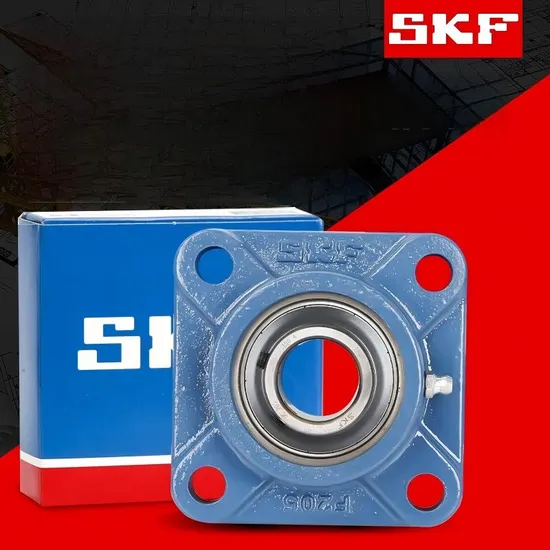
![[WARN] draft identifier mismatch UCPA201-UCPA209 Cast Iron Pillow Block Bearing Unit Timken NSK NTN Koyo NACHI FYH](https://skfiso.com/wp-content/uploads/2026/09/warn-draft-identifier-mismatch-ucpa201-ucpa209-cast-iron-pillow-block-bearing-unit-timken-nsk-ntn-koyo-nachi-fyh-a7faf2.avif)