01
Consultation
Technical needs assessment

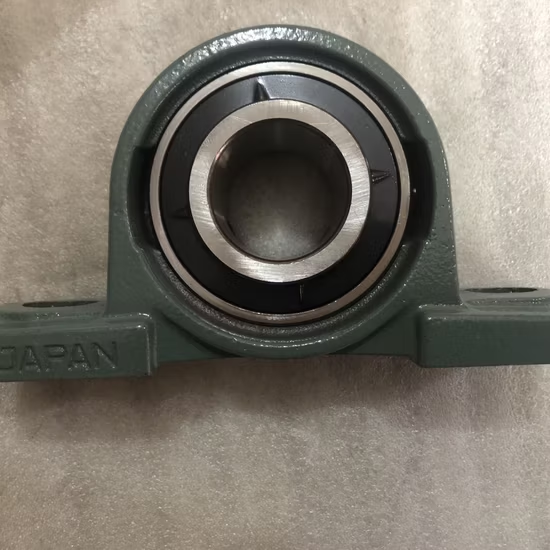
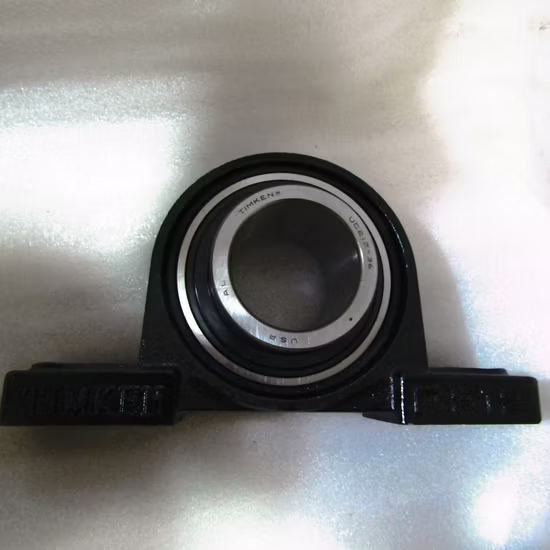
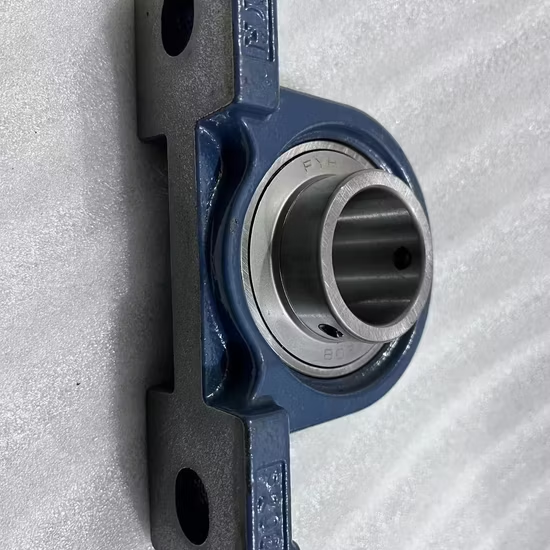


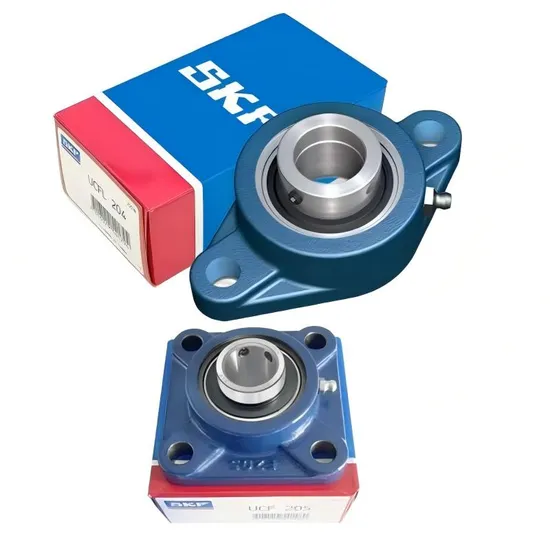
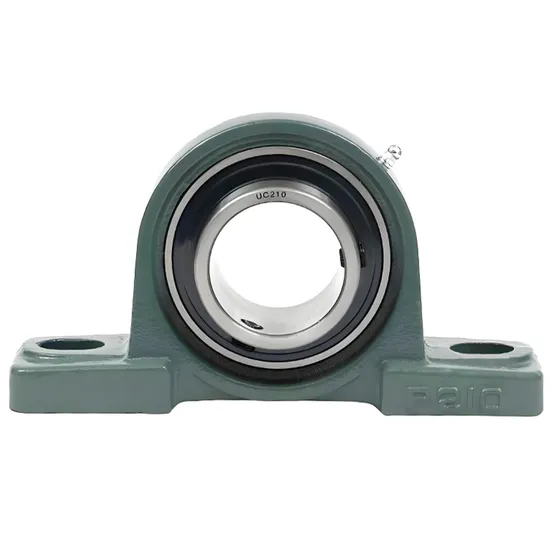
UCFL206-17 Insert Bearing with Flanged Pillow Block Housing 17 mm Bore — features a cast iron housing and deep groove raceway for high-temperature agricultural and conveyor applications.
Verify cross-reference alignment on internal clearance, cage material, and precision suffixes beyond the base designation to prevent field failures.
Official App QR Verification — Scan the housing code to confirm the UCFL206-17 batch origin directly through the manufacturer's proprietary application.
| Parameter | Value |
|---|---|
| Designation | UCFL206-17 |
| Product Type | Pillow Block Unit |
| Bore Diameter (d) | 17 mm |
| Housing Series | 206 |
| Housing Configuration | Flanged (UCFL) |
| Block Model | P |
| Raceway Design | Deep Groove |
| Number of Rows | Single |
| Housing Material | Cast Iron |
| Operational Features | Corrosion Resistant, High Temperature, High Speed |
| Origin Options | Germany, Japan, Sweden, Malaysia, China |
| HS Code | 8483200000 |
| Industry | Typical Applications |
|---|---|
| Agricultural Machinery | Harvester drive shafts, irrigation pump mounts, fertilizer spreader augers |
| Material Handling | Belt conveyor tail pulleys, bucket elevator return sprockets, roller bed supports |
| Textile Manufacturing | Yarn winding spindles, loom let-off mechanisms, fabric tensioning rollers |
Matching the base designation without verifying internal geometry guarantees field failure.
Procurement teams frequently source replacements based solely on the UCFL prefix and bore size, ignoring the fact that agricultural and conveyor environments demand specific internal clearances and seal configurations. I previously investigated a catastrophic downtime event where a standard CN clearance insert was installed in a high-temperature grain drying conveyor. The thermal expansion caused the inner ring to bind against the shaft, tearing the cage apart within hours. A genuine UCFL206-17 pillow block unit must be evaluated for its specific seal friction and thermal expansion limits, not just its outer dimensions .
Conveyor tail pulleys and agricultural drive shafts subject flanged housings to continuous radial loads combined with moderate axial displacement from belt tensioning. The UCFL206-17 pillow block unit addresses this through its two-bolt oval flange design, which accommodates slight shaft misalignment while maintaining a rigid mounting footprint. Sourcing from authorized channels ensures the cast iron housing porosity and insert seating tolerances meet the exact specifications required to prevent fretting corrosion at the housing-insert interface.
Outdoor agricultural equipment and indoor textile mills present opposing environmental extremes. High ambient temperatures in harvesting equipment dictate the need for expanded radial internal clearance to compensate for thermal shaft growth, preventing the inner ring from seizing. Conversely, textile environments introduce fine particulate dust that rapidly degrades standard lubricants. Selecting the correct seal type—balancing contact friction against contamination ingress—is critical, as is specifying corrosion-resistant variants when the equipment is exposed to fertilizer chemicals or frequent washdowns .
The designation breaks down into three critical selection parameters. "UCFL" specifies an insert bearing housed within a two-bolt oval flanged block, designed for perpendicular shaft mounting where space is constrained. The "206" series indicates the housing dimensions and load-carrying capacity of the outer ring, ensuring it fits standard OEM mounting brackets. The "-17" suffix confirms the precise 17 mm bore diameter, which is essential for shaft fit calculations. Overlooking any of these segments during cross-referencing often results in housings that physically bolt on but fail prematurely due to mismatched load ratings or improper shaft fits.
Installing counterfeit or improperly cross-referenced flanged units leads to unplanned downtime that far exceeds the initial component cost. Soft inner rings found in cloned units wear rapidly, causing the locking collar or set screws to lose grip on the shaft, which results in catastrophic shaft scoring. Furthermore, mismatched housing alloys can crack under shock loads typical in material handling, voiding equipment warranties and triggering secondary damage to adjacent drive components .
Sourcing the correct UCFL206-17 pillow block unit requires more than just finding the base number in a catalog. Our authorized distribution network covers all major international brands, allowing mixed-brand orders to be consolidated without sacrificing traceability. We actively review cross-references to ensure the replacement matches the original equipment's seal friction and clearance class, preventing the thermal binding issues common in agricultural applications. Every shipment includes batch verification, ensuring the cast iron housings and inserts originate from the manufacturer's production facilities.
To ensure the selected flanged housing survives your specific operating environment, provide our engineering team with your radial and axial load profiles, operating speeds, and ambient temperature ranges. This data allows us to verify the L10 life and recommend the appropriate internal clearance and seal configuration. If you are replacing an existing unit, sharing the OEM equipment number enables us to perform a precise cross-reference check, ensuring the replacement matches the original factory specifications.
Q: How do I verify the authenticity of the UCFL206-17 pillow block unit upon delivery?
A: Every genuine unit features a unique QR code laser-etched or labeled on the cast iron housing. By scanning this code using the manufacturer's official mobile application, you can instantly verify the batch number, production date, and origin. This digital traceability prevents the installation of cloned units with soft inner rings that pass casual visual inspections but fail under load.
Q: What cross-reference checks are necessary beyond the base UCFL206-17 designation?
A: Matching the base number is insufficient. You must verify the internal radial clearance to accommodate thermal expansion in high-heat applications, confirm the seal type matches the environmental contamination level, and ensure the locking mechanism (set screws or eccentric collars) aligns with your shaft design. Overlooking these suffixes leads to premature cage failure or thermal binding.
Q: How do I select the right housing material for harsh agricultural environments?
A: Standard cast iron housings are suitable for general conveyors, but agricultural machinery exposed to fertilizers or frequent washdowns requires corrosion-resistant variants. Providing your specific chemical exposure and moisture levels allows us to recommend the appropriate material options, ensuring the flange does not degrade or suffer from fretting corrosion at the mounting interface.
Q: What documentation is provided for customs clearance and quality assurance?
A: Each shipment includes a Certificate of Conformity, detailed batch traceability records, and country-of-origin documentation aligned with HS Code 8483200000. We also supply dimensional and running accuracy inspection reports upon request, ensuring the 17 mm bore and flange tolerances meet your precise engineering requirements before the units leave our facility.
Our 5-step process ensures every order is engineered, validated, and supported for optimal performance.
Technical needs assessment
Custom specifications
Free samples for $50k+
Pre-shipment inspection
On-site & predictive
Our certified engineers respond within 24 hours with detailed technical specifications, pricing, and lead time information.
![[WARN] draft identifier mismatch UCPA201-UCPA209 Cast Iron Pillow Block Bearing Unit Timken NSK NTN Koyo NACHI FYH](https://skfiso.com/wp-content/uploads/2026/09/warn-draft-identifier-mismatch-ucpa201-ucpa209-cast-iron-pillow-block-bearing-unit-timken-nsk-ntn-koyo-nachi-fyh-a7faf2.avif)