01
Consultation
Technical needs assessment


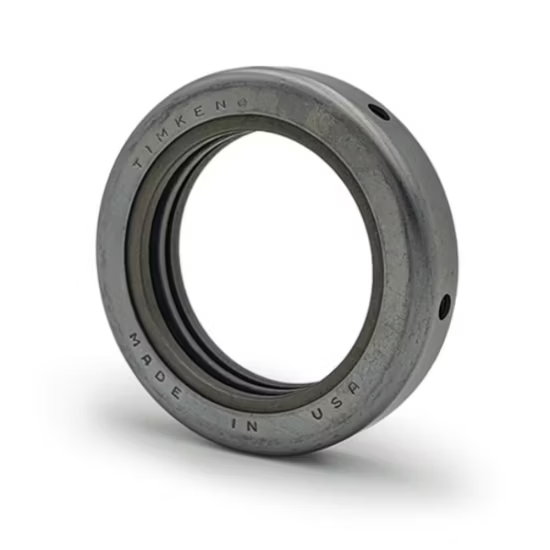
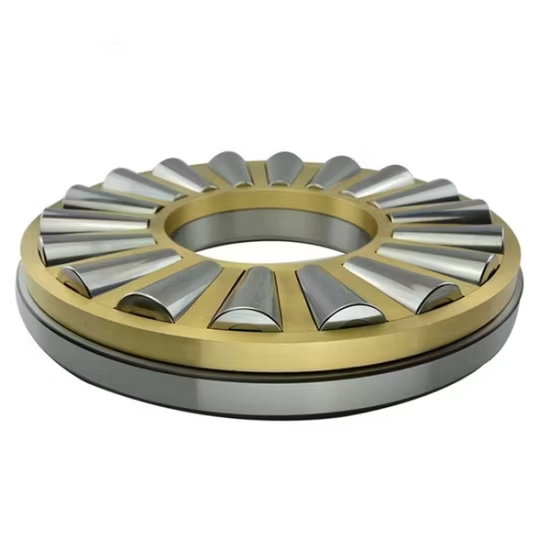


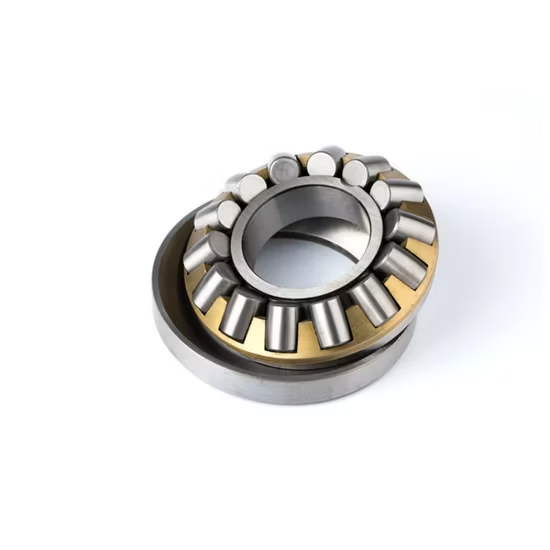
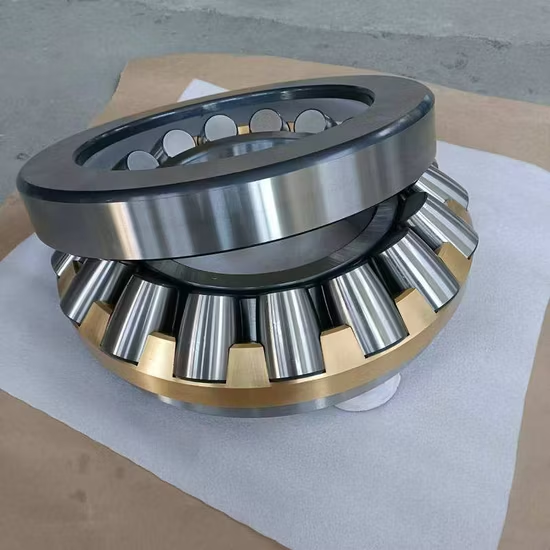
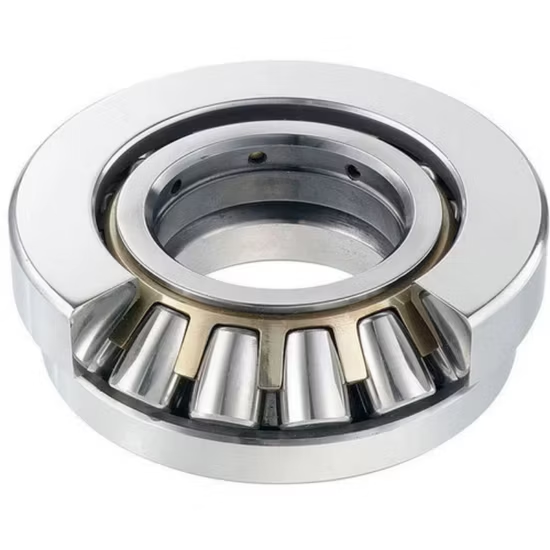
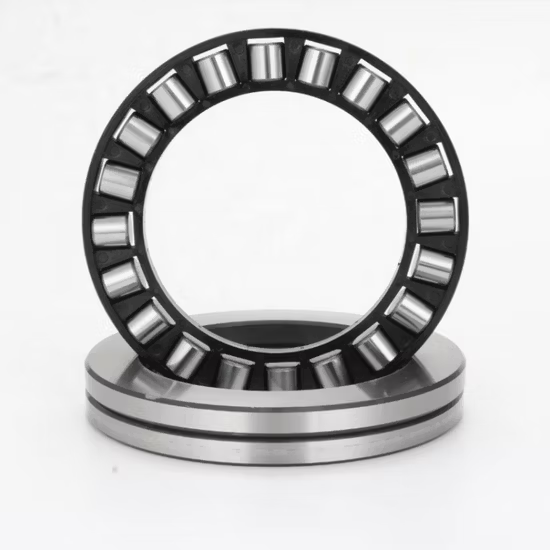
T350 Thrust Taper Roller Bearing 88.9×133.35×33.335 mm — designed for heavy axial load applications in mining, steel metallurgy, and material handling systems.
Every unit ships with full batch traceability and QR codes verifiable through the manufacturer's official app for assured authenticity.
Unified Multi-Brand Sourcing — Procure the T350 alongside other heavy-duty bearings in a single authorized shipment without juggling multiple suppliers.
| Parameter | Value |
|---|---|
| Designation | T350 |
| Bearing Type | Thrust Taper Roller Bearing |
| Bore Diameter (d) | 88.9 mm |
| Outside Diameter (D) | 133.35 mm |
| Width (T) | 33.335 mm |
| Vibration Class | Z1V1 / Z2V2 / Z3V3 |
| Industry | Typical Applications |
|---|---|
| Mining and crushing | Gyratory crusher main shaft thrust arrangements |
| Steel and metallurgy | Continuous casting machine oscillating tables |
| Material handling | Heavy-duty bucket elevator drive gearboxes |
Matching the basic designation is never enough to prevent catastrophic axial failure.
I once troubleshooted a batch of T350 bearings in Dubai that seized under high temperatures simply because the internal clearance and cage design were overlooked during cross-referencing. Procurement teams often assume that if the base number aligns, the replacement will perform identically, but ignoring internal geometry variations leads to rapid thermal binding. When heavy axial loads meet incorrect internal clearances, the resulting friction generates enough heat to weld the rollers to the raceway . Ensuring every suffix and internal design parameter aligns with the original equipment requirement is the only way to maintain uptime in extreme environments.
Selecting the correct T350 thrust taper roller bearing requires more than just verifying the envelope dimensions; it demands a thorough review of the operational environment. Our engineering team evaluates the specific axial loads, rotational speeds, and thermal profiles of your equipment to confirm that the chosen variant matches the OEM intent. By cross-referencing the exact internal contact angle and roller profile, we ensure the bearing integrates flawlessly into your existing thrust arrangements without requiring housing modifications.
Heavy-duty thrust applications subject components to immense unidirectional axial forces combined with severe shock loading from the driven equipment. Under these conditions, the friction generated within the roller-raceway contact zones elevates operating temperatures significantly, making the correct internal clearance absolutely critical to accommodate thermal expansion. If the clearance is too tight, the bearing will preload itself to destruction as the shaft and housing expand at different rates. Proper lubrication routing and maintaining strict cleanliness protocols further prevent abrasive particle ingress, which rapidly accelerates wear in heavily loaded thrust zones .
The 88.9 x 133.35 x 33.335 mm envelope of the T350 is engineered specifically to handle pure axial loads with high rigidity, utilizing tapered rollers to distribute stress evenly across the contact lines. Unlike standard cylindrical thrust designs, the tapered geometry helps mitigate edge stresses and skidding during startup or fluctuating load conditions. The availability of Z1V1 through Z3V3 vibration classes allows maintenance teams to specify tighter manufacturing tolerances for high-speed gearboxes where minimizing structural resonance is paramount. Selecting the appropriate vibration grade ensures smoother operation and reduces the transmission of dynamic forces to the surrounding housing structure.
Installing a thrust bearing with mismatched internal parameters inevitably leads to unplanned downtime and severe secondary damage to the gearbox or crusher shaft. When thermal binding occurs, the catastrophic failure often destroys the adjacent sealing systems and scoring the mating shaft surfaces, turning a simple component swap into a major rebuild. According to failure analysis frameworks, a significant share of premature bearing failures stems directly from application mismatches rather than manufacturing defects . Avoiding these compounding costs requires strict adherence to verified cross-referencing and application-specific technical validation before procurement.
Sourcing genuine components is the baseline for reliability, which is why we provide full batch traceability for every T350 shipped, allowing you to verify the origin directly through the manufacturer's official app. Cross-referencing errors are eliminated because our technical team checks the internal contact angle and cage material, not just the base designation. We support mixed-brand orders, meaning you can consolidate your SKF, FAG, or TIMKEN requirements into one coordinated dispatch. Furthermore, our application-based selection review ensures that the clearance and precision classes are explicitly matched to your equipment's thermal and load profiles.
To ensure the T350 is the optimal fit for your machinery, please provide the specific axial and radial load profiles, operating speeds, and continuous thermal conditions. Supplying the OEM equipment number or the original manufacturer's part number allows our engineers to perform a precise cross-reference and verify internal design compatibility. This technical data enables us to confirm the correct clearance class and deliver a comprehensive L10 life calculation tailored to your exact operational environment.
Q: What is the primary difference between a thrust taper roller bearing and a spherical thrust roller bearing?
A: Thrust taper roller bearings utilize tapered rolling elements to handle heavy pure axial loads with high rigidity, whereas spherical thrust roller bearings feature asymmetrical barrel rollers that accommodate combined loads and shaft misalignment. Selecting between them depends on whether the application requires strict axial alignment or tolerance for housing deflection.
Q: Beyond the base T350 designation, what internal parameters must align during cross-referencing?
A: Procurement teams must verify the internal contact angle, cage material, and specific clearance class to ensure the replacement matches the original equipment's thermal and load characteristics. Overlooking these internal design variants often results in premature thermal binding or cage failure under heavy operational stress.
Q: How can we verify the authenticity and origin of the supplied bearings?
A: Every unit is supplied with batch traceability documentation and a unique QR code that can be scanned using the manufacturer's official mobile application. This digital verification process confirms the production facility and instantly identifies cloned codes commonly found on counterfeit heavy-duty components.
Q: How do we determine the correct clearance and mounting preload for high-shock applications?
A: The required internal clearance depends on the interference fit of the shaft and the expected thermal expansion during operation. By sharing your specific load data and operating temperatures, our engineering team can calculate the necessary residual clearance to prevent the bearing from preload-binding under heavy shock loads.
Q: What mounting tools and heating protocols are recommended for imperial-sized thrust bearings?
A: Induction heaters with automatic demagnetization cycles should be used to expand the shaft washer, strictly avoiding open flames that cause localized softening. Temperature must be carefully monitored to stay within the manufacturer's limits, ensuring the 88.9 mm bore expands sufficiently without compromising the raceway hardness.
Our 5-step process ensures every order is engineered, validated, and supported for optimal performance.
Technical needs assessment
Custom specifications
Free samples for $50k+
Pre-shipment inspection
On-site & predictive
Our certified engineers respond within 24 hours with detailed technical specifications, pricing, and lead time information.