01
Consultation
Technical needs assessment
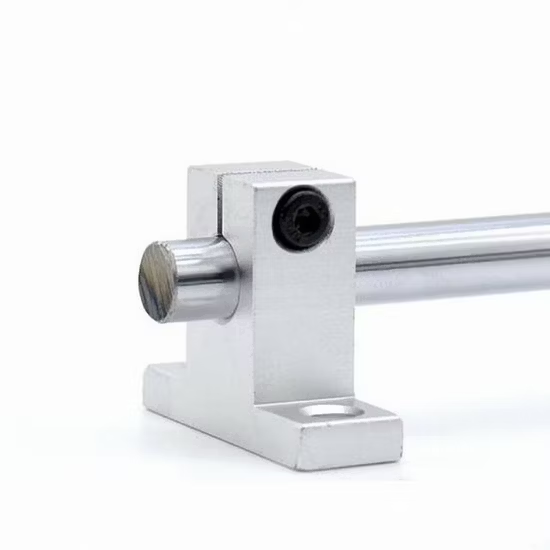
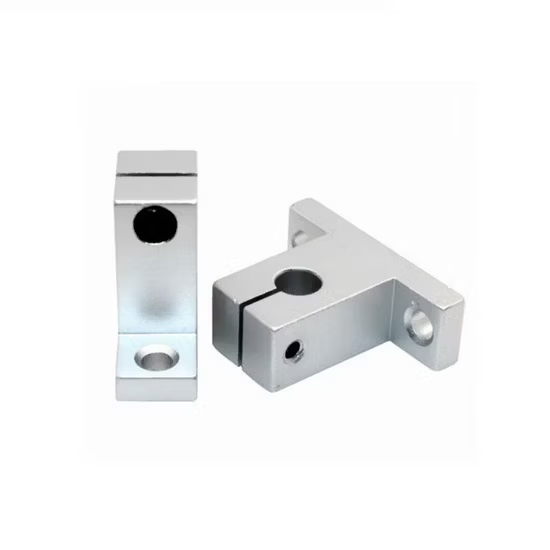
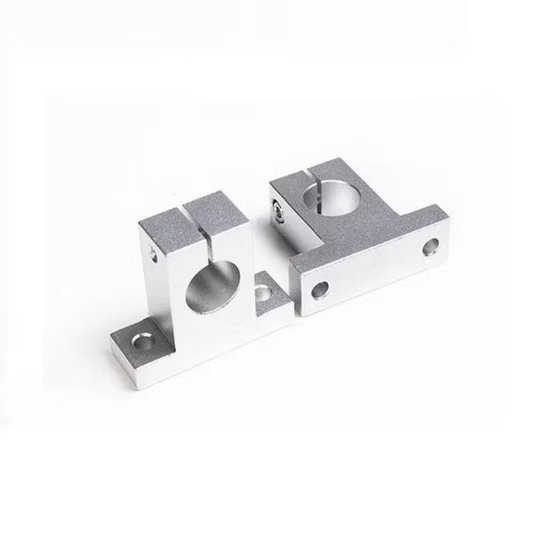
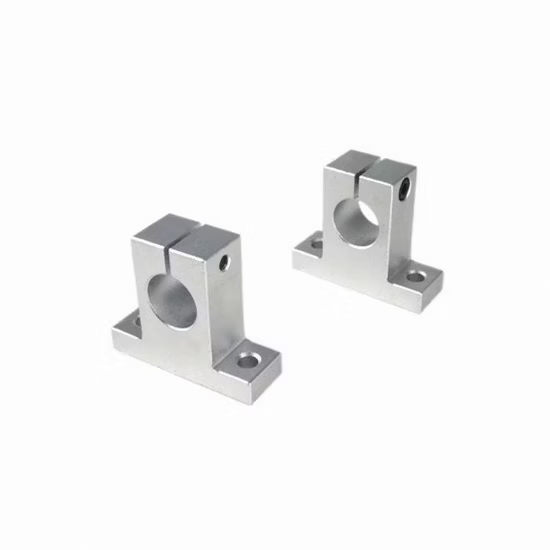
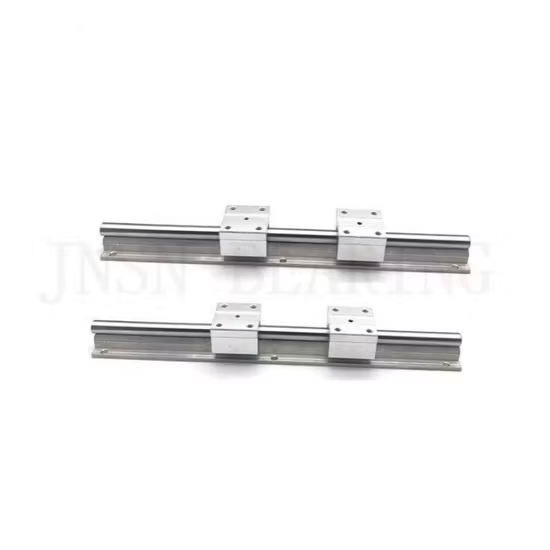
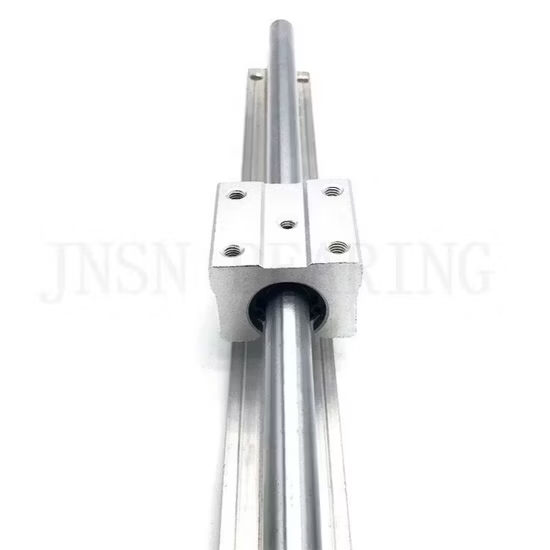
SK10 Linear Bearing Slider Support Bracket — stainless steel construction with a polished hollow profile for optical axis slide rail systems.
Verified via official apps — Every batch from our SK10 linear bearing slider support bracket supplier network includes scannable QR codes linking directly to the manufacturer's authenticity database for immediate field verification.
| Parameter | Value |
|---|---|
| Product Type | Linear Bearing Slider Support Bracket |
| Material Options | Stainless steel variants |
| Profile Design | Hollow profile construction |
| Surface Finish | Polished treatment |
| Corrosion Resistance | High corrosion resistance |
| Operational Characteristics | High speed, low noise |
| Certifications | CE, ISO 9001:2000, ISO 9001:2008, RoHS |
| Customization | Custom length configurations |
| Industry | Typical Applications |
|---|---|
| Automation Equipment | Optical axis slide rail systems, pick-and-place gantries |
| Engineering Machinery | Precision positioning stages, washdown conveyor guides |
| Material Handling | Cleanroom transfer mechanisms, automated storage retrieval tracks |
Misaligned support brackets destroy linear bearings long before the shaft wears out.
Sourcing teams often fixate on the basic SK10 designation while ignoring the fixed seat installation hole tolerances. This oversight forces the slider into a bind, causing premature track wear and catastrophic jamming on the automation line. When parallelism偏差 exceeds the bracket's accommodation range, the rolling elements skid rather than roll, generating excessive heat and rapid degradation . Finding a reliable SK10 linear bearing slider support bracket supplier means securing components where the mounting footprint is machined to match the optical axis geometry exactly.
Selecting the right SK10 linear bearing slider support bracket supplier requires looking beyond the basic 10mm shaft compatibility. The operational environment dictates whether standard bearing steel will suffice or if stainless steel variants are mandatory. In washdown areas or high-humidity automation cells, standard materials corrode rapidly, pitting the shaft and destroying the slider internals. Our technical review ensures the material option selected aligns with your specific exposure risks, preventing environmental degradation from compromising the slide rail system.
Linear sliders in optical axis systems face a constant battle between environmental sealing and friction management. High-speed operations demand low-noise, low-friction movement, yet harsh environments require aggressive protection against moisture and particulate ingress. A polished hollow profile design minimizes surface drag and prevents debris accumulation, while stainless steel construction resists chemical cleaning agents. Proper lubrication intervals must account for the washdown cycles, as standard greases easily emulsify and wash out, leaving the rolling elements unprotected .
The choice between standard and stainless steel variants fundamentally alters the slider's lifespan in corrosive settings. Stainless steel options provide substantially higher resistance to oxidation and chemical attack, though they require careful load derating compared to high-carbon bearing steel. The polished surface treatment on the hollow profile is not merely cosmetic; it reduces the microscopic peaks that cause initial run-in wear and lowers the friction coefficient. Understanding these material and finish options allows engineers to balance corrosion resistance with the dynamic load requirements of the specific automation equipment.
Overlooking the fixed seat installation hole tolerances leads to unplanned downtime and catastrophic damage to the entire linear guide assembly. When the bracket forces the slider out of alignment, the recirculating balls experience severe edge loading, which quickly spalls the raceway. According to linear motion failure analysis frameworks, this induced misalignment is a primary driver of premature slider seizure . The resulting warranty voidance and production stoppages far outweigh the initial cost of precision-machined support brackets.
We eliminate cross-reference errors by verifying that the slider type—whether open, closed, or adjustable—matches the exact fixed seat configuration your equipment requires. Our application-based selection review evaluates your specific load, speed, and mounting constraints rather than just shipping a generic 10mm bracket. We provide batch traceability and country-of-origin documentation for every component, ensuring you never receive counterfeit linear motion parts. Furthermore, our cross-brand interchange expertise ensures that if your preferred brand is unavailable, the alternative matches the exact profile and tolerance requirements, not just the base designation.
To ensure the linear motion components match your exact application, please provide the equipment model, available installation space, and the specific radial and axial loads expected on the optical axis. Detail the operating environment, including any exposure to corrosive chemicals, washdown cycles, or extreme temperatures, so we can recommend the appropriate stainless steel variants. Sharing these parameters allows our engineering team to determine the precise slider type and fixed seat configuration required, eliminating guesswork and preventing field failures.
Q: How do I determine the correct linear bearing slider type for my optical axis loads?
A: You must evaluate the specific radial and axial loads, moment loads, and the required rigidity of the automation equipment. Provide your equipment parameters and installation space constraints to our engineering team. We will calculate the required dynamic load rating and recommend whether an open, closed, or adjustable slider type best accommodates your optical axis alignment and load distribution needs.
Q: What are the common failure modes of linear sliders in high-corrosion environments?
A: In corrosive settings, standard bearing steel rapidly oxidizes, leading to pitting on the shaft and slider raceways. This surface degradation increases friction, causes the rolling elements to skid, and ultimately results in premature seizure. Utilizing stainless steel variants and ensuring proper sealing prevents this environmental degradation and maintains the low-noise, high-speed operation required for precision automation.
Q: Stainless steel vs. standard bearing steel: which material suits my application?
A: Standard bearing steel offers higher load capacity and rigidity, making it ideal for dry, controlled environments. Stainless steel variants provide substantially higher corrosion resistance, which is mandatory for washdown areas, food processing, or high-humidity automation cells. The choice depends on balancing your dynamic load requirements against the severity of environmental exposure and chemical cleaning agents.
Q: How do you handle custom length requirements and MOQ for linear support brackets?
A: We accommodate custom length configurations for the hollow profile support brackets to match your specific optical axis travel and mounting footprint. While standard lengths have lower minimum order quantities, custom cuts require a technical review of the machining tolerances and structural rigidity. Share your exact dimensional drawings, and we will confirm the feasibility, lead time, and batch traceability for your project.
Our 5-step process ensures every order is engineered, validated, and supported for optimal performance.
Technical needs assessment
Custom specifications
Free samples for $50k+
Pre-shipment inspection
On-site & predictive
Our certified engineers respond within 24 hours with detailed technical specifications, pricing, and lead time information.
![SK8 SK10 SK12 SK13 SK16 SK20 Aluminum Linear Shaft Support Unit Slide Bearing [WARN] draft identifier mismatch](https://skfiso.com/wp-content/uploads/2026/09/sk8-sk10-sk12-sk13-sk16-sk20-aluminum-linear-shaft-support-unit-slide-bearing-warn-draft-identifier-mismatch-eb5dd1.avif)