01
Consultation
Technical needs assessment


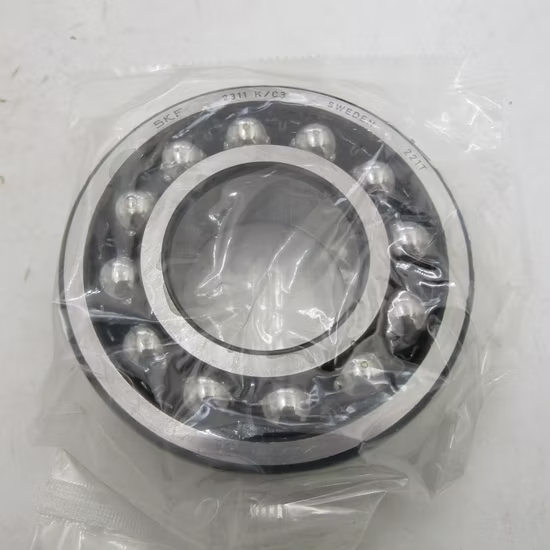

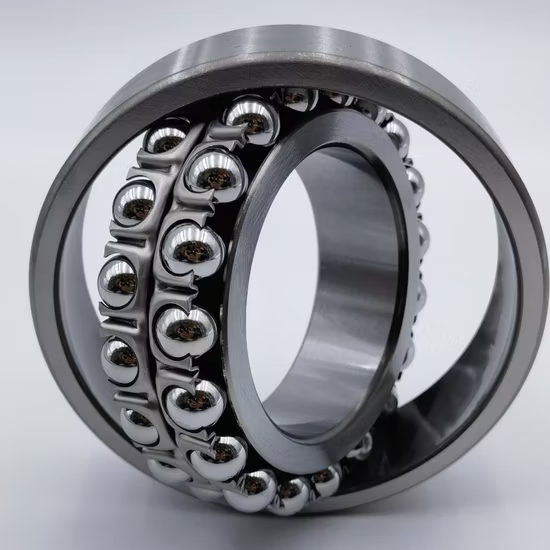

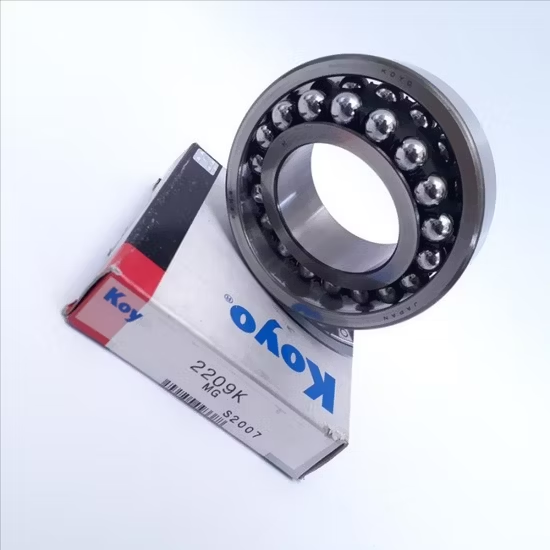
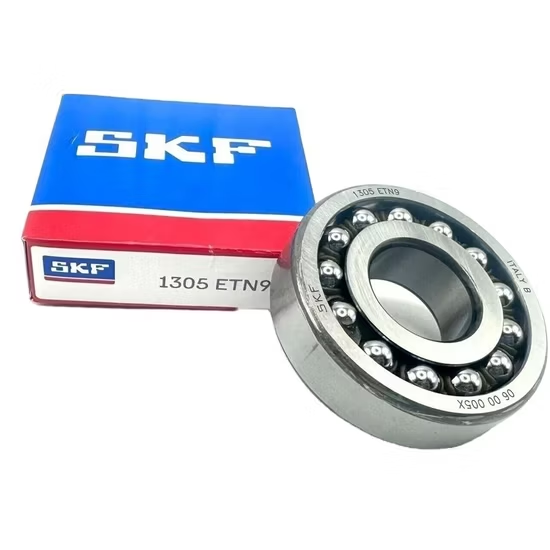
2301 2302 2303 2304 2305 Self-Aligning Ball Bearings accommodate shaft misalignment in electric motors and gearboxes.
Multi-brand authorized coverage — Source SKF, FAG, and NSK equivalents for your 2301 2302 2303 2304 2305 self-aligning ball bearing requirements in a single consolidated shipment without juggling multiple vendors.
| Parameter | Value |
|---|---|
| Designation | 2301 2302 2303 2304 2305 |
| Bearing Type | Self-Aligning Ball Bearing |
| Seal or Shield Type | Open, Rubber Seals, Iron Seals |
| Origin | Germany, Japan, Sweden, Malaysia, China |
| HS Code | 848210 |
| Material Options | Standard bearing steel, available in stainless steel variants |
| Customization | Various clearance classes, precision grades, and cage materials |
| Industry | Typical Applications |
|---|---|
| Electric Motors | Rotor shaft support requiring compensation for minor housing misalignment |
| Industrial Gearboxes | Intermediate shafts operating under slight deflection and vibration |
| Agricultural Machinery | Conveyor drive rollers and harvesting equipment shafts exposed to dust |
Matching the base designation while ignoring internal clearance and cage suffixes is the primary cause of thermal binding in the field.
I have seen countless procurement engineers in the Middle East order standard replacements for heavy-duty mining conveyors, only to watch the cages shatter under load because a standard clearance was installed where a C3 was mandatory for thermal expansion. When sourcing a 2301 2302 2303 2304 2305 self-aligning ball bearing, assuming the base number guarantees fitment is a critical error. The internal geometry, seal friction, and cage material must perfectly align with the specific operational temperature and vibration profile of your equipment . Overlooking these suffix details inevitably leads to premature seizure and catastrophic line stoppages.
Selecting the right variant from the 2301 2302 2303 2304 2305 self-aligning ball bearing range requires looking beyond the catalog number to the actual physical environment. Our technical team reviews your specific load profiles and misalignment angles to recommend the exact internal design. By cross-referencing your OEM equipment numbers against our authorized brand databases, we ensure the selected bearing handles the specific radial loads and shaft deflections inherent to your machinery.
Equipment operating in harsh environments faces constant shaft deflection, which demands the self-aligning capability of the outer ring raceway. However, this flexibility must be balanced against contamination ingress and lubrication degradation. In dusty agricultural or mining applications, selecting between rubber seals for maximum protection and iron shields for lower friction becomes a critical decision. Elevated operating temperatures further complicate this by altering the internal clearance, making the correct initial clearance class essential to prevent the rolling elements from skidding or binding once the machine reaches its thermal equilibrium .
The performance of these bearings hinges on the precise combination of cage material and internal clearance. Pressed steel cages are typically suited for standard speeds and lighter loads, while machined brass or polyamide cages offer superior stability under high vibration and rapid acceleration. The clearance class—ranging from standard CN to expanded C3 or C4—dictates how the bearing behaves as the inner ring expands from friction and external heat. Furthermore, the choice between open, rubber-sealed, or iron-shielded designs directly impacts the maintenance interval, as sealed variants retain factory grease but introduce slight frictional heat, whereas open designs require robust external lubrication systems to flush out contaminants.
Installing a bearing with the wrong internal clearance or inappropriate cage material rarely results in a graceful degradation; it usually ends in sudden, catastrophic failure. According to the failure analysis frameworks outlined in ISO 15243, improper selection leads to smearing, cage fracture, and severe raceway spalling. These failures trigger unplanned downtime, void equipment warranties, and cause secondary damage to adjacent gears and housings. The financial impact of a halted production line vastly outweighs the initial cost of specifying the correct, fully verified component from the start .
We eliminate the guesswork in cross-referencing by verifying not just the base number, but the exact clearance, cage, and seal suffixes required for your specific application. Every 2301 2302 2303 2304 2305 self-aligning ball bearing we supply is backed by authorized distribution channels, ensuring you receive genuine products rather than counterfeits with soft inner rings. Our mixed-brand consolidation allows you to fulfill complex maintenance schedules with a single order, supported by comprehensive application-based selection reviews that account for your unique thermal and load conditions.
To facilitate an accurate selection and L10 life calculation, please provide your specific radial and axial load data, operating speeds, and expected thermal gradients. If you are replacing an existing component, sharing the exact OEM equipment number or the full designation string from the old bearing allows our engineering team to perform a precise cross-reference check. Detailing the environmental exposure, such as heavy dust or moisture, ensures we recommend the optimal sealing arrangement and material variant for your application.
Q: Why must clearance and cage suffixes match exactly during cross-referencing?
A: Base numbers only define the boundary dimensions. The internal clearance dictates thermal expansion tolerance, while the cage material governs high-speed stability and vibration resistance. Mismatching these suffixes during cross-referencing often results in thermal binding or catastrophic cage failure under load, rendering the replacement entirely unsuitable for the specific application.
Q: How do CN, C3, and C4 clearances affect motor and gearbox applications?
A: Standard CN clearance suits normal temperatures and standard fits. C3 provides extra internal space to accommodate thermal expansion from high speeds or hot environments, preventing preload buildup. C4 offers even greater expansion room for extreme heat. Selecting the wrong class causes the bearing to either run too loose, creating vibration, or too tight, leading to overheating.
Q: What is the trade-off between rubber seals and iron shields?
A: Rubber seals provide excellent contact protection against dust and moisture ingress but generate higher frictional heat, limiting maximum operational speeds. Iron shields offer non-contact protection, retaining grease while minimizing friction and allowing higher rotational speeds, though they are less effective against fine particulate contamination or liquid splashes.
Q: How can we verify the authenticity of the supplied bearings?
A: We provide full batch traceability documentation and original manufacturer packaging featuring secure QR codes. Procurement teams can scan these codes using the respective brand's official mobile application to instantly verify the production lot, origin, and authenticity, effectively eliminating the risk of installing counterfeits with compromised metallurgical hardness.
Our 5-step process ensures every order is engineered, validated, and supported for optimal performance.
Technical needs assessment
Custom specifications
Free samples for $50k+
Pre-shipment inspection
On-site & predictive
Our certified engineers respond within 24 hours with detailed technical specifications, pricing, and lead time information.