01
Consultation
Technical needs assessment

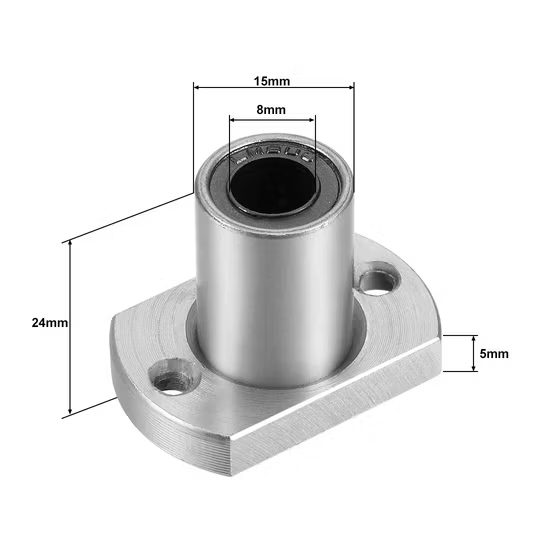
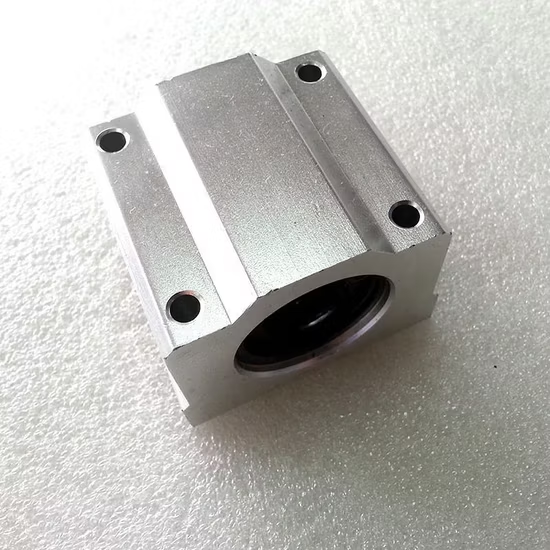
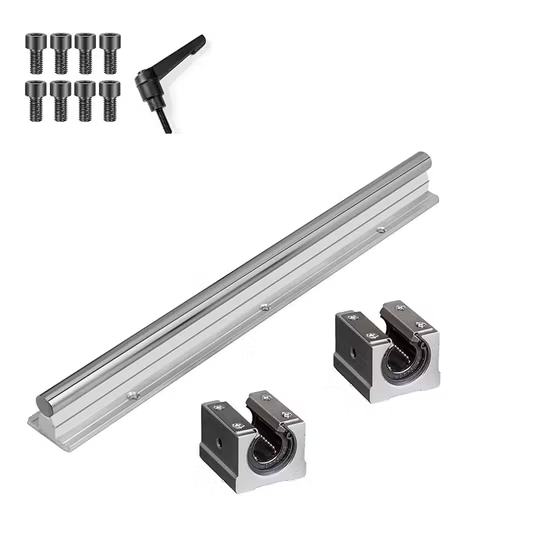
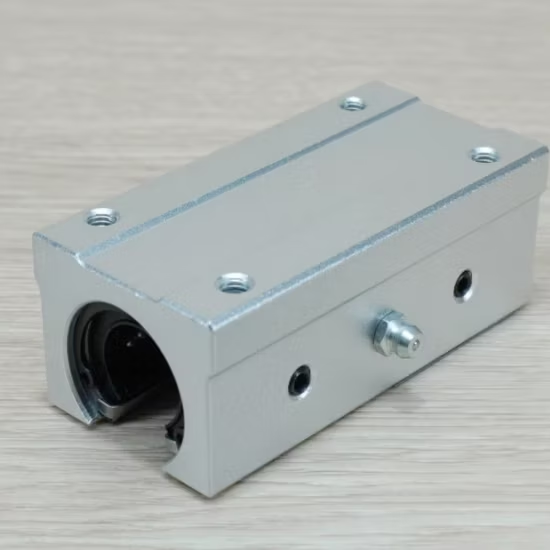
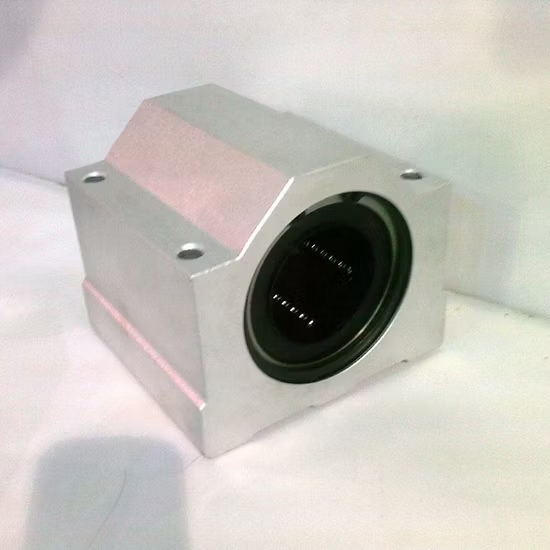
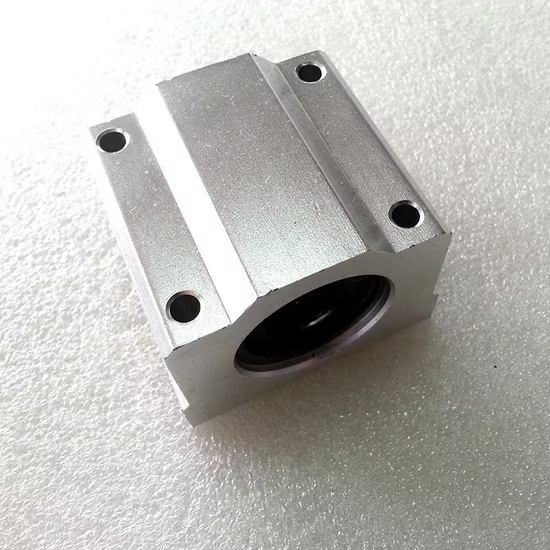
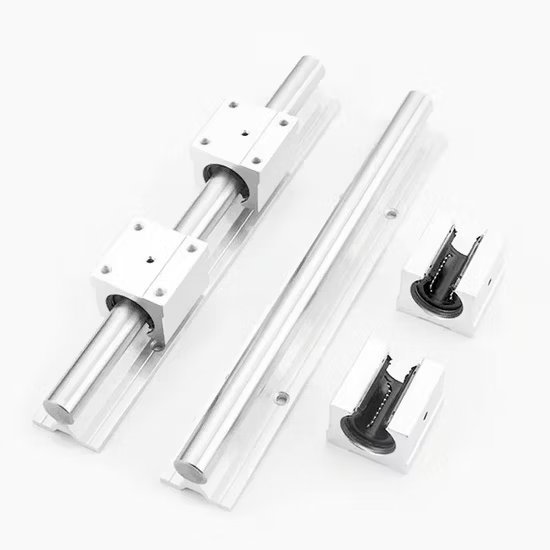
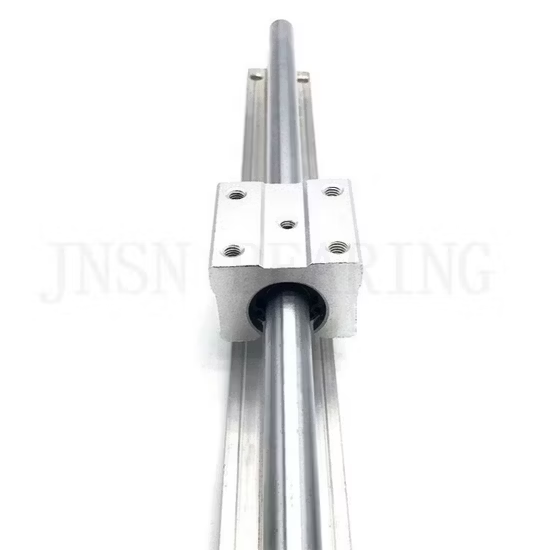
Sc8uu Linear Slide Bearing Housing Block 8 mm
Batch Traceability — Every Sc8uu linear bearing housing block ships with verifiable lot documentation to confirm material origin and manufacturing authenticity.
| Parameter | Value |
|---|---|
| Designation | Sc8uu |
| Product Type | Linear Slide Bearing Housing Block |
| Bore Diameter (d) | 8 mm |
| Material Options | Aluminum or Stainless Steel variants |
| Surface Treatment | Polished |
| Profile Type | Hollow Profile |
| Precision Rating | P0, P6, P5, P4, P2 |
| Corrosion Resistance | High |
| Operational Features | High Speed, Low Noise |
| Customization | Available |
| Certification | CE, RoHS, ISO 9001 |
Note: Suffix interpretations for bore size and seal configuration are based on general industry conventions for linear motion components and remain unverified against a specific manufacturer catalog.
| Industry | Typical Applications |
|---|---|
| Industrial Automation | Pick-and-place robot linear axes, automated assembly sliding stages |
| Medical Equipment | CNC surgical table positioning tracks, laboratory liquid handling sliders |
| Food Processing | Washdown-compatible conveyor guide rails, packaging machine sliding carriages |
| Electronics Manufacturing | SMT placement machine linear guides, cleanroom wafer transfer mechanisms |
| Packaging Machinery | Carton sealing machine sliding heads, labeling applicator linear tracks |
Substandard housing alloys deform under dynamic loads, destroying the parallel alignment required for smooth linear travel.
When sourcing linear motion components, procurement teams often focus solely on the internal rolling elements while overlooking the structural integrity of the housing. In high-cycle automation environments, a housing that lacks sufficient rigidity will gradually warp. This microscopic distortion transfers uneven stress to the internal ball retainer, leading to accelerated wear and eventual track binding. We frequently inspect returned units where the aluminum alloy was too soft, resulting in crushed mounting surfaces and compromised running accuracy . Ensuring the housing material meets strict metallurgical standards is just as critical as verifying the internal bearing grade.
Selecting the right housing material dictates the operational lifespan of the entire linear axis. Aluminum variants offer a lightweight solution ideal for high-speed automation where reducing moving mass minimizes inertia and motor strain. Conversely, stainless steel options provide the necessary corrosion resistance for food processing or medical environments that require frequent chemical washdowns. By evaluating the specific environmental exposure and dynamic load requirements, engineers can specify the optimal Sc8uu linear bearing housing block configuration to prevent premature degradation.
Linear slide systems endure complex force vectors, including radial loads from the carriage weight and moment loads during acceleration or deceleration. In environments with airborne particulates, such as woodworking or packaging facilities, contamination is the primary driver of track failure. The integrated seal configuration is designed to retain lubrication while excluding abrasive dust, but high-speed operation generates friction heat that can degrade standard grease. Balancing the sealing friction against the required velocity and ambient temperature ensures the system maintains its low-noise performance without suffering from thermal seizure .
The specified precision class directly governs the positioning repeatability of the linear axis. While standard P0 or P6 grades are sufficient for general material handling, multi-axis CNC routers and optical inspection machines demand P4 or P2 tolerances to eliminate microscopic backlash. Upgrading the precision class requires corresponding improvements in the mounting surface flatness; otherwise, the housing will distort to match the imperfect machine bed, negating the benefits of the high-precision internal components.
Installing a linear block with out-of-tolerance bore dimensions or misaligned mounting holes forces the assembly into a pre-loaded state before any external forces are applied. This artificial preload causes excessive friction, rapid lubricant breakdown, and catastrophic track scoring. According to failure analysis frameworks, improper mounting and geometric misalignment account for a significant share of premature linear motion failures . The resulting unplanned downtime and replacement costs far exceed the initial savings of purchasing unverified, low-cost alternatives.
Our supply chain eliminates the risk of receiving counterfeit linear blocks with soft inner rings that quickly develop indentation marks. We verify the metallurgical hardness and dimensional accuracy of every batch, ensuring the steel ball and track matching meets original design specifications. Our cross-referencing process checks not just the basic bore size, but also the exact housing footprint, seal type, and material grade to guarantee direct interchangeability. Furthermore, we provide comprehensive application-based selection reviews to confirm the chosen configuration can withstand your specific speed and load parameters.
To ensure optimal performance, please provide the specific radial and moment loads, maximum travel speed, and operating temperature range for your application. Sharing the original equipment manufacturer part numbers allows our engineering team to perform a comprehensive cross-reference check, verifying that the housing footprint, seal configuration, and material options perfectly match your existing linear motion infrastructure.
Q: What is the functional difference between standard and closed-type linear housings?
A: Standard open housings allow for adjustable clearance and are often used with adjustable pillow blocks, while closed-type housings provide a fixed, rigid bore that maintains strict alignment under heavy moment loads. The choice depends on whether your application requires adjustable preload or maximum structural rigidity for the linear axis.
Q: How do I determine the correct precision grade for my automation equipment?
A: General conveyor systems typically perform well with P6 or P5 grades, whereas high-speed pick-and-place robots or optical inspection stages require P4 or P2 to minimize positioning error. Providing your required repeatability tolerance and travel speed allows us to recommend the most cost-effective precision class.
Q: Can stainless steel linear blocks be used in high-temperature washdown environments?
A: Stainless steel variants offer excellent corrosion resistance against chemical washdowns, but the internal seals and standard lubricants have thermal limits. If your washdown process involves high-temperature steam, we must specify high-temperature seal materials and specialized grease to prevent internal degradation.
Q: How do you verify cross-references for discontinued linear bearing models?
A: We analyze the original equipment's required bore diameter, housing footprint, mounting hole spacing, and seal configuration. By matching these physical and functional parameters rather than just the base designation, we identify alternative models that provide identical performance without requiring machine modifications.
Our 5-step process ensures every order is engineered, validated, and supported for optimal performance.
Technical needs assessment
Custom specifications
Free samples for $50k+
Pre-shipment inspection
On-site & predictive
Our certified engineers respond within 24 hours with detailed technical specifications, pricing, and lead time information.