01
Consultation
Technical needs assessment

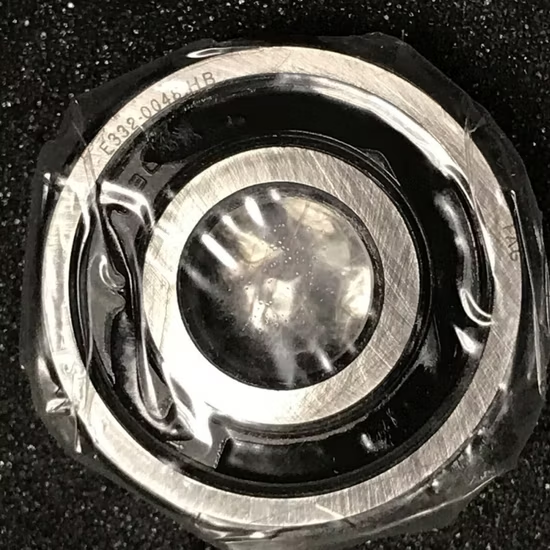
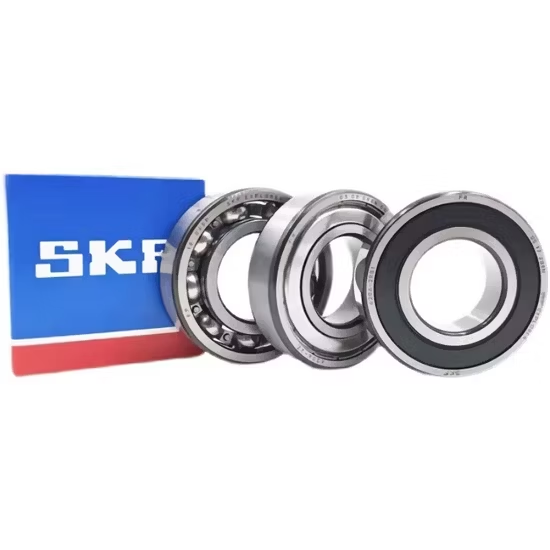
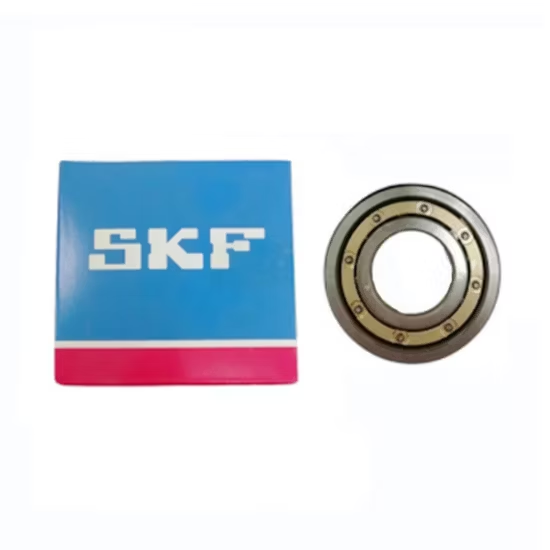
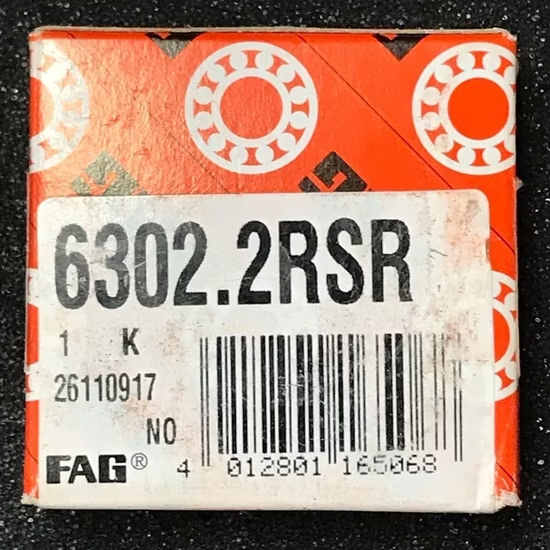
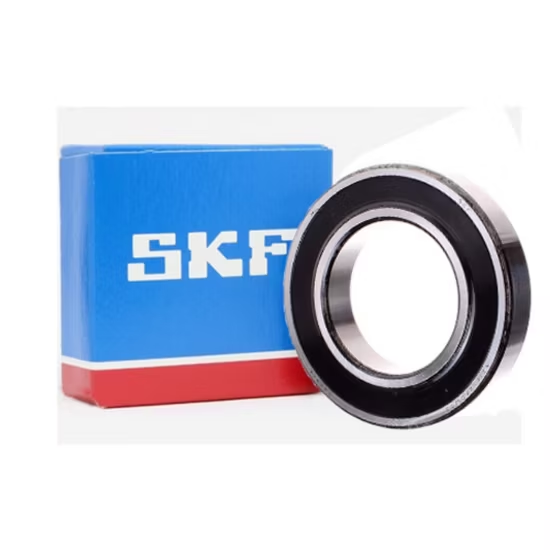
S6200 S6201 S6202 S6203 S6204 S6907 S61907 Stainless Steel Deep Groove Ball Bearings — Engineered from 420/440/304 stainless steel for reliable operation in corrosive and washdown environments.
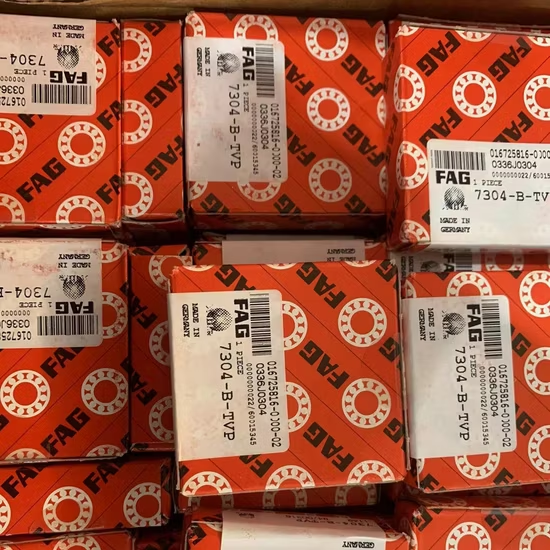
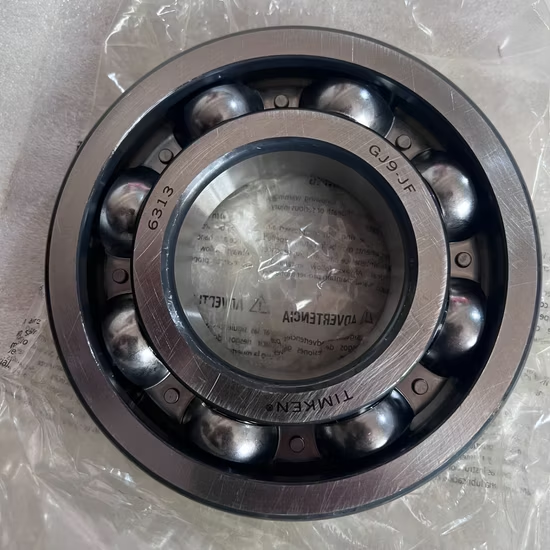
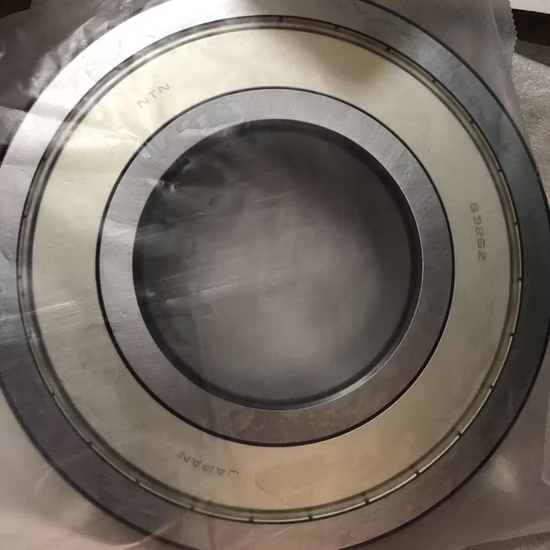
Traceable Batch Origins — Every S6200 and S6907 unit ships with verifiable manufacturer lot documentation to guarantee material authenticity.
| Parameter | Value |
|---|---|
| Designation | S6200 S6201 S6202 S6203 S6204 S6907 S61907 |
| Product Type | Deep Groove Ball Bearing |
| Material Options | 420, 440, or 304 Stainless Steel |
| Bearing Style | Open, Rubber Seals, Iron Seals |
| Quality Level | Z1V1, Z2V2, Z3V3, Z4V4 |
| Origin Options | Germany, Japan, Sweden, Malaysia, China |
| HS Code | 848210 |
Note: Z1V1 through Z4V4 typically denote noise and vibration grading classes, but exact proprietary thresholds require manufacturer catalog confirmation.
| Industry | Typical Applications |
|---|---|
| Food and Beverage | Washdown conveyor rollers, hygienic filling machine agitators |
| Pharmaceutical | Tablet press rotary mechanisms, sterile packaging sealing jaws |
| Chemical Processing | Corrosive fluid pump shafts, aggressive media mixing vessels |
| Marine and Offshore | Deck winch sheaves, saltwater exposure steering linkages |
Surface passivation cannot compensate for substandard metallurgy in the raceway.
I have seen countless S6203 units seize inside high-temperature food processing motors simply because the supplier ignored the necessary thermal expansion clearance. When counterfeit stainless bearings with soft inner rings are forced into washdown environments, the raceway quickly develops micro-pitting under cyclic loading. This degradation accelerates when the internal geometry fails to accommodate the thermal growth of the shaft, turning a minor specification oversight into a complete line stoppage .
Selecting the correct stainless steel deep groove ball bearing S6200 series variant requires aligning the specific alloy with the chemical exposure of the facility. Martensitic grades offer the hardness necessary for sustained radial loads on conveyor shafts, while austenitic options provide superior resistance to the aggressive caustic cleaners used in daily sanitation cycles. We evaluate the exact washdown protocols of your plant to ensure the chosen material option prevents both chemical degradation and structural fatigue over the equipment lifecycle.
Food processing environments subject bearings to extreme thermal cycling as hot water sanitation meets cold production runs. This rapid temperature fluctuation demands precise internal clearance selection; a standard clearance will inevitably lead to thermal binding and cage failure when the shaft expands. Furthermore, high-pressure washdowns force moisture past inadequate seals, washing out the lubricant and introducing abrasive particulates . Selecting the appropriate rubber seal or iron shield configuration is critical to maintaining lubrication integrity and preventing premature corrosion inside the bearing envelope.
The Z1V1 through Z4V4 designations indicate specific noise and vibration thresholds, which are vital for precision pharmaceutical packaging machinery where smooth operation prevents product damage. Beyond vibration control, the seal configuration dictates the maintenance schedule. Rubber-sealed variants provide excellent contamination exclusion for wet environments but generate higher friction, whereas iron-shielded or open styles reduce operating temperatures but require external lubrication management. Matching these internal design features to the specific speed and load profile of the application ensures the bearing operates within its optimal thermal and acoustic limits.
Installing a bearing that matches the base designation but lacks the correct internal clearance or seal type leads to catastrophic damage in wet environments. According to failure analysis frameworks like ISO 15243, moisture ingress and thermal binding are primary drivers of premature fatigue and surface distress. When the internal geometry binds due to thermal expansion, the resulting friction generates excessive heat,*elements to skid. This unplanned downtime not only halts production but often causes secondary damage to the expensive stainless steel shafts and housings .
Sourcing genuine components across multiple international brands eliminates the risk of receiving cloned products with compromised metallurgy. We verify the exact stainless steel grade for every S6204 and S6907 unit, ensuring the material hardness meets the rigorous demands of corrosive applications. Our cross-reference process aligns not just the base number, but the critical seal types and internal clearances required for your specific machinery. By providing full batch traceability and technical selection review, we ensure that the physical bearing matches the exact operational parameters of your equipment.
To ensure the selected bearing meets your operational demands, please provide the specific radial and axial loads, operating speeds, and temperature ranges of your application. Sharing the OEM equipment number allows our engineering team to perform a precise cross-reference review, verifying that the seal type and internal clearance align perfectly with the original design. This technical validation ensures the proposed configuration delivers reliable performance in your specific washdown or corrosive environment.
Q: How can I verify the exact stainless steel grade of the received bearings?
A: We supply comprehensive material test reports with every shipment, detailing the specific metallurgical composition of the 420, 440, or 304 variants. Additionally, you can verify the batch authenticity by scanning the QR codes through the manufacturer's official application, ensuring the physical product matches the documented material specifications and preventing the installation of substandard clones.
Q: What are the cross-reference pitfalls regarding seal types in stainless variants?
A: A common error occurs when a cross-reference matches the base designation but substitutes an iron shield for a rubber seal, or vice versa. In high-moisture washdown environments, this oversight allows aggressive cleaning chemicals to penetrate the bearing envelope, rapidly degrading the lubricant. We strictly verify the exact seal configuration against your environmental exposure to prevent premature moisture ingress.
Q: How do I select the correct noise and vibration grade for food processing motors?
A: The Z1V1 through Z4V4 classifications indicate varying levels of acoustic and vibrational performance. For high-speed food processing motors where vibration can affect product consistency or cause structural fatigue, selecting a higher precision grade is essential. We review your specific speed and load parameters to recommend the optimal vibration class that ensures smooth, quiet operation without over-specifying the component.
Q: What causes stainless steel bearings to fail in high-moisture washdown environments?
A: Failure in these environments typically stems from moisture ingress washing out the lubricant, or thermal binding caused by incorrect internal clearance during hot sanitation cycles. When the shaft expands and the bearing lacks the necessary clearance, the rolling elements skid, generating destructive heat. Proper seal selection and precise clearance matching are critical to preventing these specific washdown failure modes.
Q: How is food-grade lubrication managed for these deep groove ball bearings?
A: For rubber-sealed or iron-shielded variants, the bearings are pre-lubricated for life and require no maintenance. However, open-style bearings used in specific processing equipment must be manually lubricated using certified food-grade greases. We provide guidance on the appropriate lubrication intervals and grease compatibility to ensure compliance with hygiene standards while maintaining optimal friction reduction.
Our 5-step process ensures every order is engineered, validated, and supported for optimal performance.
Technical needs assessment
Custom specifications
Free samples for $50k+
Pre-shipment inspection
On-site & predictive
Our certified engineers respond within 24 hours with detailed technical specifications, pricing, and lead time information.