01
Consultation
Technical needs assessment


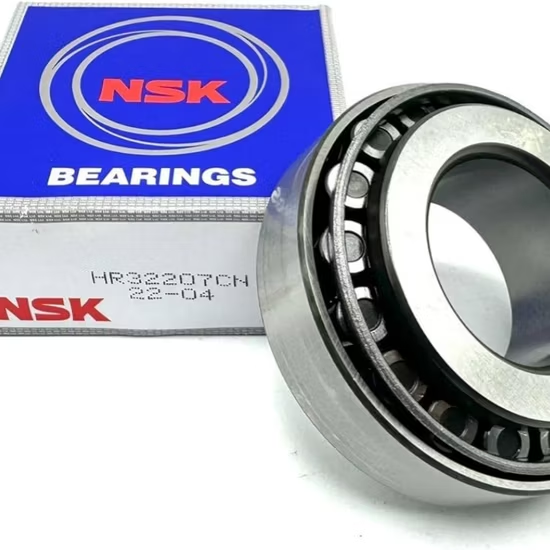
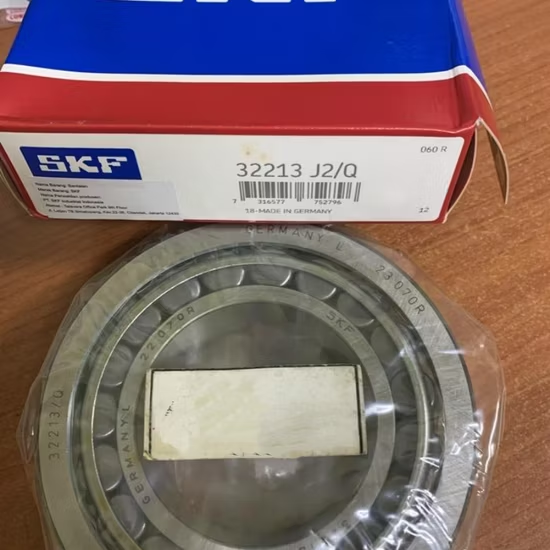

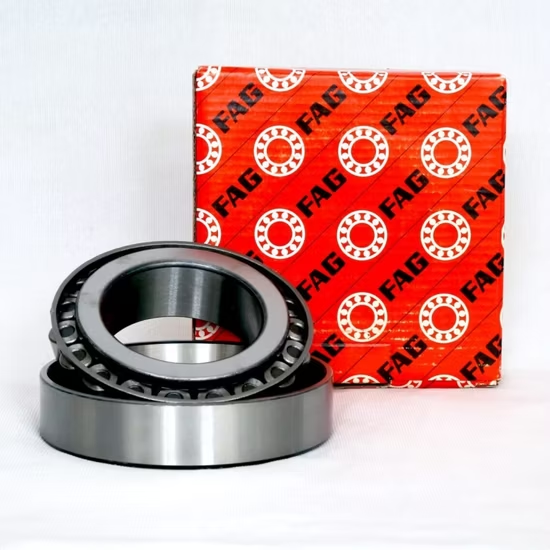

32238 32239 32240 Tapered Roller Bearing P4 Precision — Manufactured from GCr15 bearing steel, these single-row units deliver tight dimensional accuracy for heavy-duty gearboxes and automotive hubs.
Traceable Manufacturer Batches — every 32238 32239 32240 tapered roller bearing P4 precision set ships with original lot documentation to guarantee metallurgical consistency across heavy-duty deployments.
| Parameter | Value |
|---|---|
| Designation | 32238 32239 32240 |
| Bearing Type | Tapered Roller Bearing |
| Number of Rows | Single Row |
| Precision Class | P4 |
| Cage Material | Nylon / Brass / Iron options |
| Material | GCr15 bearing steel |
| Origin | Germany / Japan / Sweden / Malaysia / China |
| HS Code | 8482500090 |
| Customization | Available |
| Industry | Typical Applications |
|---|---|
| Mining and Crushing | Gyratory crusher main shafts, heavy vibrating screen exciters |
| Automotive and Heavy Vehicle | Commercial truck wheel hubs, heavy-duty drive axles |
| Industrial Gearboxes | Extruder gearbox output shafts, marine propulsion drives |
| Building Material Machinery | Rotary kiln support trunnions, cement mill pinion shafts |
Matching the base designation is never enough to prevent thermal binding in high-load environments.
Procurement teams often order standard replacements assuming the base number guarantees fitment, yet field failures routinely occur when internal clearances or precision grades do not align with the actual operating temperatures and loads. A standard clearance installed in a high-heat crushing application will inevitably lead to catastrophic seizure once the shaft expands under load . Securing the exact 32238 32239 32240 tapered roller bearing P4 precision configuration ensures the internal geometry handles the specific thermal and mechanical stresses of your equipment.
Sourcing the correct 32238 32239 32240 tapered roller bearing P4 precision variant requires looking past the catalog number to evaluate how the internal components interact under your specific site conditions. We review your operational parameters to confirm that the selected cage material and precision class will maintain optimal rolling element guidance. This application-based selection review prevents the mismatched internal clearances that frequently cause premature cage failure in demanding mining and heavy transport sectors.
Heavy machinery in mining and material processing subjects bearings to severe shock loads combined with significant temperature fluctuations. When shaft temperatures rise, the internal clearance of a standard bearing diminishes rapidly, and without the appropriate thermal allowance, the rolling elements will skid and generate excessive friction heat . Furthermore, the intense vibration from crushing equipment demands a cage design that maintains structural integrity and prevents roller skewing under dynamic axial and radial forces. Selecting the proper precision and cage combination is critical to surviving these extreme operational boundaries.
Achieving P4 precision in these large-bore tapered roller bearings means the dimensional and running accuracy tolerances are significantly tighter than standard commercial grades, which directly reduces vibration and heat generation at higher rotational speeds. The GCr15 bearing steel provides the necessary core hardness and wear resistance for the raceways, but the cage material selection dictates the bearing's operational limits. Brass cages offer superior durability and heat dissipation for high-vibration crushing applications, while nylon variants reduce weight and friction for high-speed gearbox environments, and iron cages provide a robust solution for moderate-speed, heavy-load axle configurations.
Installing a bearing that meets the basic dimensional requirements but lacks the necessary precision or internal clearance allowance leads to unplanned downtime that far exceeds the component cost. Premature failure in a critical drive axle or crusher main shaft halts entire production lines, resulting in massive revenue losses and potential secondary damage to adjacent gears and housings . Relying on exact specification alignment rather than generic substitutions protects your operational continuity and prevents catastrophic mechanical damage.
Our authorized distribution network ensures that every order for these specific designations is fulfilled with exact specification alignment, preventing the common error of receiving standard precision when P4 is required. We provide comprehensive cross-reference matching that verifies the cage material and internal design, not just the base number, ensuring the replacement perfectly mirrors the OEM requirements. Furthermore, our batch traceability protocols guarantee that the GCr15 steel components originate directly from the manufacturer's production facilities, eliminating the risk of counterfeit rings with inadequate hardness that plague the heavy machinery aftermarket.
To ensure the selected configuration perfectly matches your operational demands, please provide the specific radial and axial load profiles, operating speeds, and expected temperature ranges. Sharing the original OEM equipment numbers allows our engineering team to perform a precise cross-reference review, verifying that the cage material and precision class align with the factory design. This technical validation guarantees that the replacement components will deliver reliable service life in your specific heavy-duty application.
Q: How does P4 precision differ from standard grades in these tapered roller bearings?
A: P4 precision dictates significantly tighter tolerances for bore, outside diameter, and running accuracy compared to standard P0 grades. This reduced geometric deviation minimizes internal vibration and friction heat generation, which is critical for maintaining stability and extending service life in high-speed gearboxes and precision heavy-duty axles where thermal management is a primary concern.
Q: Why must cage material be matched during cross-referencing?
A: The cage guides the rolling elements and manages friction heat. A brass cage withstands high vibration and shock loads typical in mining crushers, while a nylon cage reduces friction for higher-speed applications. Substituting the wrong cage material based solely on the base designation will lead to rapid cage degradation, roller skewing, and catastrophic bearing failure under the specific dynamic forces of your equipment.
Q: How can we verify the authenticity of the received bearings?
A: Every bearing set is supplied with original manufacturer batch traceability and a unique QR code. You can scan this code using the official brand application on your mobile device to instantly verify the authenticity, production date, and origin of the GCr15 steel components, ensuring you have received genuine products rather than sophisticated counterfeits.
Q: What mounting practices are recommended for these large-bore single-row units?
A: Due to the tight P4 tolerances and large bore sizes, induction heating should be applied exclusively to the inner ring to expand it for mounting, while strictly monitoring the temperature to prevent metallurgical damage. After installation, the internal clearance must be re-verified once the entire shaft and housing assembly reaches its normal operating thermal equilibrium to ensure no binding occurs.
Our 5-step process ensures every order is engineered, validated, and supported for optimal performance.
Technical needs assessment
Custom specifications
Free samples for $50k+
Pre-shipment inspection
On-site & predictive
Our certified engineers respond within 24 hours with detailed technical specifications, pricing, and lead time information.