01
Consultation
Technical needs assessment

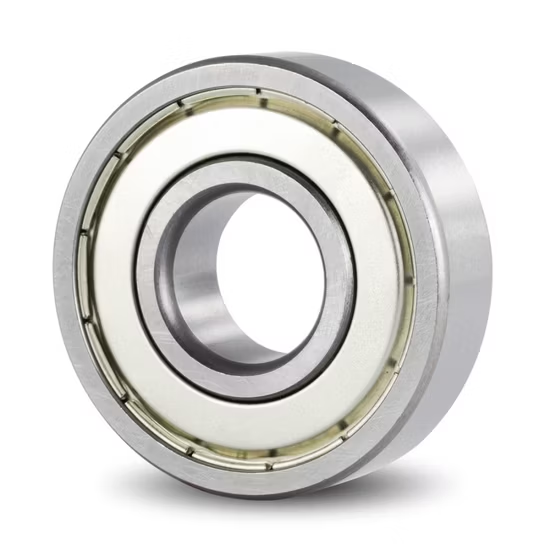
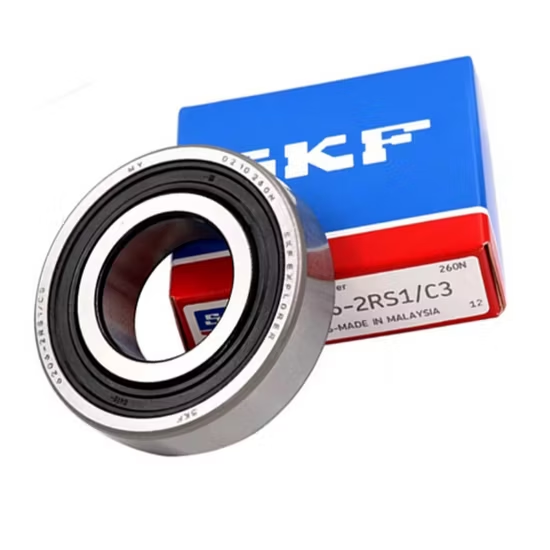
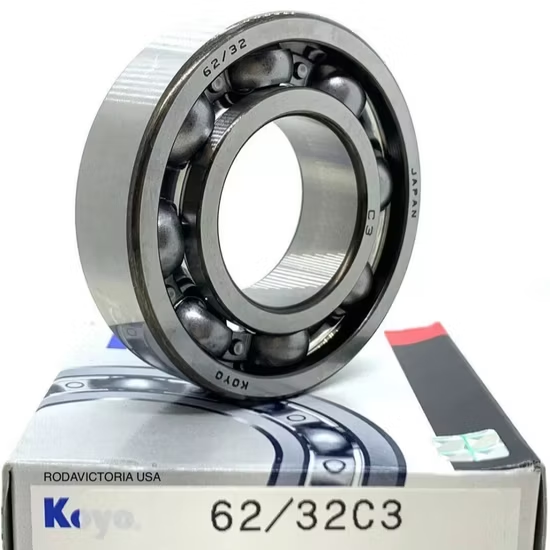
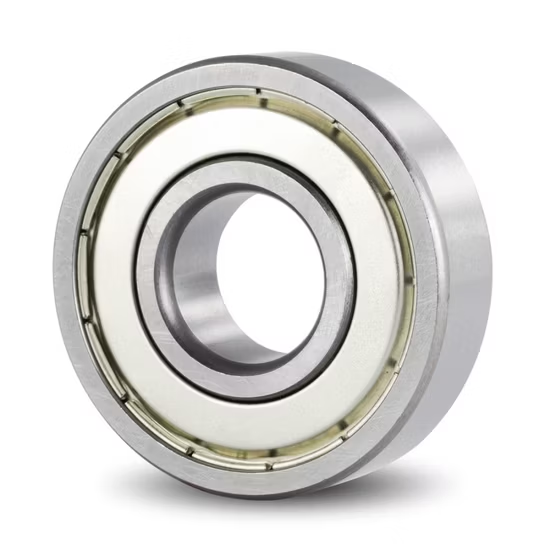


OEM Deep Groove Ball Bearing for Electric Motors and Industrial Gearboxes — 6000-6900 series with ceramic ball, nylon cage, and copper cage configurations for varied speed and thermal conditions.
Every shipment includes full batch and lot traceability back to the manufacturing source.
Verified Authenticity — Every batch is traceable via official brand application QR scans, ensuring the rolling elements and cages inside match the external labeling.
| Parameter | Value |
|---|---|
| Product Type | Deep Groove Ball Bearing |
| Bearing Style Options | Open, Rubber Seals, Iron Seals |
| Quality Level | Z1V1, Z2V2, Z3V3, Z4V4 |
| Cage Material Options | Nylon, Copper, Steel |
| Rolling Element Options | Standard Steel, Ceramic |
| Feature | Low Noise, High Speed, Long Service Life |
| Origin | Germany, Japan, Sweden, Malaysia, China |
| HS Code | 848210 |
| Customization | Available |
| Industry | Typical Applications |
|---|---|
| Electric Motors | High-speed rotor shafts, cooling fan assemblies, stator end-shields |
| Industrial Gearboxes | High-speed input shafts, intermediate transfer gears, output sealing journals |
| Pumps & Compressors | Impeller drive shafts, centrifugal rotor supports, vacuum pump journals |
| Conveyors & Material Handling | Drive roller journals, idler pulley shafts, tensioner wheel hubs |
| Household Appliances | Washing machine drum supports, HVAC blower motors, refrigerator compressor shafts |
Matching the base series number is insufficient when internal clearances and cage materials dictate the actual operational lifespan.
Procurement teams frequently approve purchase orders based solely on the 6000 or 6300 series prefix, overlooking the critical suffix combinations that define internal geometry. I once inspected a batch of returned motors where the deep groove ball bearings suffered premature cage fracture. The base designation matched the OEM requirement, but the supplier substituted a standard steel cage for a high-speed nylon variant without adjusting the internal clearance. This resulted in thermal binding under continuous duty . When evaluating an OEM deep groove ball bearing supplier, the inability to verify these micro-specifications often leads to catastrophic field failures that void equipment warranties.
Selecting the correct configuration requires balancing friction, thermal expansion, and electrical conductivity. For high-speed electric motors, nylon cages offer lower inertia and reduced noise, provided the operating temperature remains within the polymer's thermal limits. Copper cages are preferable for heavy-duty gearboxes where vibration and higher thermal loads demand superior heat dissipation and structural rigidity. When electrical pitting is a concern in variable frequency drive motors, ceramic rolling elements are available to interrupt the current path, protecting the raceways from fluting damage while maintaining high-speed capabilities.
The operational environment dictates the sealing and clearance strategy. Open configurations minimize friction and allow for external oil circulation in high-speed spindle applications, but they require pristine environments. Rubber seals provide excellent contamination exclusion for agricultural or dusty MRO settings, though the lip contact generates friction heat that limits the maximum permissible speed. Iron shields offer a middle ground, retaining grease while allowing higher rotational speeds than contact seals. Furthermore, selecting the appropriate internal clearance is vital; standard clearance may cause binding when the inner ring expands due to shaft heat, necessitating a larger clearance class to compensate for thermal growth .
The Z1V1 through Z4V4 classifications define the strictness of noise and vibration limits during manufacturing. A Z1V1 grade is generally acceptable for standard conveyors or general MRO applications where ambient noise masks bearing operation. However, precision appliances, HVAC blowers, and high-end electric motors require Z3V3 or Z4V4 grading to eliminate audible hum and prevent resonance-induced fatigue in adjacent components. Achieving these tighter tolerances requires superior raceway superfinishing and precise ball sorting, directly influencing the smooth operation of noise-sensitive equipment.
Installing a bearing with incorrect internal clearance or an incompatible cage material rarely results in immediate seizure; instead, it initiates a cycle of elevated operating temperatures and accelerated lubricant degradation. This leads to unplanned downtime, secondary damage to shafts and housings, and significant labor costs for emergency teardowns. According to failure analysis frameworks, a substantial share of premature bearing failures stems from application mismatch rather than manufacturing defects . The hidden costs of a slightly cheaper, incorrectly specified component easily outweigh the initial procurement savings.
Our approach eliminates the guesswork inherent in mixed-brand procurement. We verify that the selected cage material and seal type align precisely with your equipment's thermal and contamination profile, preventing the common error of installing standard clearance where thermal expansion demands a larger gap. Every shipment includes batch traceability, allowing you to scan QR codes via official brand applications to confirm the metallurgical origin. We also provide cross-reference alignment that checks internal design and precision suffixes, ensuring that an alternative brand matches the exact operational characteristics of the original specification.
To ensure the selected configuration meets your exact operational demands, please provide the specific equipment model, installation space constraints, and detailed load profiles. Sharing the operating speed, ambient temperature, and exposure to contaminants allows our engineering team to determine the optimal seal type and internal clearance. If you are replacing an existing component, supplying the original OEM equipment number or the full designation from the nameplate enables precise cross-reference verification and technical alignment.
Q: How do I determine the exact bearing designation and suffixes for my equipment?
A: Provide the equipment model, operational speed, load characteristics, and environmental conditions. Our engineering team analyzes these parameters to select the appropriate internal clearance, cage material, and seal type, ensuring the final designation perfectly matches your application's thermal and mechanical demands without relying on guesswork.
Q: When should I choose ceramic balls over standard steel rolling elements?
A: Ceramic options are ideal for applications involving high rotational speeds, extreme temperatures, or electrical currents, such as variable frequency drive motors. They offer lower density, reducing centrifugal stress on the cage, and provide electrical insulation to prevent raceway fluting, though they require careful handling to avoid impact damage.
Q: What is the practical difference between Z1V1 and Z4V4 quality levels?
A: These classifications define the strictness of noise and vibration limits. Z1V1 is suitable for general industrial machinery where ambient noise is high. Z3V3 and Z4V4 are mandatory for noise-sensitive applications like household appliances and precision electric motors, requiring superior raceway finishing to eliminate audible hum and vibration.
Q: How do you handle cross-brand interchange for discontinued OEM parts?
A: We do not merely match the base number. We analyze the internal design, cage material, clearance class, and precision suffixes of the original part. We then identify an equivalent from our authorized brands that mirrors these exact technical characteristics, ensuring seamless integration without compromising operational reliability.
Q: What are the relubrication requirements for different seal variants?
A: Open bearings require a continuous external lubrication system or regular manual regreasing based on operating hours. Rubber-sealed and iron-shielded variants are typically pre-lubricated for life; attempting to regrease them can damage the seals or introduce contamination, making replacement the standard maintenance protocol once the initial grease degrades.
Our 5-step process ensures every order is engineered, validated, and supported for optimal performance.
Technical needs assessment
Custom specifications
Free samples for $50k+
Pre-shipment inspection
On-site & predictive
Our certified engineers respond within 24 hours with detailed technical specifications, pricing, and lead time information.