01
Consultation
Technical needs assessment


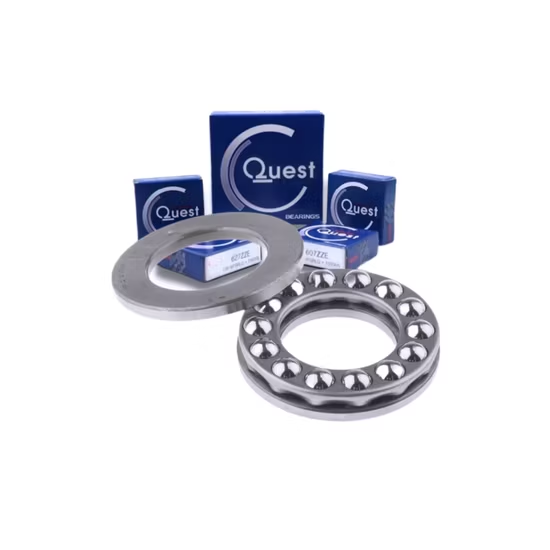
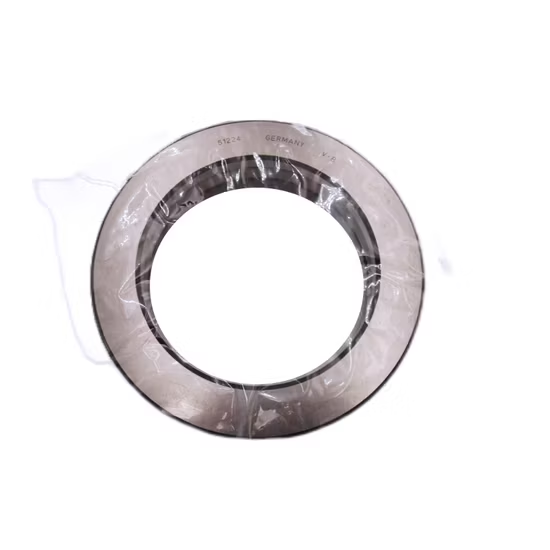
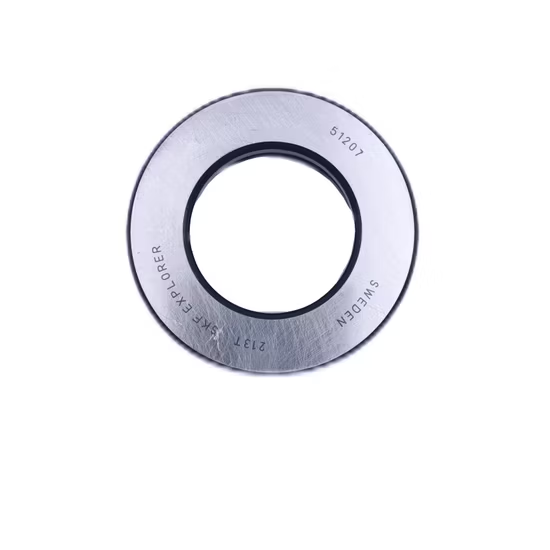

51101 Single Direction Thrust Ball Bearing
Traceable Batch Origins — Every 51101 thrust ball bearing ships with manufacturer lot documentation verifying its exact production run.
| Parameter | Value |
|---|---|
| Designation | 51101 |
| Bearing Type | Thrust Ball Bearing |
| Direction | Single Direction |
| Bore Diameter (d) | 12 mm |
| Outside Diameter (D) | 26 mm |
| Width (B) | 9 mm |
| Cage Material | Pressed steel or machined brass options |
| Clearance Class | Standard or C3 for thermal expansion |
| Precision Class | P0 to P6 available |
| Origin | Japan / Germany / Sweden / Malaysia |
Note: The legacy 8101 cross-reference designation requires careful verification of internal geometry and cage material to ensure exact interchangeability.
| Industry | Typical Applications |
|---|---|
| Material Handling | Crane hook swivel mechanisms and heavy-duty hoisting blocks |
| Fluid Management | Vertical water pump impeller shafts and axial thrust collars |
| Machine Tools | Vertical spindle tables and precision indexing fixtures |
| Automotive Repair | Heavy vehicle steering knuckles and clutch release assemblies |
Matching the basic designation is never enough; installing a standard clearance thrust bearing in a high-temperature crane hook application without verifying internal design leads to premature cage failure.
I still remember the sharp smell of burnt insulation from a vertical motor in Dubai, completely seized because a standard clearance bearing was forced into a high-heat environment. The thermal expansion choked the internal geometry, locking the shaft solid. When procurement teams source a 51101 thrust ball bearing based solely on the base number, they frequently overlook the required clearance class and cage material. This oversight causes severe friction, rapid lubricant degradation, and catastrophic downtime in vertical load equipment .
Single direction axial load capacity is the defining characteristic here, optimized specifically for vertical applications like crane hooks and water pumps where radial forces are negligible. Sourcing through authorized multi-brand channels ensures that mixed-brand procurement is supported by unified documentation. We validate every cross-reference to guarantee the exact internal geometry matches your OEM equipment requirements, preventing the subtle mismatches that destroy vertical shafts.
Vertical shafts in water pumps and lifting hoists subject the bearing to constant, unidirectional axial stress, often combined with significant thermal gradients. As the equipment operates, heat transfers down the shaft, causing elongation that can eliminate internal clearance if a standard class is used. Lubrication must be carefully selected to withstand this vertical orientation, as gravity can pull grease away from the upper raceway. Proper installation requires precise alignment to prevent uneven load distribution across the balls, which accelerates fatigue and compromises the entire assembly .
The "51" prefix strictly identifies this as a single direction thrust ball bearing series, designed with a shaft washer, a housing washer, and a ball and cage assembly. Because this specific designation lacks complex suffix combinations, the critical selection variables shift to the cage material and clearance class. Pressed steel cages offer low friction for higher speed applications, while machined brass cages provide superior durability under heavy axial loads and vibration. Selecting a C3 clearance instead of standard CN is often mandatory in vertical pump applications to accommodate the thermal expansion of the shaft during continuous operation, preventing the raceways from binding under heat.
Specifying the wrong clearance class in a vertical application rarely results in a graceful degradation; it typically ends in sudden, catastrophic seizure. When thermal expansion eliminates the internal clearance, the rolling elements skid rather than roll, generating immense friction and destroying the raceways. This leads to unplanned downtime, severe damage to the surrounding housing, and complete warranty voidance. Following failure analysis frameworks reveals that a significant share of premature thrust bearing failures stems directly from ignoring the thermal dynamics of the specific installation environment.
Counterfeit thrust bearings often feature soft inner rings that deform under heavy axial loads, a defect hidden beneath cloned QR codes. We eliminate this risk by providing batch traceability to the manufacturer, ensuring every component meets original metallurgical standards. Cross-referencing older equipment manuals often yields outdated designations; we verify that the modern equivalent matches the exact precision and cage requirements. Our application-based selection review evaluates your specific load and temperature conditions, ensuring you receive a component engineered for your exact operational reality.
To ensure precise technical validation, please provide the exact axial load figures, operational speeds, and expected temperature ranges for your application. If you are replacing an older component, share the OEM equipment number or the legacy designation so our engineering team can execute a thorough cross-reference check. Detailing the environmental conditions, such as exposure to moisture or heavy particulate contamination, allows us to recommend the optimal cage material and clearance class for your specific machinery.
Q: How do I verify the authenticity of the 51101 thrust ball bearing using official apps?
A: Every genuine unit features a unique laser-etched QR code on the packaging or directly on the washer. By scanning this code with the manufacturer's official mobile application, you can instantly verify the production batch, factory origin, and authenticity. This digital traceability ensures you are installing a certified component, protecting your equipment from the severe risks associated with counterfeit bearings that feature substandard metallurgy and soft raceways.
Q: What are the cross-reference pitfalls when replacing older 8101 designations?
A: While legacy manuals may list the 8101 designation, simply matching the base numbers is insufficient. Older designs might have utilized different cage materials or internal geometries that are not compatible with modern high-speed vertical applications. A proper cross-reference must validate the axial load capacity, cage type, and dimensional tolerances to ensure the modern equivalent performs reliably without causing premature wear or unexpected friction in your specific machinery.
Q: Which clearance class is required for high-temperature crane hook applications?
A: In high-temperature lifting environments, the vertical shaft expands significantly during operation. Installing a standard clearance bearing in these conditions often leads to thermal binding and sudden seizure. A C3 or greater clearance class is typically required to provide the necessary internal space for thermal expansion. Sharing your exact operating temperature profile allows us to calculate the precise clearance needed to maintain smooth rotation and prevent catastrophic cage failure.
Q: What documentation ensures batch traceability for customs and compliance?
A: For international procurement and strict compliance requirements, we provide a comprehensive documentation package. This includes the Certificate of Conformity, detailed material test reports, and precise country-of-origin documentation. Furthermore, our dimensional and running accuracy inspection reports confirm that the specific batch meets all required axial thickness and parallelism tolerances, ensuring seamless customs clearance and full traceability for your quality management systems.
Q: How do I select the correct single direction thrust bearing for vertical water pumps?
A: Vertical water pumps generate continuous, heavy axial loads that require a bearing optimized for pure thrust. Selection depends on the impeller weight, operational speed, and the thermal profile of the pumped fluid. You must also consider the lubrication method and potential exposure to moisture. By providing these specific operational parameters, our technical team can recommend the exact cage material and precision class required to maximize the service life of your pump assembly.
Our 5-step process ensures every order is engineered, validated, and supported for optimal performance.
Technical needs assessment
Custom specifications
Free samples for $50k+
Pre-shipment inspection
On-site & predictive
Our certified engineers respond within 24 hours with detailed technical specifications, pricing, and lead time information.


