01
Consultation
Technical needs assessment

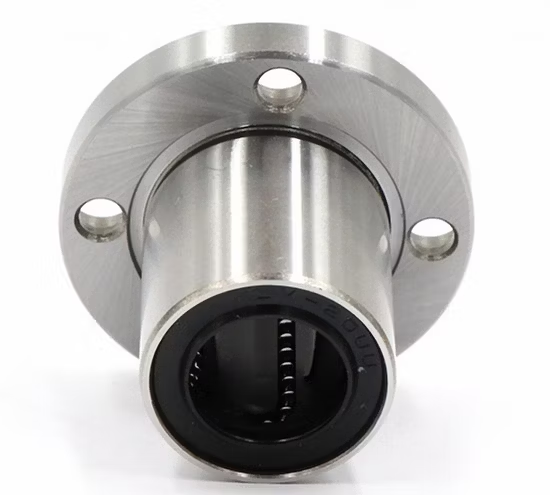


Lmef20luu Lmef25luu Lmef30luu Linear Bearing for 20/25/30 mm Shafts — Engineered with bearing steel and nylon cages for low-noise operation, supporting P0 to P2 precision ratings.
Full Brand Coverage — Mixed orders for Lmef20luu Lmef25luu Lmef30luu linear bearing units ship from a single authorized source, eliminating multi-vendor coordination delays.
| Parameter | Value |
|---|---|
| Designation | Lmef20luu Lmef25luu Lmef30luu |
| Product Type | Linear Bearing |
| Flange Shape | Circular |
| Shape | Open |
| Series | LM |
| Material | Bearing Steel |
| Precision Rating | P0, P6, P5, P4, P2 |
| Cage Material | Nylon |
| HS Code | 8483109000 |
Note: The 'F' flange and 'LUU' seal designations in the identifier are unverified suffixes requiring manufacturer catalog confirmation for exact dimensional profiles.
| Industry | Typical Applications |
|---|---|
| Automation & Robotics | Multi-axis robotic arm linear guides, automated assembly line transfer carriages |
| Machine Tool Manufacturing | CNC router spindle traverse axes, precision measuring instrument scanning stages |
| Packaging & Printing | High-speed packaging machinery sealing jaws, 3D printer extruder carriage rails |
A perfectly matched Lmef20luu Lmef25luu Lmef30luu linear bearing prevents carriage binding caused by housing distortion.
In automated assembly environments, I have seen standard flange bearings fail prematurely simply because the aluminum housing tolerances were ignored during installation. When the mounting surface is uneven, the circular flange distorts the outer sleeve upon bolting, transferring stress directly to the ball retainer. This causes the carriage to stutter during high-speed reciprocation. Procurement teams often focus solely on the base shaft diameter, overlooking how flange thickness and mounting hole spacing interact with the machine frame .
Automated transfer systems demand components that handle continuous reciprocating motion without generating excessive particulate matter. The circular flange design provides a secure, multi-point mounting interface that resists moment loads when the carriage extends beyond its support base. By ensuring the housing bore matches the outer diameter tolerance, we prevent the sleeve deformation that typically leads to retainer drag and uneven wear tracks on the shaft.
High-speed linear axes in 3D printers and CNC machines generate friction heat and expose the guideway to dust or metallic swarf. The nylon cage reduces moving mass, allowing faster acceleration while maintaining low acoustic noise. However, in environments with heavy particulate contamination, the seal type becomes critical. Contact seals increase drag and generate heat at high velocities, whereas non-contact shields offer less resistance but allow fine dust ingress, eventually scoring the shaft and degrading running accuracy .
The circular flange configuration allows for direct, flush mounting onto carriage plates, distributing the load evenly across the housing face. The bearing steel construction provides the necessary surface hardness to resist brinelling under static loads. Precision ratings ranging from P0 to P2 dictate the dimensional tolerance of the inner bore; selecting a P4 or P2 class is essential for precision measuring instruments where micron-level radial play translates directly into measurement errors. The nylon retainer is optimized for standard lubricated environments, offering a balance of low friction and vibration damping compared to heavier metallic cages.
Overlooking the interaction between the flange mounting surface and the bearing sleeve leads to catastrophic damage in automated lines. When the housing bore is machined too tight, the sleeve compresses, eliminating the internal clearance and causing the balls to skid rather than roll. This results in unplanned downtime, severe shaft scoring, and premature failure of the entire linear guide assembly. According to standard failure analysis frameworks, improper mounting and housing distortion account for a significant share of early linear bearing replacements .
Sourcing the Lmef20luu Lmef25luu Lmef30luu linear bearing requires more than matching the base shaft size. We verify that the flange thickness and mounting hole patterns align exactly with your carriage design, preventing installation stress. Our cross-brand interchange process checks the internal ball grade and cage pocket geometry, not just the outer dimensions. Every batch ships with traceability documents, ensuring the bearing steel meets the required hardness specifications. If your application involves high moment loads, our engineering review confirms the flange diameter provides adequate leverage resistance.
To ensure the selected models match your automated equipment, provide the radial and axial load profiles, maximum traverse speed, and operating temperature range. Share the carriage housing material and bore tolerance specifications so we can verify the flange fit and recommend the appropriate precision class. Supplying the OEM equipment number allows our team to perform a comprehensive cross-reference check, confirming the seal type and cage material align with the original design parameters.
Q: How do we verify the authenticity of these linear bearings upon delivery?
A: You can scan the QR codes on the packaging using the manufacturer's official mobile application. This confirms the batch origin and validates the bearing steel specifications. We also provide batch traceability documents and dimensional inspection reports, ensuring the internal components meet the required hardness and tolerance standards before they reach your facility.
Q: Why must the flange shape and seal suffixes match during cross-referencing?
A: Matching only the base shaft diameter ignores critical mounting and environmental factors. The circular flange dictates the carriage bolt pattern and load distribution, while the seal suffix determines contamination resistance and friction levels. An incorrect flange thickness or seal type causes housing distortion or excessive drag, leading to premature failure in high-speed automated applications.
Q: What are the selection boundaries for nylon versus steel cages in linear systems?
A: Nylon cages are preferred for high-speed, low-noise applications like 3D printers and robotics due to their lower mass and vibration damping properties. However, they have thermal limits and may degrade in environments with aggressive chemicals. Steel cages are selected for applications involving elevated temperatures or where chemical exposure would compromise polymer integrity.
Q: How do precision ratings impact linear motion systems?
A: Precision classes from P0 to P2 define the dimensional tolerances of the inner bore and outer sleeve. In precision measuring instruments or high-end CNC spindles, tighter tolerances minimize radial play and ensure micron-level positioning accuracy. Selecting a lower precision grade for these applications introduces positioning errors and uneven load distribution across the ball tracks.
Our 5-step process ensures every order is engineered, validated, and supported for optimal performance.
Technical needs assessment
Custom specifications
Free samples for $50k+
Pre-shipment inspection
On-site & predictive
Our certified engineers respond within 24 hours with detailed technical specifications, pricing, and lead time information.