01
Consultation
Technical needs assessment

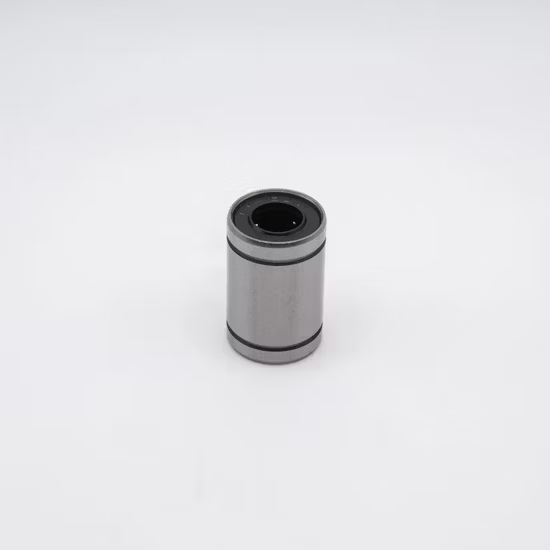
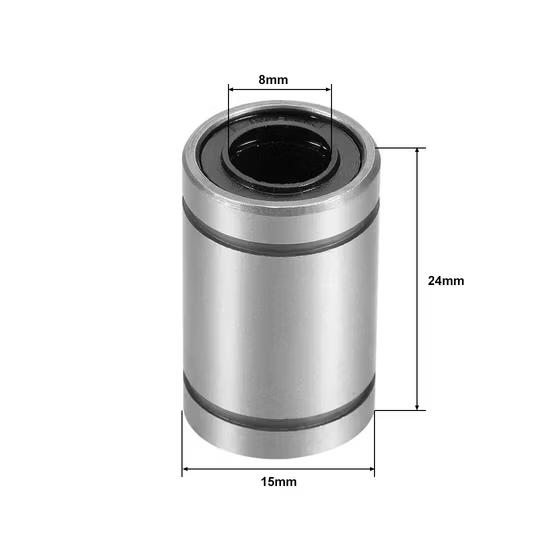

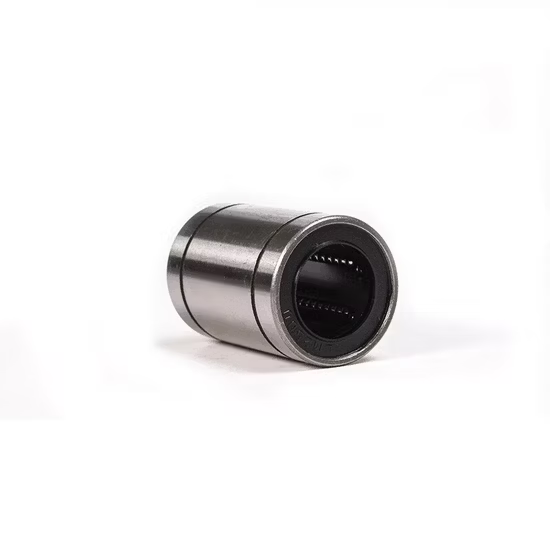
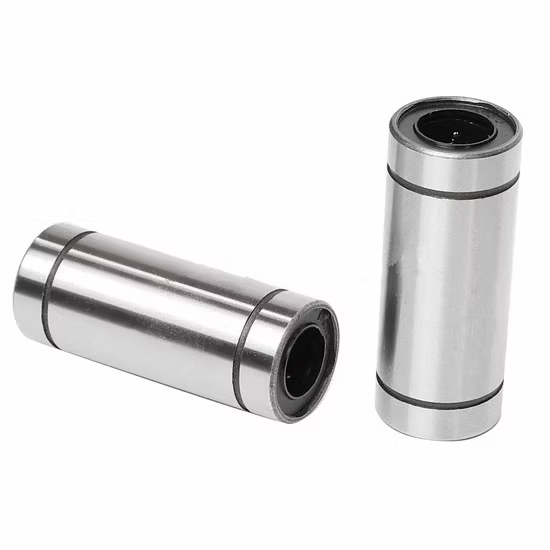
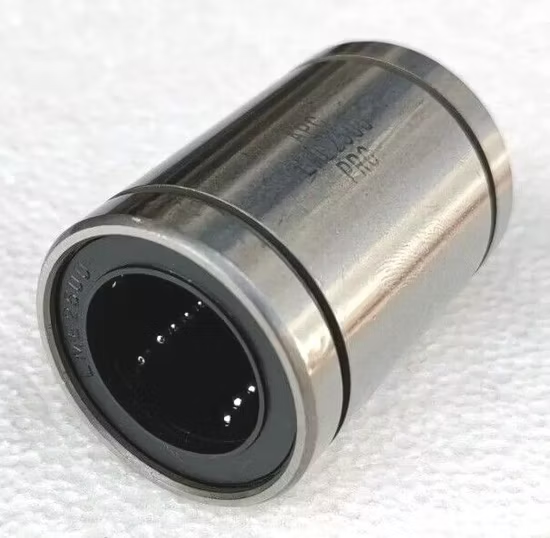
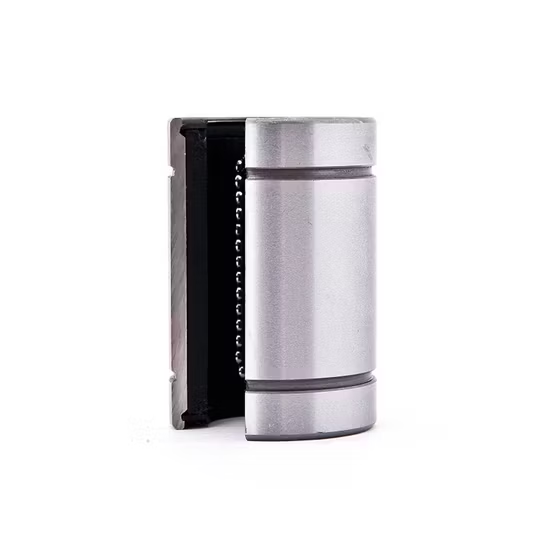
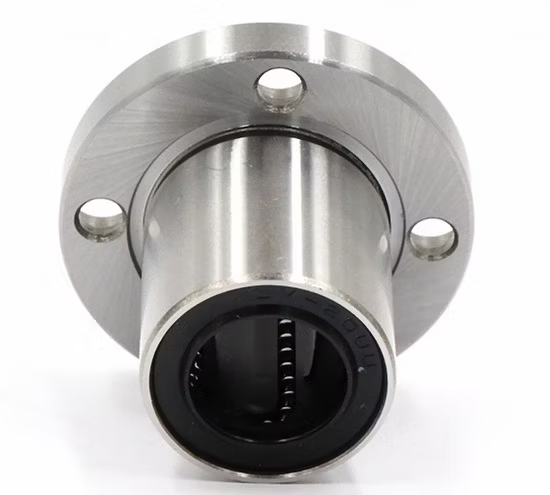
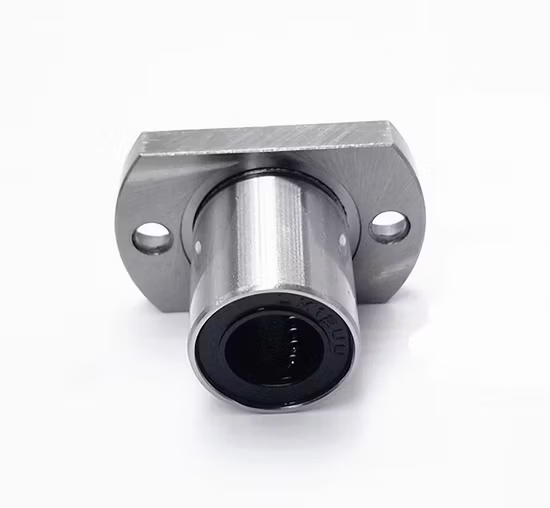
Lme4uu Linear Bearing features an open shape for adjustable clearance and a nylon cage for low-noise operation.
Verified via official apps — Every Lme4uu batch includes scannable QR codes linking directly to the manufacturer's authenticity database.
| Parameter | Value |
|---|---|
| Designation | Lme4uu |
| Product Type | Linear Bearing |
| Shape | Open |
| Flange Shape | Circular |
| Series | LM |
| Material | Bearing Steel |
| Cage Material | Nylon Cage |
| Precision Rating | P0, P6, P5, P4, P2 |
| Feature | High Speed, Low Voice |
| Origin | Germany, Japan, Sweden, Malaysia, China |
*The "uu" suffix is an unverified designation requiring manufacturer catalog confirmation for exact seal and retainer specifications.
| Industry | Typical Applications |
|---|---|
| CNC Machining | Linear guide carriages for multi-axis milling machines |
| Additive Manufacturing | Z-axis lift mechanisms and extruder positioning in 3D printers |
| Industrial Automation | Pick-and-place robotic arms and automated assembly slides |
| Metrology | Precision measuring instrument stages and optical inspection tables |
| Packaging | High-speed sorting conveyors and automated sealing actuators |
Material misalignment causes catastrophic carriage lockups long before the steel shaft wears out.
Procurement teams often focus exclusively on the base dimension and overlook the cage material, assuming all linear bearings handle vibration equally. When a standard polymer retainer is installed in a high-shock environment without proper verification, the cage pockets deform and fracture under continuous oscillation. . This leads to the rolling elements clustering together, instantly jamming the carriage and halting the entire automated line. We prevent these field binding incidents by cross-referencing the exact cage material against the specific vibration profile of your machinery.
Selecting the correct Lme4uu linear bearing for automated machinery requires looking past the basic outer diameter and focusing on the internal geometry. The open shape design is specifically engineered to be used with adjustable clearance housings, allowing maintenance teams to dial in the exact preload needed for smooth travel on slightly worn or soft shafts. By verifying the nylon cage specification and matching it to the operational speed, we ensure the carriage maintains low operational noise and minimal friction during rapid traverse cycles.
Linear guides in CNC machines and 3D printers endure continuous acceleration and deceleration, generating localized friction heat at the ball-to-shaft contact points. If the internal clearance is too tight, this thermal expansion eliminates the running gap, causing the carriage to bind and score the shaft surface. Proper lubrication is equally critical; open-type carriages rely entirely on the housing's external lubrication channels, meaning the grease must be carefully selected to resist being pushed out of the raceway by the reciprocating motion. . Furthermore, environmental dust from machining or packaging operations can easily infiltrate the open ends if the housing seals are not perfectly matched to the carriage profile.
The open shape of this linear bearing is not merely a manufacturing variation; it is a critical feature for precision adjustment. When clamped inside a slotted housing, the open profile allows the bearing to compress slightly around the shaft, eliminating play and ensuring rigid, chatter-free movement during heavy cutting or high-speed printing. The internal nylon cage plays a vital role in separating the rolling elements, preventing metal-to-metal contact that would otherwise generate excessive heat and acoustic noise. While steel cages are available for extreme temperature environments, the polymer variant significantly reduces the moving mass of the carriage, allowing for faster acceleration without sacrificing structural integrity. The bearing steel construction provides the necessary surface hardness to resist brinelling under static loads, though it requires strict environmental control to prevent corrosion.
Installing a linear carriage with an incorrect internal design or mismatched seal type rarely results in immediate failure; instead, it causes a gradual degradation of positioning accuracy. Over time, this microscopic play ruins the surface finish of machined parts or causes layer shifting in additive manufacturing, leading to massive scrap rates. According to failure analysis frameworks, a significant share of premature linear guide failures stems from contamination ingress and lubrication breakdown rather than fatigue. . Ultimately, the cost of an unplanned machine stoppage and the subsequent shaft replacement far outweighs the initial effort required to verify the exact internal configuration before procurement.
Mixed-brand requirements often force buyers to coordinate with multiple vendors, increasing the risk of receiving mismatched tolerances across different axes of the same machine. Our authorized coverage across all major international brands allows us to fulfill complex, multi-axis orders in a single shipment, ensuring uniform running accuracy. I once inspected a failed automation module where an LME8UU carriage locked up completely because the supplier substituted a brittle cage material that shattered under high-frequency vibration. We eliminate this risk by verifying every suffix and internal component, ensuring the nylon cage and open profile exactly match your equipment's dynamic requirements. Furthermore, our cross-reference alignment covers not just the base number, but the precise shape, series, and internal geometry to prevent thermal binding in the field.
To ensure the selected carriage perfectly matches your automated equipment, please provide the specific radial and axial load profiles, maximum traverse speeds, and operating temperature ranges. Sharing the OEM equipment number or the existing carriage designation allows our engineering team to perform a comprehensive cross-reference check, verifying the exact shape, cage material, and seal configuration. If you are redesigning a linear module, detailing the shaft diameter, housing bore tolerance, and environmental exposure will enable us to recommend the optimal precision class and lubrication strategy for reliable, long-term operation.
Q: What is the difference between open and closed linear bearing shapes?
A: Closed shapes are rigid cylinders pressed directly into a housing, while open shapes feature a longitudinal slit. This slit allows the bearing to compress slightly when clamped in an adjustable housing, enabling precise clearance tuning. This adjustability is critical for eliminating play on shafts that may have worn slightly over time, ensuring smooth, chatter-free linear motion in high-precision CNC and automation applications.
Q: How do I cross-reference Lme4uu with other common linear bearings?
A: When cross-referencing to similar designations like Lme5uu or Lme8uu, you must verify more than just the base dimension. It is essential to confirm the open shape, the specific nylon cage material, and the exact seal or retainer configuration. A base number match that overlooks these internal differences can lead to thermal binding or cage failure under high-speed oscillation.
Q: How do precision ratings affect linear bearing performance?
A: Precision ratings such as P0, P6, P5, P4, and P2 dictate the dimensional and running accuracy of the carriage. Higher precision classes like P4 or P2 ensure tighter tolerances, which are necessary for precision measuring instruments and high-speed CNC spindles to prevent microscopic play. Selecting a lower precision grade for these applications can result in poor surface finishes and reduced positioning accuracy.
Q: What are the boundaries for selecting nylon versus steel cages?
A: Nylon cages offer lower friction, reduced moving mass, and quieter operation, making them ideal for high-speed automation and 3D printers. However, they have strict thermal limits and can degrade under extreme heat or certain chemical exposures. Steel cages are required when the operating environment exceeds the thermal capacity of polymers or when the carriage is exposed to aggressive solvents that would compromise the nylon structure.
Q: What shaft surface finish is required for open-type linear bearings?
A: The shaft must have a precise surface finish and adequate hardness to prevent the rolling elements from scoring the metal during reciprocation. A rough shaft surface will rapidly wear down the bearing steel and generate metallic debris that contaminates the open carriage. Proper shaft preparation and hardness verification are mandatory to ensure the linear guide achieves its expected service life without premature failure.
Our 5-step process ensures every order is engineered, validated, and supported for optimal performance.
Technical needs assessment
Custom specifications
Free samples for $50k+
Pre-shipment inspection
On-site & predictive
Our certified engineers respond within 24 hours with detailed technical specifications, pricing, and lead time information.