01
Consultation
Technical needs assessment

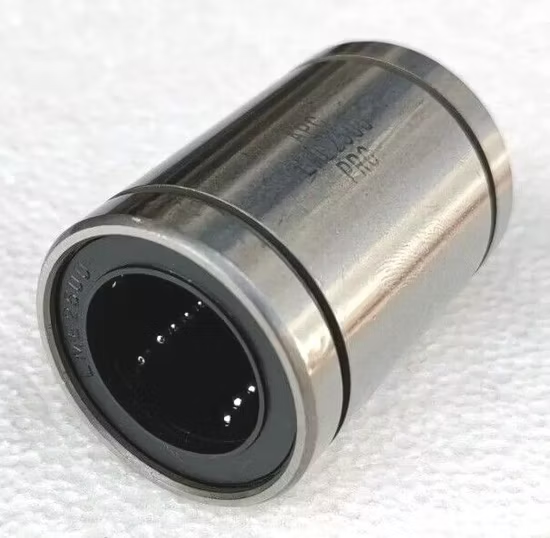
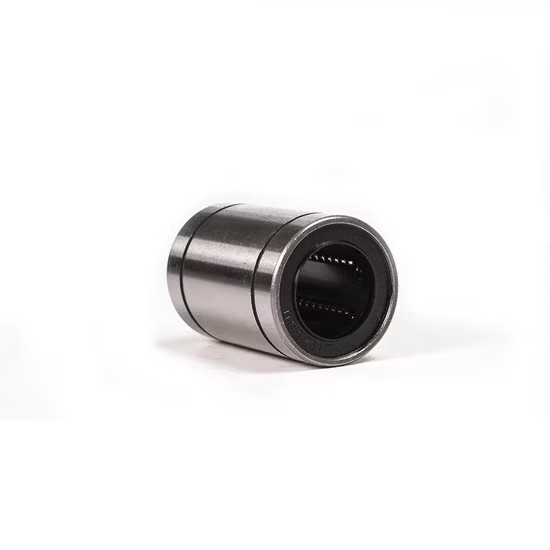

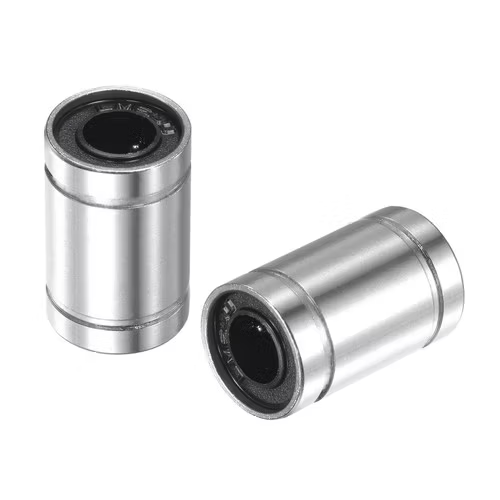
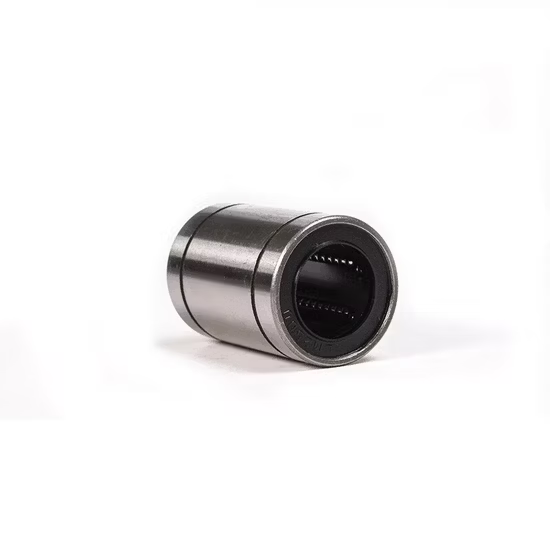

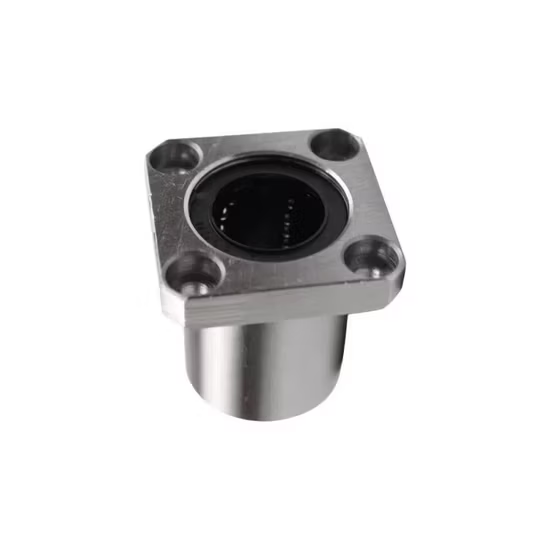
Lme40uu Linear Bearing 40 mm — equipped with double-sided rubber seals to block dust and retain lubrication for smooth operation in CNC machines.
Cross-Reference Tri-Alignment — Every interchange review for the Lme40uu verifies inner diameter, seal configuration, and cage material rather than relying on base numbers alone.
| Parameter | Value |
|---|---|
| Designation | Lme40uu |
| Product Type | Linear Bearing |
| Series | LM |
| Nominal Shaft Diameter (d) | 40 mm |
| Material | Bearing Steel |
| Cage Material | Nylon |
| Seal Type | Double-sided rubber seals (uu) |
| Shape | Open |
| Flange Shape | Circular |
| Feature | High Temperature, High Speed |
| Precision Class | P0, P6, P5, P4, P2 |
| Industry | Typical Applications |
|---|---|
| Machine Tool Manufacturing | CNC machine spindle traversing and tool changer mechanisms |
| Industrial Automation | High-speed robotic arm linear guides and pick-and-place actuators |
| Material Handling | Automated storage and retrieval system shuttle tracks |
| Packaging Machinery | High-cycle sealing and cutting head linear motion rails |
Matching the base designation while ignoring internal suffixes leads to rapid track seizure.
Procurement teams often source linear motion components by matching the basic size, overlooking critical internal variations. When a standard carbon steel cage is installed in a high-speed automated assembly line instead of the specified polymer variant, the resulting friction and heat cause the cage to fracture within weeks. These cross-reference errors bypass the necessary clearance and material alignments, triggering premature binding on the guide shaft.
High-cycle automation environments demand consistent sliding friction and minimal particulate generation. The Lme40uu linear bearing addresses these requirements through its optimized internal geometry and specialized sealing arrangement. By aligning the cage material and seal type with the specific往复 speed of the equipment, we ensure smooth travel without the micro-vibrations that degrade positioning accuracy in CNC and robotic applications.
Linear guides in automated machinery face continuous cyclic loading and rapid directional reversals. At elevated speeds, friction heat accumulates quickly within the ball retainer, making thermal stability a primary concern. Contamination from ambient dust or metal shavings can easily infiltrate the carriage, scoring the shaft and destroying the recirculation path. Proper sealing and low-friction cage materials are mandatory to prevent lubricant starvation and maintain dimensional stability.
The "40" in the designation confirms a 40 mm nominal shaft diameter, dictating the fundamental load capacity and mounting footprint. The "uu" suffix indicates double-sided rubber seals, which provide essential contact sealing to retain lubrication and block particulate ingress during high-speed traversal. Inside the carriage, the nylon cage minimizes sliding friction and dampens operational noise compared to metallic retainers. Furthermore, the open shape with a circular flange allows for precise clearance adjustment and flexible mounting on custom automation brackets.
Installing a mismatched linear carriage often results in unplanned downtime that halts the entire production cell. If the seal type fails to exclude fine particulates, the internal recirculation path suffers catastrophic scoring, leading to sudden carriage lockup. Such premature failures not only destroy the linear bearing but also damage the expensive precision ground shaft. According to industry failure analysis frameworks, these cascading mechanical damages frequently void equipment warranties and escalate repair expenses significantly.
Our technical team verifies the exact cage material and seal suffix during every cross-reference, preventing the common mistake of substituting an open carriage for a sealed one. We provide authorized batch traceability for every shipment, ensuring the bearing steel and nylon components meet original metallurgical standards. Our application-based selection review evaluates your specific traverse speed and load profile to confirm the precision class is adequate. Furthermore, we supply comprehensive dimensional and running accuracy inspection reports before dispatch, eliminating the guesswork in critical CNC installations.
To ensure optimal performance, please share your specific radial and axial load profiles, maximum traverse speeds, and operating temperature ranges. Providing the original OEM equipment number allows our engineering team to perform a precise cross-reference check, verifying that the seal and cage suffixes perfectly match your application. This technical review guarantees the selected configuration will withstand your operational demands without premature degradation.
Q: What does the "uu" suffix indicate on this linear motion component?
A: The "uu" suffix specifies that the carriage is equipped with double-sided rubber contact seals. These seals are critical for retaining internal lubrication and preventing dust or metal shavings from entering the ball recirculation path, which is especially vital in dusty CNC or packaging environments where contamination causes rapid track scoring.
Q: How do you handle cross-referencing for automated equipment replacements?
A: We do not rely solely on the basic 40 mm size designation. Our technical review strictly aligns the internal cage material, seal configuration, and precision class with your specific application parameters. This prevents the common error of installing an open or metallic-cage variant in a high-speed line, ensuring exact functional equivalence to the original component.
Q: Can this carriage be used in high-temperature automation ovens?
A: While the bearing steel and specific nylon cage materials offer enhanced thermal stability for high-speed friction heat, extreme ambient oven temperatures require specialized high-temperature variants. Please provide your exact operating temperature range so we can verify if the standard polymer retainer is suitable or if a specialized high-temperature configuration is required.
Q: What documentation is provided to verify the precision class?
A: Every shipment includes a dimensional and running accuracy inspection report that confirms the specific precision class, such as P5 or P4, before dispatch. Alongside this, we provide a Certificate of Conformity and batch traceability documents, allowing your quality control team to verify the exact manufacturing origin and tolerance compliance.
Our 5-step process ensures every order is engineered, validated, and supported for optimal performance.
Technical needs assessment
Custom specifications
Free samples for $50k+
Pre-shipment inspection
On-site & predictive
Our certified engineers respond within 24 hours with detailed technical specifications, pricing, and lead time information.