01
Consultation
Technical needs assessment
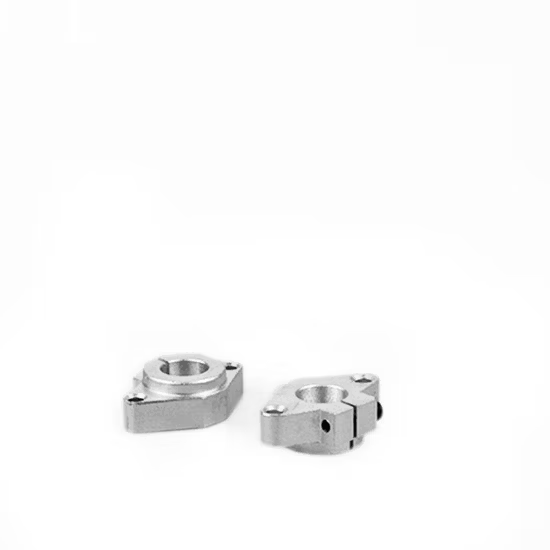
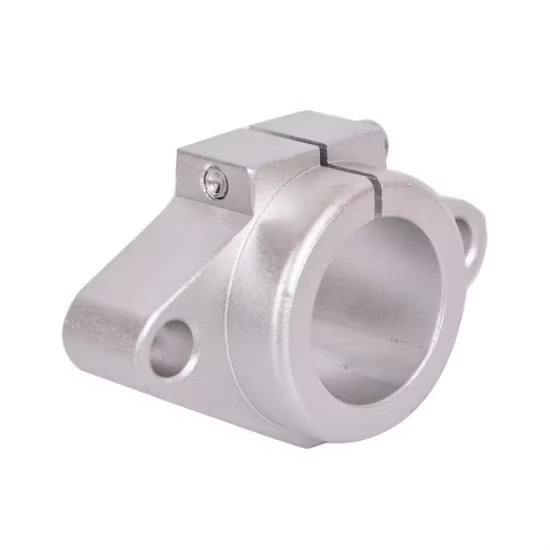
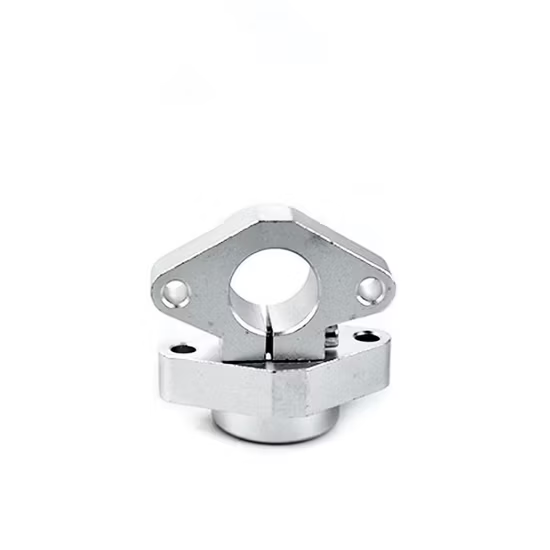
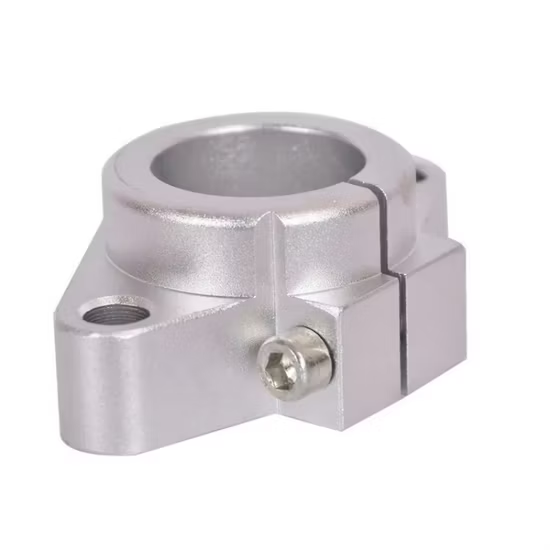
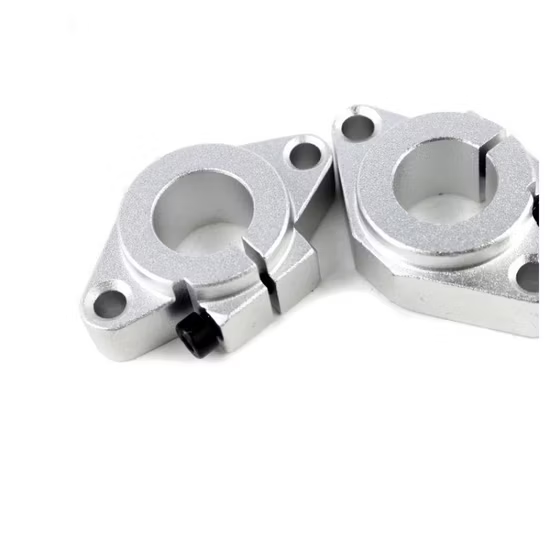
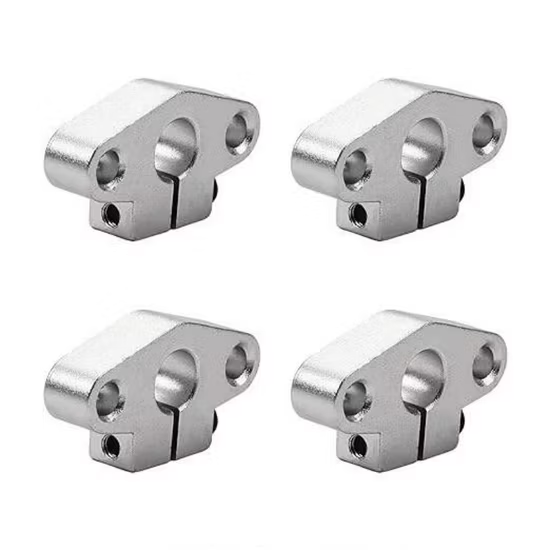
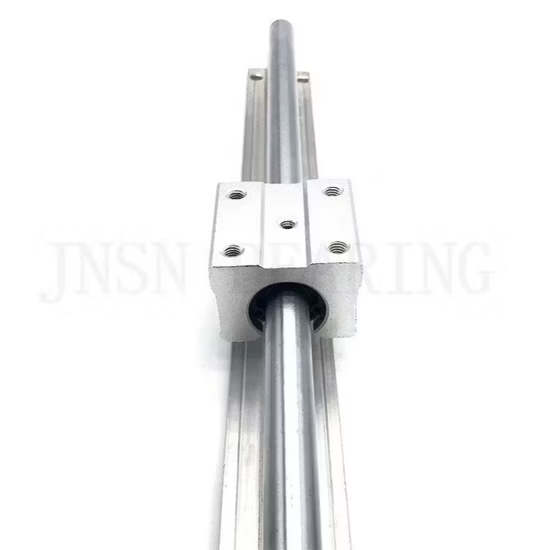
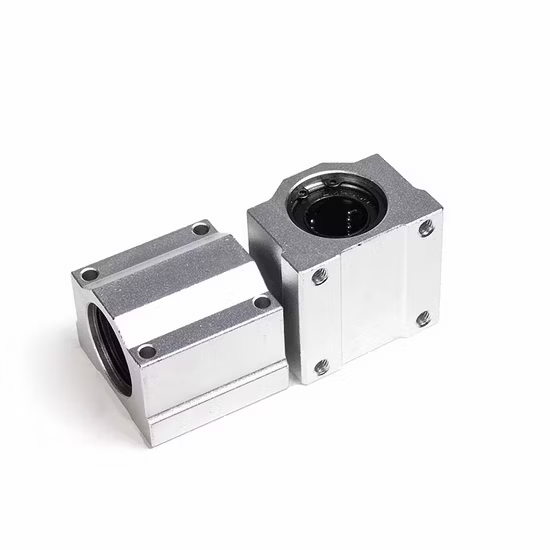
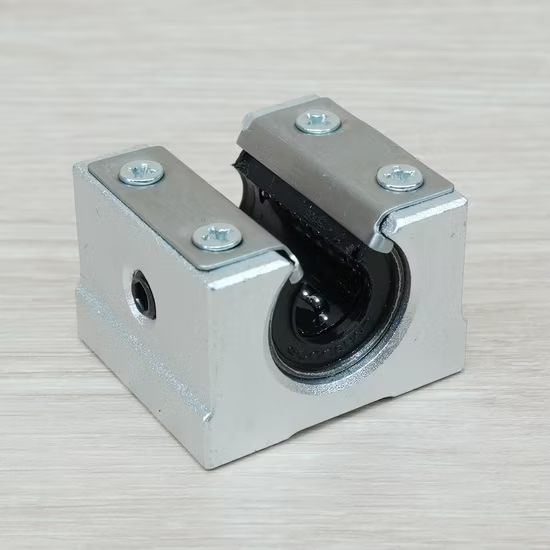
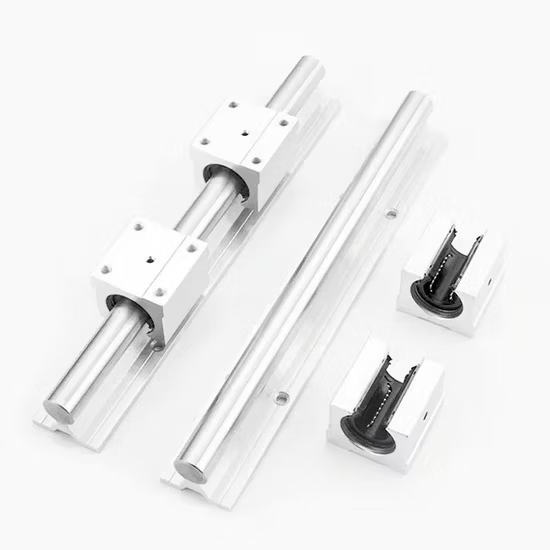
Linear Motion Shaft Support Bracket — stainless steel hollow profile with polished surface for high corrosion resistance in precision CNC and 3D printer axis systems.
Verified Origin Traceability — Every batch includes QR codes linking directly to the manufacturer's official verification app for authenticity confirmation.
| Parameter | Value |
|---|---|
| Product Type | Linear Motion Shaft Support Bracket |
| Material Options | Stainless steel or standard bearing steel variants |
| Profile Type | Hollow profile |
| Surface Treatment | Polished |
| Corrosion Resistance | High corrosion resistance |
| Precision Rating Options | P0, P2, P4, P5, P6 |
| Operational Features | High speed, low voice |
| Customization | Custom length |
| Origin Options | Germany, Japan, Sweden, Malaysia, China |
| Certification | CE, ISO 9001:2000, ISO 9001:2008, RoHS |
| Industry | Typical Applications |
|---|---|
| CNC Machining | Spindle axis guidance and tool changer linear rails |
| 3D Printing | Z-axis lead screw stabilization and print head gantry support |
| Automation Equipment | Pick-and-place linear motion modules and engineering machinery |
Selecting a reliable linear motion shaft support bracket supplier involves more than matching basic dimensions; it requires verifying structural rigidity and geometric tolerance.
In the Pearl River Delta manufacturing hub, I have seen countless CNC sliders suffer abnormal wear simply because the rail parallelism deviated beyond acceptable limits. The hardware itself was fine, but the support structure introduced microscopic binding. When procurement teams prioritize lowest cost over geometric stability, the resulting friction generates localized heat and accelerates fatigue . The support bracket must maintain absolute alignment under dynamic loads to prevent these cascading failures.
A high-precision motion system relies entirely on the foundational stability of its guide rails. Our engineering review ensures the selected linear motion shaft support bracket supplier provides components with verified straightness and gap matching. We evaluate the specific load vectors and travel speeds of your equipment to recommend the optimal profile thickness and mounting configuration, eliminating any mechanical play that could compromise positioning accuracy.
High-speed 3D printer gantries and CNC spindles generate significant localized heat, which alters the dimensional stability of the entire rail assembly. When thermal expansion is not accounted for, the shaft support can induce axial binding, leading to severe layer shifting or tool chatter. Furthermore, exposure to coolant splashes or humid workshop environments demands high corrosion resistance. Selecting the appropriate material option and polished surface treatment prevents micro-pitting and ensures smooth linear travel despite environmental contamination .
The choice between stainless steel and standard bearing steel variants dictates the component's lifespan in corrosive versus high-load environments. Stainless options with a polished surface finish provide the high corrosion resistance needed for medical or food-grade 3D printers, while standard steel variants offer superior load capacity for heavy engineering machinery. The hollow profile design optimizes the weight-to-rigidity ratio, reducing the moving mass on high-speed axes without sacrificing structural integrity. Precision ratings from P0 to P2 are available to match the exact running accuracy required by your motion controller, ensuring low voice operation and minimal vibration at high speeds.
Installing a shaft bracket with poor straightness or incorrect material hardness leads to unplanned downtime and catastrophic damage to the linear bearings. The resulting uneven load distribution causes premature failure of the rolling elements, voiding equipment warranties and halting production lines. According to ISO 15243 frameworks, surface distress and smearing are direct consequences of misaligned support structures forcing the slider to bind . The financial impact of replacing an entire rail system far outweighs the initial savings of a substandard bracket.
We prevent cross-reference errors by evaluating your specific load, speed, and temperature conditions rather than just matching base part numbers. Our batch traceability ensures every stainless steel component meets the declared metallurgical standards, avoiding the soft inner ring counterfeits that plague the market. We provide cross-brand interchange expertise, verifying that the hollow profile dimensions and precision suffixes align perfectly with your OEM equipment requirements. This application-based selection review guarantees that the linear motion shaft support bracket supplier delivers components engineered for your exact operational reality.
Provide your equipment model, rail diameter, and specific load parameters so our technical team can determine the exact bracket configuration required. Detail the operational environment, including exposure to coolants or elevated temperatures, to help us select the most appropriate material option and surface treatment. In return, you receive a comprehensive cross-reference review and application-based selection validation ensuring optimal axis performance.
Q: How do I determine the exact shaft support model for my CNC rail?
A: Share your rail diameter, dynamic load parameters, and travel speed with our engineering team. We evaluate these application variables alongside your spatial constraints to specify the exact custom length and precision rating required, ensuring the linear motion shaft support bracket supplier delivers a perfectly matched component for your axis.
Q: When should I choose stainless steel over standard bearing steel?
A: Stainless steel variants are essential when the motion axis is exposed to moisture, coolant splashes, or washdown environments requiring high corrosion resistance. Standard bearing steel is preferred for dry, high-load engineering machinery applications where maximum structural rigidity and load capacity take priority over environmental protection.
Q: What causes Z-axis卡顿 and layer shifting in 3D printers?
A: This is typically caused by rail parallelism deviation or microscopic binding induced by a misaligned shaft support. When the bracket fails to maintain strict geometric tolerances, the resulting friction disrupts smooth linear travel, leading to mechanical play and severe print layer misalignment during high-speed operations.
Q: Are custom lengths available for non-standard motion axis systems?
A: Yes, we provide custom length configurations tailored to your specific gantry or rail dimensions. By providing your exact installation space and mounting hole requirements, our technical team ensures the hollow profile bracket is machined to integrate flawlessly with your existing linear motion architecture.
Our 5-step process ensures every order is engineered, validated, and supported for optimal performance.
Technical needs assessment
Custom specifications
Free samples for $50k+
Pre-shipment inspection
On-site & predictive
Our certified engineers respond within 24 hours with detailed technical specifications, pricing, and lead time information.