01
Consultation
Technical needs assessment

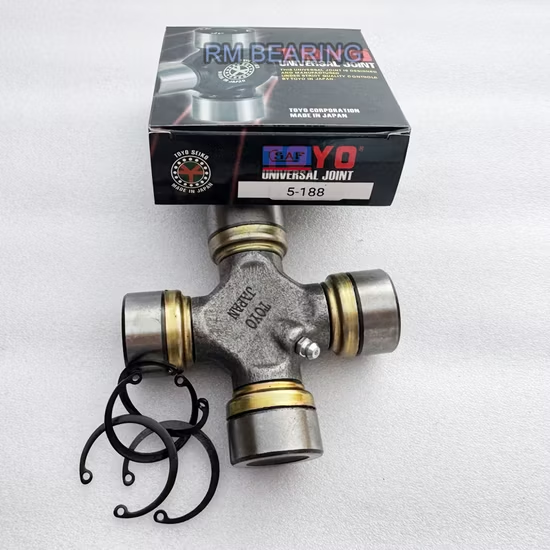
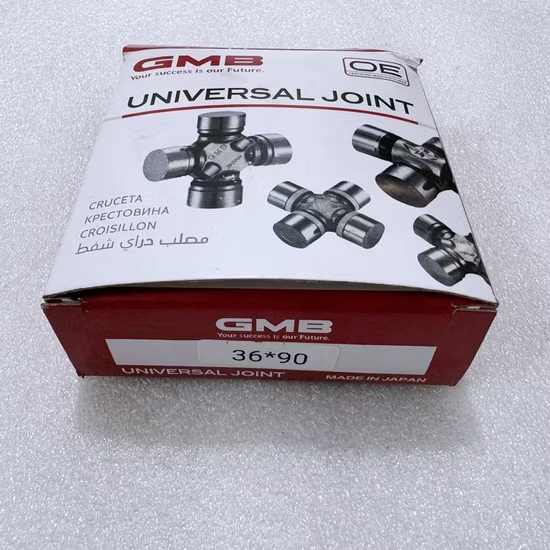
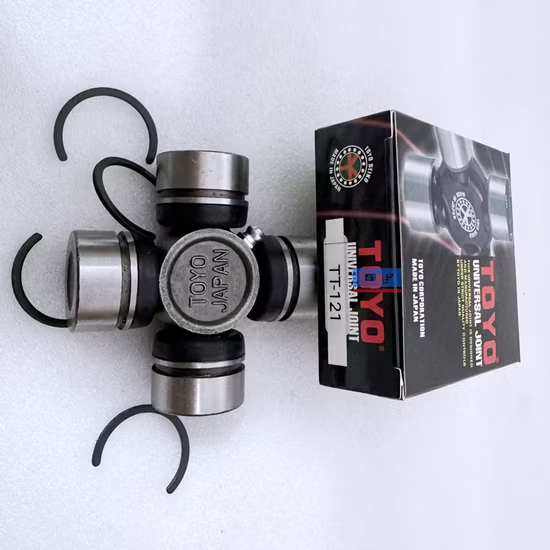
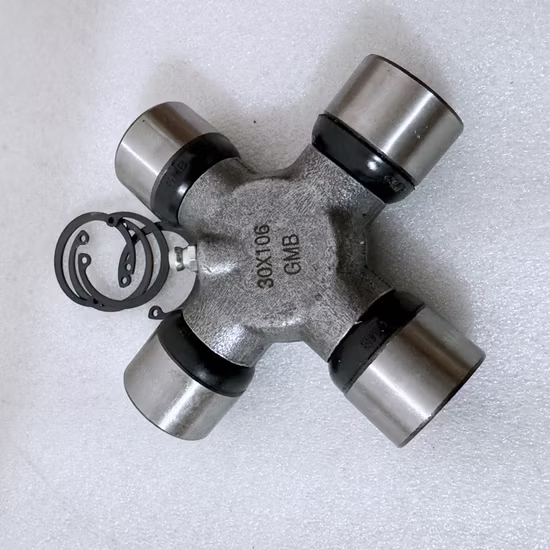
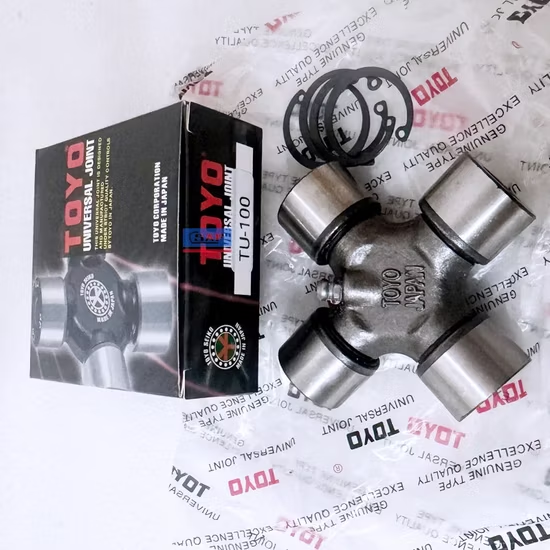
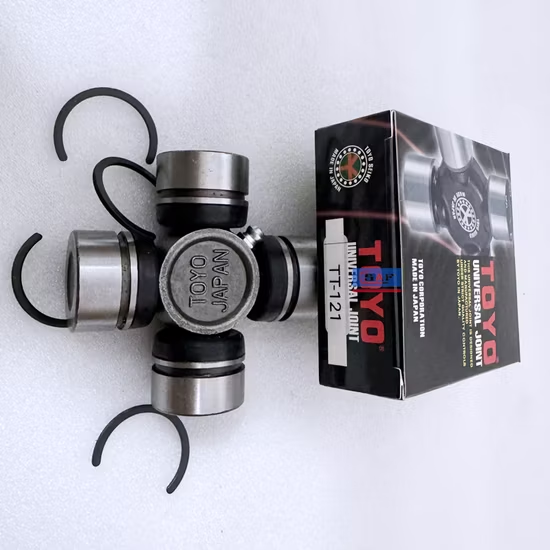
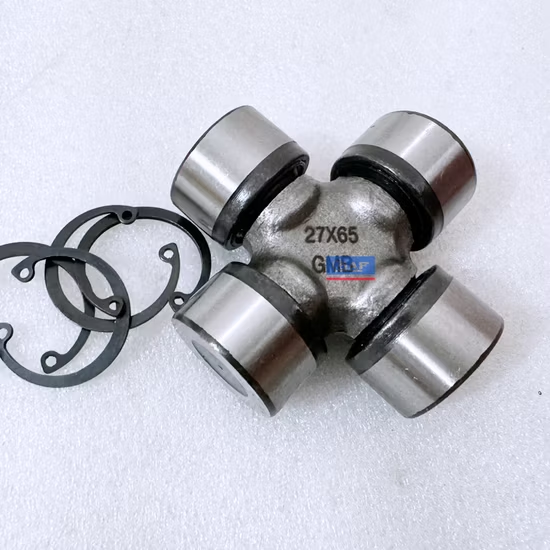
Koyo NSK Gum72 Universal Joint Cross Bearing — engineered for automotive and construction machinery drivetrains to handle heavy torque.
Scan to verify origin — Every Koyo NSK Gum72 universal joint cross bearing ships with a scannable QR code linking directly to the manufacturer's authentication database for immediate batch validation.
| Parameter | Value |
|---|---|
| Designation | Koyo NSK Gum72 |
| Product Type | Universal Joint Cross Bearing |
| Structure | Single cross assembly |
| Material Options | Available in stainless steel or high-carbon chrome bearing steel variants |
| Certification | ISO |
| Target Applications | Automotive, Tractors, Construction Machinery, Rolling Mills |
| Origin | Japan, Germany, Sweden, Malaysia, or China |
Note: Suffix designations including Gum72, Gum93, Gum94, and Gum95 require manufacturer catalog confirmation for exact dimensional interchangeability.
| Industry | Typical Applications |
|---|---|
| Automotive & Heavy Vehicles | Propeller shafts, steering column u-joints, and driveline slip yokes |
| Construction & Earthmoving | Articulation joints in loaders, hydraulic pump drives, and track tensioners |
| Agricultural Machinery | PTO drivelines, combine harvester rotor drives, and tractor steering linkages |
| Industrial Rolling Mills | Spindle coupling joints and heavy-duty transfer table drive shafts |
The Koyo NSK Gum72 universal joint cross bearing must endure severe torsional spikes that snap inferior trunnions. Field teardowns in the Shenzhen aftermarket consistently reveal that counterfeit crosses suffer from soft inner rings and incorrectly matched needle cage materials, leading to catastrophic binding under high-torque vibration. When internal clearances collapse due to poor thermal management, the entire driveline fails prematurely . Sourcing verified components prevents these hidden metallurgical defects from causing sudden transmission lockups on the highway or job site.
Selecting the correct Koyo NSK Gum72 universal joint cross bearing requires aligning the trunnion material with the specific shock load profile of the driveline. We cross-reference the exact OEM equipment number to ensure the needle roller hardness and cage geometry match the original engineering intent, preventing the accelerated wear that plagues generic substitutes.
Driveline environments expose u-joints to severe water ingress, abrasive dust, and extreme thermal cycling from exhaust proximity. Proper seal selection dictates whether the cross retains its grease purge capability while blocking contaminants, while the internal clearance must accommodate shaft expansion without inducing needle skidding . Neglecting these environmental factors rapidly degrades the rolling contact surfaces.
The internal architecture of this single cross structure relies on precision-ground trunnion journals and tightly toleranced needle rollers to distribute radial loads evenly across the bearing caps. Material variants, such as stainless steel options, offer enhanced resistance to corrosive environments like marine or chemical plant applications, while standard high-carbon chrome variants deliver maximum fatigue strength for heavy-haul trucking. Ensuring the correct cap diameter and snap ring groove placement is critical for maintaining axial retention under dynamic reversing loads.
Installing an out-of-specification cross bearing inevitably leads to unplanned downtime, vibrating propeller shafts, and eventual yoke destruction. According to mechanical failure analysis frameworks, localized surface fatigue in u-joints quickly escalates into journal fracture when load distribution is compromised by dimensional inaccuracies . The resulting warranty voidance and secondary damage to the transmission output seal far exceed the initial part cost.
Mixed-brand procurement often results in cross-reference errors where the base designation matches but the internal needle profile differs, causing immediate thermal binding. We verify every Koyo NSK Gum72 universal joint cross bearing against OEM driveline parameters, ensuring the cross-to-cap dimensions and grease fitting alignments are exact. Our batch traceability confirms the heat treatment lot, eliminating the risk of installing soft-journal counterfeits into high-torque heavy vehicle applications.
To ensure precise driveline compatibility, provide the OEM equipment number, propeller shaft series, and specific yoke bore dimensions for our engineering team to verify the cross-to-cap geometry. Supplying the operational torque range and environmental exposure details allows us to confirm whether a stainless steel variant or standard bearing steel is required for your application. This technical review guarantees the selected u-joint withstands your specific dynamic loads.
Q: How do I verify the authenticity of the Koyo NSK Gum72 universal joint cross bearing?
A: Scan the QR code printed on the product packaging using the brand's official mobile application. This instantly retrieves the manufacturing date, production facility, and batch traceability data, confirming the metallurgical origin and protecting your driveline from counterfeit components with soft trunnion journals.
Q: What is the boundary for selecting stainless steel over standard bearing steel in u-joints?
A: Stainless steel variants are specified for applications involving continuous moisture exposure, chemical washdowns, or marine environments where standard high-carbon chrome steel would suffer rapid surface pitting. Standard bearing steel remains the superior choice for high-torque, dry environments requiring maximum fatigue strength and shock load resistance.
Q: Which installation dimensions must align when cross-referencing Gum93, Gum94, or Gum95?
A: When evaluating alternative designations, you must verify the exact cross journal diameter, bearing cap outer diameter, and overall cross width. A mismatch in the snap ring groove placement or cap length will cause axial walk or yoke binding, leading to rapid driveline vibration and catastrophic joint failure.
Q: What causes premature failure in automotive and construction machinery u-joints?
A: The most common failure modes include needle brinelling from inadequate lubrication, trunnion galling due to water ingress past degraded seals, and journal fracture caused by severe torsional shock loads. Regular grease purging and inspecting the seal lips for abrasive wear are critical preventive measures.
Q: How do I find a reliable replacement if the original u-joint designation is obsolete?
A: Provide the exact yoke bore diameter, cap length, and cross width to our technical team. We cross-reference these physical dimensions against current production catalogs to identify an exact geometric match, ensuring the replacement maintains the original driveline operating angles and torque capacity.
Our 5-step process ensures every order is engineered, validated, and supported for optimal performance.
Technical needs assessment
Custom specifications
Free samples for $50k+
Pre-shipment inspection
On-site & predictive
Our certified engineers respond within 24 hours with detailed technical specifications, pricing, and lead time information.