01
Consultation
Technical needs assessment
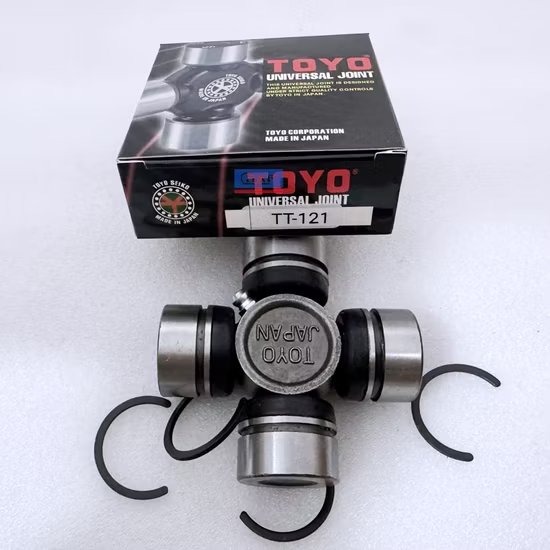
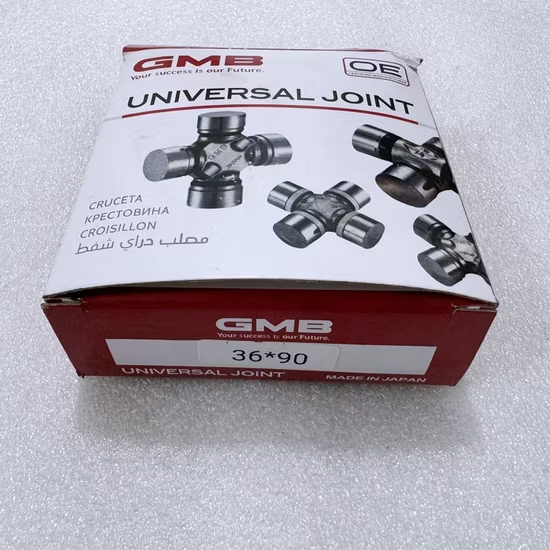
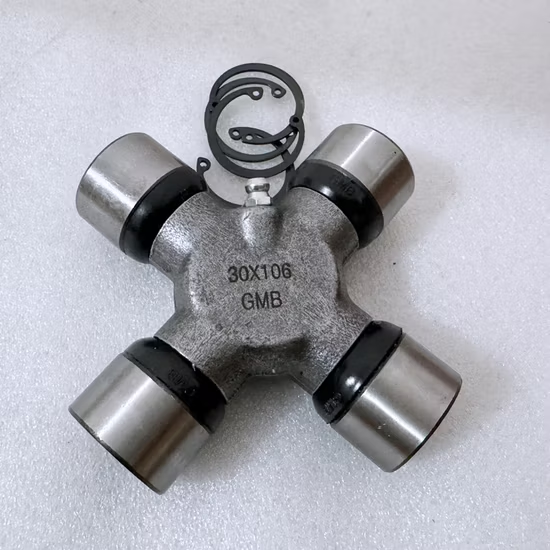
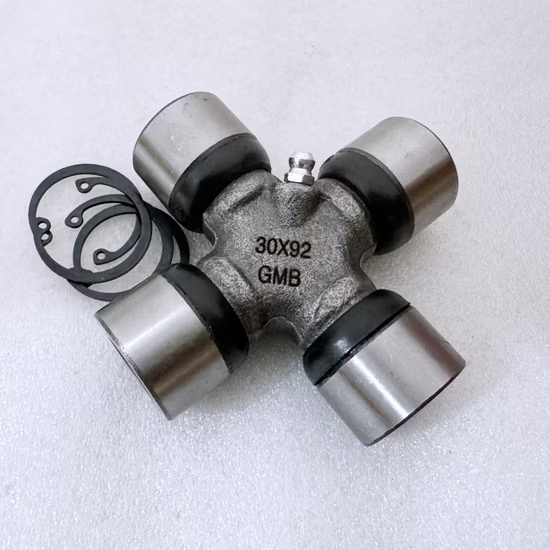
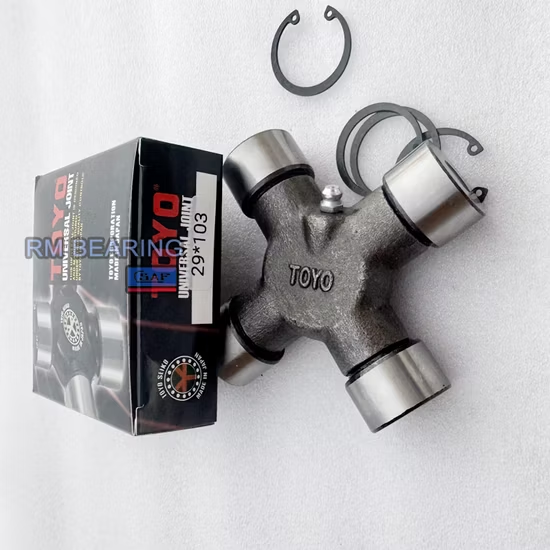
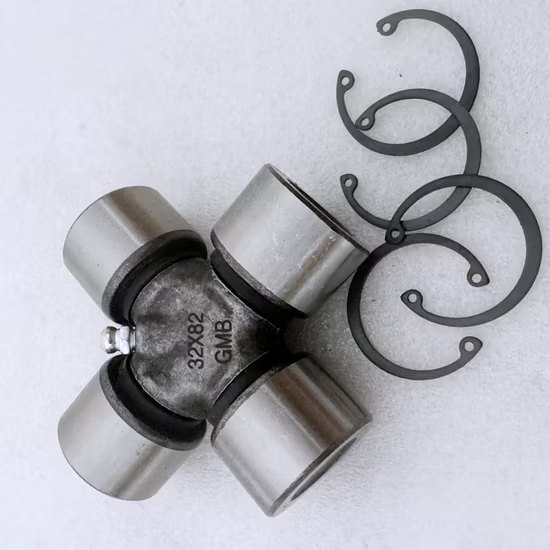
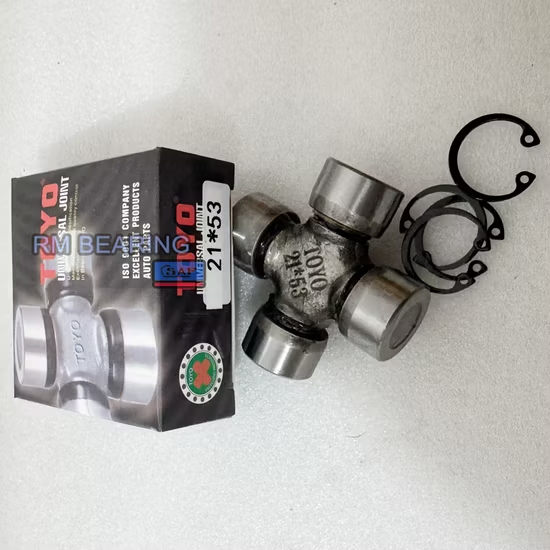
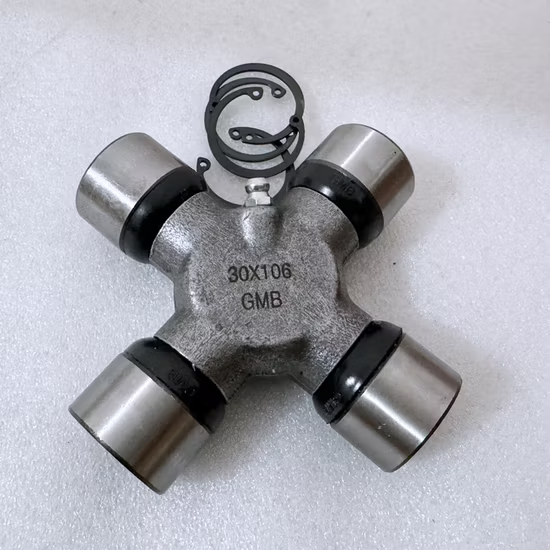
Universal Joint Cross Bearing for Automotive and Heavy Machinery Drive Shafts — ISO-certified U-joint assemblies for tractors, construction equipment, and rolling machinery applications.
Unified Multi-Brand Sourcing — Consolidating mixed-brand drivetrain requirements into a single shipment eliminates the logistical friction of coordinating multiple vendors for your heavy machinery maintenance.
| Parameter | Value |
|---|---|
| Product Type | Universal Joint Cross Bearing |
| Material Options | Available in stainless steel or standard alloy steel variants |
| Structure | Single cross assembly |
| Certification | ISO compliant manufacturing |
| Application Scope | Automotive drive shafts, tractors, construction machinery, rolling equipment |
| Origin Options | Germany, Japan, Sweden, Malaysia, China |
| Customization | OEM dimensional and specification support available |
| Industry | Typical Applications |
|---|---|
| Automotive & Heavy Vehicles | Propeller shafts, steering column joints, heavy-duty truck drivelines |
| Agricultural Machinery | Tractor PTO (Power Take-Off) shafts, combine harvester drive linkages |
| Construction & Earthmoving | Excavator swing drives, loader articulation joints, concrete mixer drums |
| Industrial Rolling Equipment | Steel mill roll transfer tables, continuous casting machine drive shafts |
Base number alignment means nothing if the internal metallurgy cannot survive the torque spikes.
Sourcing replacement crosses based solely on dimensional cross-references often leads to catastrophic field failures. We frequently see maintenance teams install visually identical replacements that fail within weeks because the internal needle roller design or material hardness was never validated for the specific shock loads of the application. When a cross-shaft journal fractures under high-torque articulation, it rarely happens in isolation; it takes the yoke and the entire drive assembly down with it, turning a minor scheduled maintenance task into an extended unplanned downtime event . Finding a reliable universal joint cross bearing supplier who verifies internal geometry and material traceability is the only way to prevent these secondary damage cascades.
Selecting the correct metallurgy is the first critical step in specifying a universal joint cross bearing. Standard alloy steel variants provide the necessary core toughness and surface hardness for high-torque automotive and construction applications. Conversely, stainless steel options are reserved for environments where moisture, chemical exposure, or washdown protocols would rapidly degrade standard finishes. As an experienced universal joint cross bearing supplier, we review the specific operating environment to ensure the material selection aligns with both the mechanical stress and the corrosion risk of the application.
The operating environment for a U-joint assembly is defined by extreme localized stress. Unlike standard rotary bearings, cross bearings must accommodate continuous oscillating movements and severe articulation angles while transmitting massive torque. This creates boundary lubrication conditions where the needle rollers experience high contact stress and sliding friction simultaneously . Adequate grease retention and seal integrity are paramount; if the sealing lips fail to exclude abrasive grit from a construction site or agricultural field, the needle rollers will score the cross journals, leading to rapid wear and eventual cross-shaft seizure.
Because this is an application-oriented component, selection relies on matching the exact OEM dimensional envelope and load capacity rather than reading a standard suffix code. The cross journal diameter, overall width, and snap ring or cap retention methods must perfectly match the existing yoke design. Furthermore, the internal needle roller profile and cage material must be suited to the specific oscillating frequency of the drive shaft. We verify these critical interface dimensions and internal design features against the original equipment specifications to ensure drop-in compatibility and optimal load distribution.
Installing a cross bearing that is dimensionally close but internally compromised introduces severe operational risks. A journal with insufficient surface hardness will spall under cyclic loading, releasing metallic debris into the drivetrain grease and destroying the mating needle rollers. According to failure analysis frameworks, this type of surface fatigue often mimics lubrication failure but is actually rooted in substandard material processing . The resulting vibration not only destroys the U-joint but also accelerates wear on the transmission output bearings and differential pinions, multiplying the repair costs far beyond the price of the initial component.
Mixed-brand equipment fleets require a universal joint cross bearing supplier capable of sourcing authentic components across multiple OEM standards without compromising traceability. We address the pervasive issue of counterfeit crosses—where soft inner rings fail under highway speeds—by mandating batch traceability and official verification for every shipment. Our cross-reference process goes beyond matching the outer dimensions; we validate the internal clearance, needle roller count, and seal type to ensure the replacement handles the exact articulation and torque profile of your machinery. This technical scrutiny prevents the premature failures that plague procurement strategies focused solely on base designations.
To ensure we supply the exact U-joint assembly your equipment requires, please provide the original equipment manufacturer part number, the specific yoke dimensions, and the operational torque parameters. Sharing details about the operating environment, such as exposure to heavy dust, moisture, or extreme articulation angles, allows our engineering team to recommend the optimal material variant and sealing configuration for your application.
Q: How do I determine the exact U-joint cross model for my drive shaft?
A: Identification requires measuring the cross journal diameter, the overall width across the caps, and identifying the retention method, such as internal or external snap rings. Providing the OEM equipment number or the existing drive shaft serial number allows our technical team to cross-reference the exact factory specification and verify the internal needle roller configuration.
Q: What are the common failure modes of universal joint bearings in heavy-duty applications?
A: Premature failures typically stem from seal degradation allowing abrasive contamination to score the needle rollers, or insufficient lubrication causing boundary friction and journal spalling. In high-torque scenarios, using a cross with inadequate core hardness leads to catastrophic journal shearing under shock loads, as classified in standard bearing failure analysis protocols.
Q: When should I select stainless steel over standard alloy steel for a U-joint cross?
A: Stainless steel variants are necessary for applications involving frequent washdowns, marine environments, or exposure to corrosive chemicals where standard alloy steel would rapidly degrade. For standard high-torque automotive or construction applications, high-carbon alloy steel remains the superior choice due to its higher load-bearing capacity and impact resistance.
Q: Can you support custom dimensions for non-standard or legacy rolling equipment?
A: Yes, we facilitate OEM customization for legacy machinery where original U-joint crosses are obsolete. By providing detailed dimensional drawings, articulation angle requirements, and load profiles, our manufacturing partners can engineer a custom cross assembly that matches the exact mechanical and spatial constraints of your specific drive system.
Our 5-step process ensures every order is engineered, validated, and supported for optimal performance.
Technical needs assessment
Custom specifications
Free samples for $50k+
Pre-shipment inspection
On-site & predictive
Our certified engineers respond within 24 hours with detailed technical specifications, pricing, and lead time information.