01
Consultation
Technical needs assessment

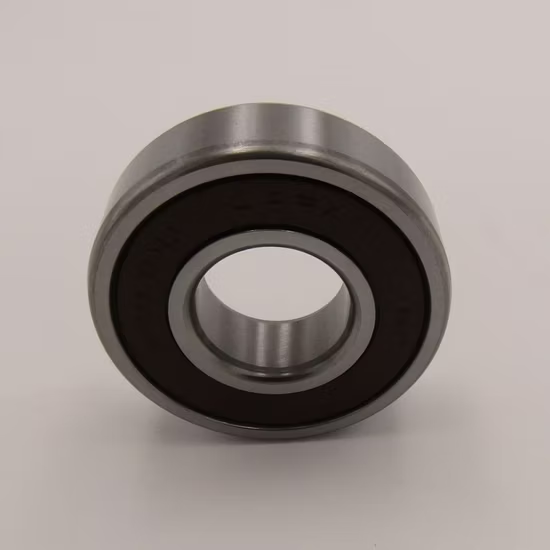

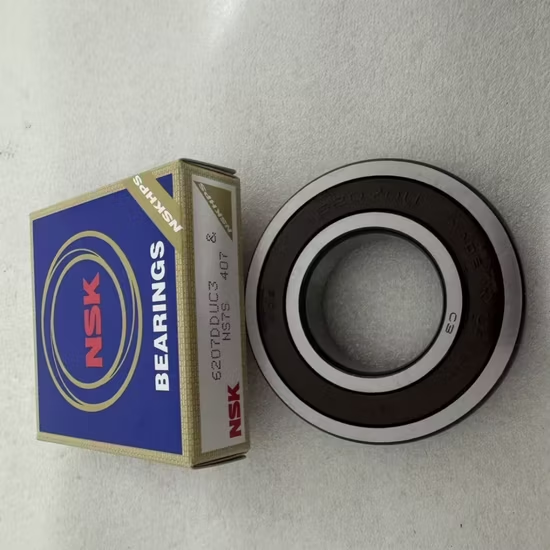


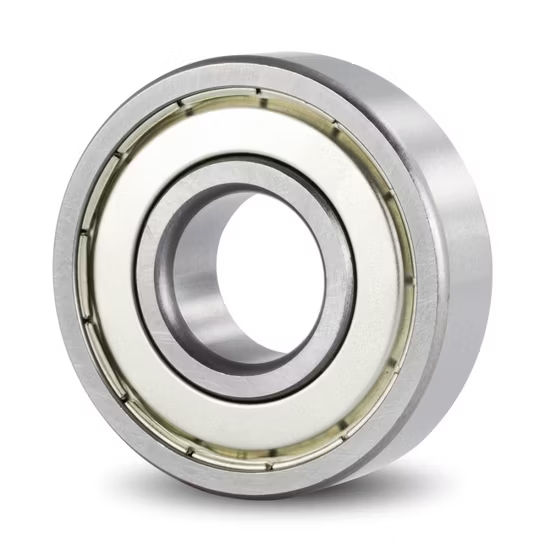
NTN NACHI NSK Koyo 6203-2RS Deep Groove Ball Bearing — double rubber contact seals ensure effective contamination exclusion and moisture protection for electric motors and gearboxes. Available in Z1V1 to Z4V4 quality levels to match specific noise and vibration requirements.
Factory Batch Traceability — Every NTN NACHI NSK Koyo 6203-2RS deep groove ball bearing ships with verifiable lot codes linked directly to the manufacturer's production facilities.
| Parameter | Value |
|---|---|
| Designation | NTN NACHI NSK Koyo 6203-2RS |
| Bearing Type | Deep Groove Ball Bearing |
| Seal Type | Double rubber contact seals (2RS) |
| Quality Level | Z1V1, Z2V2, Z3V3, Z4V4 |
| Origin | Germany / Japan / Sweden / Malaysia / China |
| HS Code | 848210 |
| Industry | Typical Applications |
|---|---|
| Electric Motors | Rotor shaft support in continuous-duty industrial motors |
| Pumps | Centrifugal pump impeller shaft bearings |
| Conveyors | Drive and idler roller journal bearings |
| Gearboxes | High-speed input shaft and intermediate shaft support |
| Household Appliances | Washing machine drum and HVAC blower motor bearings |
Assuming a base 6203 number is universally interchangeable across all brands and applications is a primary cause of unexpected motor seizures.
Procurement teams often treat standard deep groove ball bearings as simple commodity parts, focusing solely on the base dimensions while overlooking critical internal variations. In the manufacturing hubs of the Pearl River Delta, I have witnessed countless instances where standard CN clearance bearings were installed in high-temperature motor applications. As the rotor heated up, thermal expansion eliminated the internal clearance entirely, leading to catastrophic thermal binding and immediate seizure . When sourcing a genuine NTN NACHI NSK Koyo 6203-2RS deep groove ball bearing, matching the base number is merely the first step; verifying the exact seal friction characteristics and noise grade is what actually keeps the equipment running.
Selecting the correct variant requires looking beyond the outer dimensions to evaluate the specific operational environment. The double rubber contact seals provide excellent exclusion of moisture and fine particulates, making them ideal for humid or dusty plant floors. However, this sealing effectiveness introduces slight frictional drag. For high-speed electric motors where heat generation must be minimized, confirming the precise Z/V quality level ensures the vibration and acoustic emissions remain within acceptable thresholds for the specific appliance or industrial drive.
Electric motors and industrial gearboxes subject bearings to sustained radial loads combined with high rotational speeds and significant internal heat generation. The rubber seals must maintain their elasticity and sealing lip tension without degrading under elevated temperatures, otherwise, contaminant ingress accelerates raceway wear . Furthermore, the internal clearance must accommodate the thermal expansion of the steel shaft and housing during startup and steady-state operation. If the lubrication grease inside the sealed cavity is not rated for the operational temperature range, it will either thin out and leak past the seal lips or harden and cause starvation, drastically reducing the service life.
The 2RS suffix indicates double rubber contact seals, which physically rub against the inner ring to create a tight barrier against dust and water ingress, though this contact generates slightly more friction and heat than non-contact metal shields. The Z1V1 through Z4V4 quality levels define the strict limits for vibration velocity and acoustic noise. A Z1V1 grade is generally sufficient for standard industrial conveyors or basic pumps, whereas a Z4V4 grade is strictly required for precision household appliances, HVAC blowers, or high-end electric motors where low noise and smooth operation are critical. Matching the exact Z/V specification prevents the transmission of high-frequency vibrations into the motor housing.
Substituting a bearing based solely on the base 6203 designation without verifying the seal type or quality grade frequently results in premature failure and unplanned downtime. If a metal-shielded bearing is mistakenly installed in a wet environment instead of the specified rubber-sealed variant, moisture ingress will quickly cause rust and spalling on the raceways . Similarly, using a lower Z/V grade in a noise-sensitive application can lead to failed quality inspections and rejected batches. These errors void equipment warranties and force maintenance teams into costly emergency replacements, disrupting entire production schedules.
We do not simply pick a box with the right base number off a shelf; we verify that the internal clearance and seal friction match your specific thermal and speed profiles. Our cross-brand interchange expertise ensures that when you request a specific quality level like Z3V3, the supplied unit meets those exact acoustic parameters, preventing unexpected noise issues in sensitive motor applications. Every unit is sourced through authorized channels, guaranteeing that the rubber sealing lips are manufactured to original tolerances rather than wearing out prematurely due to inferior counterfeit materials. We also maintain stock across multiple origins to mitigate the long lead times typically associated with specific suffix combinations.
To ensure optimal performance and longevity, please provide your exact operational parameters, including continuous radial and axial loads, maximum rotational speed, and ambient operating temperatures. This data allows our engineering team to perform an L10 life calculation and verify that the internal clearance and grease fill of the selected unit are perfectly suited for your equipment. If you are replacing an existing component, sharing the OEM equipment number or the exact designation printed on the old bearing enables us to conduct a precise cross-reference check.
Q: How do I verify the authenticity of the 6203-2RS bearings upon delivery?
A: You can verify authenticity by scanning the QR code printed on the packaging using the official mobile application provided by the respective brand. This digital verification confirms the batch number, manufacturing date, and origin, ensuring you have received genuine products with full traceability rather than counterfeit units with cloned labels.
Q: What cross-reference checks are necessary when substituting 6203-2RS across different brands?
A: Beyond matching the base 6203 dimensions, you must verify that the substitute features the exact same 2RS rubber contact seal design and matches the required Z/V quality grade. Differences in internal clearance or seal friction coefficients between brands can lead to thermal binding or excessive noise if not properly aligned during the selection process.
Q: How do the Z1V1 to Z4V4 quality levels affect electric motor performance?
A: These grades define the strict limits for vibration velocity and acoustic noise. While Z1V1 is adequate for general industrial machinery, higher grades like Z3V3 or Z4V4 are essential for precision motors and household appliances where low noise and smooth operation are critical to passing final product quality inspections.
Q: What is the difference between 2RS rubber seals and ZZ iron shields in dusty environments?
A: The 2RS rubber contact seals physically rub against the inner ring, providing a much tighter barrier against fine dust and moisture ingress compared to the non-contact ZZ iron shields. However, this contact creates slightly more friction, which must be accounted for in high-speed applications to manage heat generation effectively.
Our 5-step process ensures every order is engineered, validated, and supported for optimal performance.
Technical needs assessment
Custom specifications
Free samples for $50k+
Pre-shipment inspection
On-site & predictive
Our certified engineers respond within 24 hours with detailed technical specifications, pricing, and lead time information.