01
Consultation
Technical needs assessment



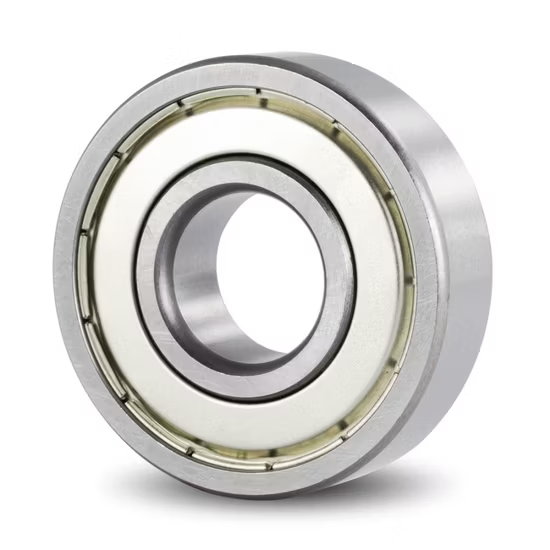
61908 61909 61910 61911 61912 61913 61914 61915 Zz P5 P4 Deep Groove Ball Bearings — P5 and P4 precision classes deliver tighter dimensional and running accuracy than standard P0 grades, ensuring stable performance in machine tool spindles and high-speed motors.
Factory Lot Traceability — Every 61908 61909 61910 61911 61912 61913 61914 61915 Zz P5 P4 deep groove ball bearing shipment includes unbroken batch documentation linking directly to the original production run.
| Parameter | Value |
|---|---|
| Designation | 61908 61909 61910 61911 61912 61913 61914 61915 Zz P5 P4 |
| Product Type | Deep Groove Ball Bearing |
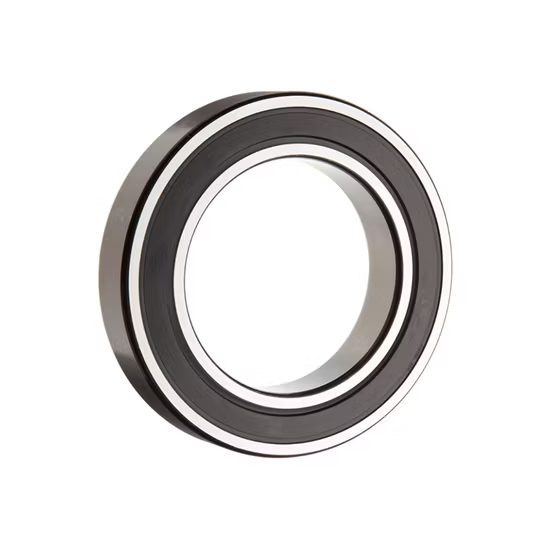
| Bearing Style Options | Open, Rubber Seals, Iron Seals |
| Precision Class | P5, P4 |
| Noise and Vibration Grades | Z1V1, Z2V2, Z3V3, Z4V4 |
| Origin Options | Germany, Japan, Sweden, Malaysia, China |
| Shield Configuration | Zz* |
| HS Code | 848210 |
*The Zz shield designation requires manufacturer catalog confirmation to verify exact structural design and clearance tolerances against standard ZZ or 2Z formats.
| Industry | Typical Applications |
|---|---|
| Electric Motors | High-speed rotor shafts requiring low-vibration P4 precision |
| Machine Tool Spindles | Precision grinding headstocks demanding strict P5 radial runout limits |
| Industrial Gearboxes | High-speed input shafts needing effective particulate exclusion |
| Pumps and Conveyors | Continuous duty drive assemblies requiring stable torque transmission |
A matching base number rarely guarantees field survival. Procurement teams frequently source the 61908 61909 61910 61911 61912 61913 61914 61915 Zz P5 P4 deep groove ball bearing series by looking only at the inner and outer dimensions, completely overlooking the precision and shielding suffixes. This oversight leads to standard P0 clearance components being forced into high-speed motor spindles, resulting in rapid thermal binding and premature cage failure under continuous operational loads .
Upgrading from standard tolerance to P5 or P4 precision fundamentally alters the operational envelope of thin-section deep groove ball bearings. The tighter dimensional control minimizes radial runout and acoustic emission, which is absolutely critical when these components operate at the elevated rotational speeds typical of modern electric motors and machine tool spindles. Supplying verified precision grades ensures the rotating assembly maintains dynamic stability without generating destructive harmonic vibrations.
High-speed applications generate substantial internal friction heat, demanding careful consideration of internal clearance to accommodate thermal expansion of the shaft and housing. Simultaneously, industrial gearboxes and conveyor drives operate in heavily contaminated environments where airborne dust rapidly degrades lubricant efficacy. Selecting the appropriate non-contact iron shield configuration provides a vital physical barrier against particulate ingress while avoiding the excessive friction and speed limitations inherent to contact rubber seals .
The P5 and P4 precision classifications dictate exceptionally strict tolerances for bore diameter, outer diameter, and radial runout compared to standard industrial grades. This exacting geometric accuracy ensures the rolling elements maintain optimal load distribution, drastically reducing localized stress concentrations at high speeds. Meanwhile, the iron shield configuration is engineered to retain factory-applied lubrication while deflecting coarse contaminants. Because specific shield nomenclature can vary across different international manufacturing standards, verifying the exact non-contact gap geometry against the official brand catalog prevents unexpected axial clearance interference during assembly.
Ignoring the specific shielding and precision requirements during cross-referencing inevitably triggers cascading mechanical failures. Installing a standard precision component in a P4-rated spindle application causes severe vibration, destroying the surrounding machining tolerances and voiding equipment warranties. Furthermore, deploying open or incorrectly sealed bearings in dusty environments leads to rapid lubricant contamination, resulting in catastrophic raceway spalling and unplanned production halts that far exceed the initial component savings .
Our multi-brand authorization allows buyers to consolidate mixed requirements for NSK, NTN, NACHI, Timken, and Koyo into a single, fully documented order. We actively intercept cross-reference errors by verifying that the replacement component matches not just the base dimensions, but the exact P5/P4 precision class and shield type required by the OEM specification. Every batch is backed by unbroken traceability to the manufacturer, eliminating the risk of installing counterfeit rings with compromised metallurgical hardness. We also provide application-based selection reviews to ensure the chosen noise and vibration grade aligns perfectly with the specific acoustic demands of the end-user equipment.
To ensure optimal performance and longevity, please provide detailed operational parameters including radial and axial loads, continuous operating speeds, and ambient temperature ranges. Sharing the specific OEM equipment serial numbers or original engineering drawings allows our technical team to execute precise cross-reference verification and L10 life calculations. This collaborative approach guarantees the selected precision class and shielding configuration perfectly match your unique mechanical requirements.
Q: Why is base number matching insufficient for cross-referencing this series?
A: Matching only the base dimensions ignores critical internal geometry. Substituting a standard precision bearing where P5 or P4 is specified causes severe vibration and thermal binding in high-speed spindles. Furthermore, failing to match the exact shield type compromises contamination protection, leading to rapid lubricant degradation and premature raceway failure under continuous operational loads.
Q: How do P5 and P4 precision grades differ from standard industrial tolerances?
A: P5 and P4 classifications enforce significantly tighter limits on bore diameter, outer diameter, and radial runout according to ISO standards. This exacting geometric accuracy ensures optimal load distribution among the rolling elements at high rotational speeds, minimizing acoustic emission and preventing the destructive harmonic vibrations that rapidly degrade standard tolerance components in precision applications.
Q: What is the functional difference between iron shields and rubber seals?
A: Iron shields provide a non-contact physical barrier that effectively excludes coarse dust while retaining factory lubrication, making them ideal for high-speed applications where friction must be minimized. Rubber seals offer superior protection against fine particulates and moisture but generate higher friction, which restricts the maximum permissible rotational speed and increases internal operating temperatures.
Q: How can buyers identify counterfeit bearings using digital verification?
A: Counterfeiters often clone packaging QR codes that redirect to fake websites. Genuine components feature unique, batch-specific codes that must be scanned using the manufacturer's official mobile application. This direct digital handshake verifies the authentic production origin and confirms the metallurgical integrity of the rings, protecting critical machinery from catastrophic failures caused by soft inner rings.
Our 5-step process ensures every order is engineered, validated, and supported for optimal performance.
Technical needs assessment
Custom specifications
Free samples for $50k+
Pre-shipment inspection
On-site & predictive
Our certified engineers respond within 24 hours with detailed technical specifications, pricing, and lead time information.