01
Consultation
Technical needs assessment

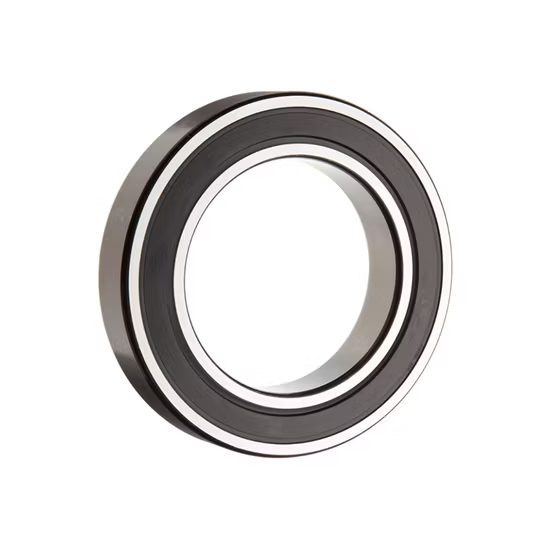


6800 6801 6802 6803 6804 6805 Deep Groove Ball Bearings — extra-thin section design for precision instruments and robotics.
Traceable Thin-Section Batches — Every 6800 series unit ships with manufacturer lot documentation verifying its exact production run and material origin.
| Parameter | Value |
|---|---|
| Designation | 6800 6801 6802 6803 6804 6805 |
| Bearing Type | Deep Groove Ball Bearing |
| Seal or Shield Type | Open, Rubber Seals (RS/2RS), Iron Seals (Z/ZZ) |
| Noise and Vibration Level | Z1V1, Z2V2, Z3V3, Z4V4 |
| Origin | Japan / Global manufacturing facilities |
| HS Code | 848210 |
| Industry | Typical Applications |
|---|---|
| Robotics & Automation | Joint actuators and lightweight robotic arm pivots |
| Precision Instruments | Optical device focusing mechanisms and gimbal stabilizers |
| Semiconductor Manufacturing | Wafer handling robot end-effectors and cleanroom conveyors |
| Medical Equipment | Surgical drill handpieces and imaging table linear guides |
Matching the base number without verifying the seal and clearance suffix is the primary cause of early field failure in thin-section applications.
During my transition from procurement to sales in Shenzhen, I witnessed a costly equipment breakdown caused by a simple cross-reference error. A maintenance team installed an open-type 6802-2Z equivalent into a highly dusty environment, assuming the base dimension was sufficient. The missing rubber seals allowed particulate ingress, leading to rapid grease leakage and catastrophic jamming within weeks. This exact scenario highlights why a NACHI NTN NSK Koyo 6800 series deep groove ball bearing requires meticulous suffix alignment. Procurement engineers often focus solely on the bore and outer diameter, overlooking that internal design variations dictate survival in specific operational environments .
Selecting the correct NACHI NTN NSK Koyo 6800 series deep groove ball bearing requires matching the seal type to the contamination level of the workspace. Open variants dissipate heat efficiently but demand pristine, externally sealed housings. Iron shields offer non-contact protection against larger debris with minimal friction, while rubber seals provide superior exclusion of fine dust and moisture at the cost of slightly higher operating temperatures. We review your specific housing design to ensure the chosen seal configuration prevents the exact ingress failures I previously encountered in the field.
Extra-thin section bearings operate under unique constraints where radial loads are relatively light but moment loads and misalignment pose severe threats. High-speed electric motors demand low-friction iron shields to prevent thermal binding, whereas robotic joints exposed to intermittent shock loads benefit from the damping characteristics of rubber seals. Furthermore, standard clearance might cause thermal binding in continuous-duty spindle applications, necessitating specific internal geometry adjustments. Proper lubrication selection must also account for the limited internal volume of these thin-section races .
The Z1V1 through Z4V4 classifications define the acoustic and vibrational performance boundaries of these extra-thin section bearings. Z1V1 represents standard commercial grades suitable for general conveyors, while Z4V4 denotes ultra-quiet, dynamically balanced units essential for semiconductor manufacturing and medical imaging equipment. Achieving these higher grades requires superior raceway finishing and stringent cage tolerances. Understanding these suffixes ensures that a high-precision optical device does not suffer from micro-vibrations that could blur imaging results or disrupt wafer alignment processes.
Substituting a specified bearing with an unverified alternative often results in unplanned downtime that far exceeds the initial savings on the component. When a cross-reference matches the base designation but ignores the cage material or precision class, the replacement may suffer from premature fatigue or cage disintegration under high-speed operation. Such failures not only destroy the bearing but can cause catastrophic damage to the surrounding precision machined housing. Adhering to ISO 281 life calculation principles requires exact parameter matching, not just dimensional equivalence .
Sourcing from our network guarantees that every NACHI, NTN, NSK, and Koyo unit is verified through authorized channels, eliminating the risk of counterfeit rings with inadequate hardness. We execute cross-references that strictly align the base number, clearance class, and seal suffix, preventing the thermal binding issues common with mismatched replacements. Our technical team reviews your specific load and speed parameters to validate the selection before shipment. Furthermore, we consolidate mixed-brand requirements into single orders, simplifying logistics while maintaining full batch traceability for every thin-section unit delivered.
To ensure optimal performance, please provide your specific radial and axial load profiles, operational speeds, and ambient temperature ranges. Supplying the exact OEM equipment number allows our engineering team to perform a comprehensive cross-reference check, verifying that all internal design suffixes align perfectly with the original specification. We will then deliver a validated selection complete with L10 life calculations and precise lead time estimates for your required seal and vibration grade.
Q: How do I verify the authenticity of the 6800 series bearings upon delivery?
A: Every unit includes a unique QR code linked to the manufacturer's official verification application. Scanning this code confirms the production batch, origin, and authorized distribution status. We also provide physical Certificates of Conformity and dimensional inspection reports to ensure the thin-section tolerances meet exact OEM requirements before installation.
Q: Why is it critical to check the seal suffix during cross-referencing?
A: Base dimension matching ignores environmental protection. Installing an open or iron-shielded variant in a dusty application where a rubber-sealed unit was specified leads to rapid grease contamination and failure. We verify the exact suffix to ensure the seal type matches your specific contamination and friction requirements.
Q: How do I choose between Z1V1 and Z4V4 vibration levels?
A: Z1V1 is suitable for general industrial motors where standard noise levels are acceptable. Z4V4 is strictly required for precision medical devices, optical instruments, and semiconductor robotics where micro-vibrations could disrupt sensitive operations. Selecting the correct grade ensures acoustic compliance and smooth operation.
Q: What is the performance difference between rubber (2RS) and iron (ZZ) seals?
A: Iron shields provide non-contact protection against large debris with minimal friction, ideal for high-speed electric motors. Rubber seals offer contact-based exclusion of fine dust and moisture, making them better for harsh environments, though they generate slightly more friction heat and have lower maximum speed limits.
Our 5-step process ensures every order is engineered, validated, and supported for optimal performance.
Technical needs assessment
Custom specifications
Free samples for $50k+
Pre-shipment inspection
On-site & predictive
Our certified engineers respond within 24 hours with detailed technical specifications, pricing, and lead time information.


