01
Consultation
Technical needs assessment

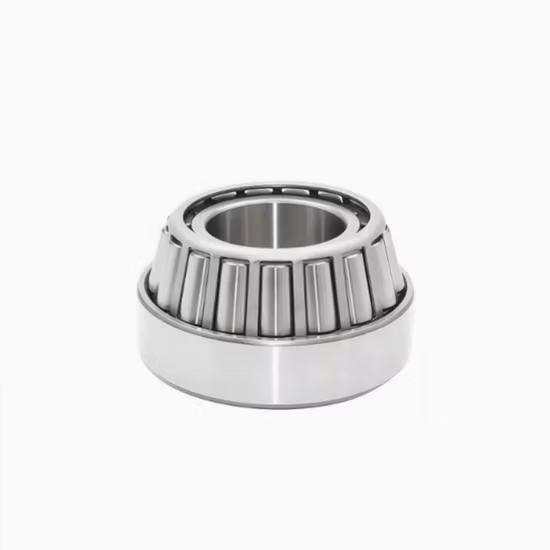
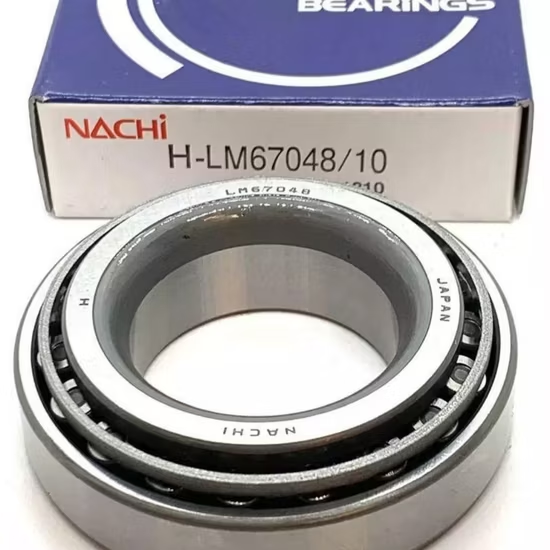
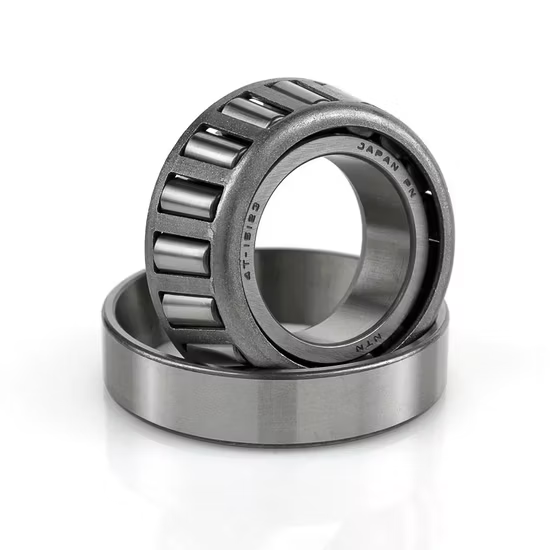
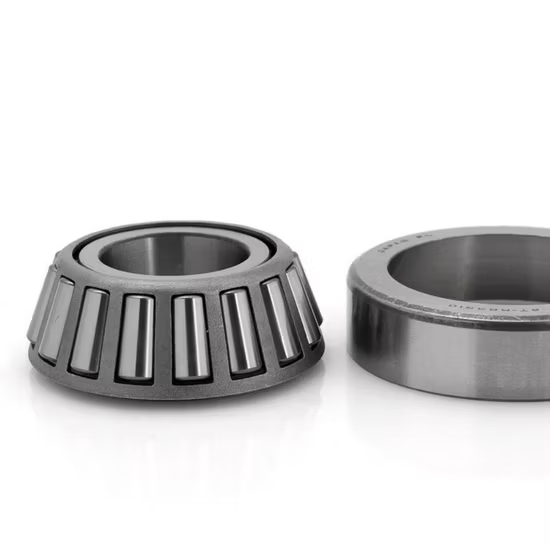
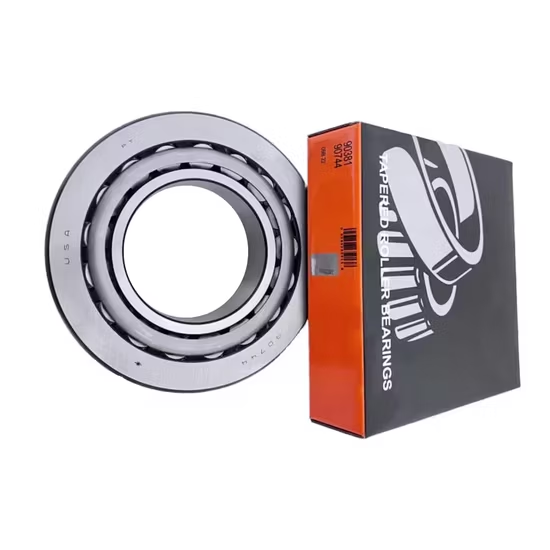

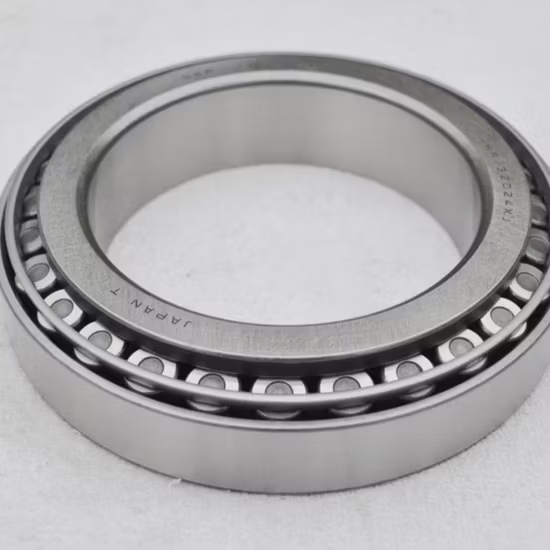
LM67048/10 Tapered Roller Bearing P4 — separable cone and cup design enables flexible clearance adjustment under combined radial and axial loads. The P4 precision class delivers strict dimensional and running accuracy control for industrial gearboxes and heavy vehicle axles.
Verified QR Authenticity — Scan the manufacturer's official app to confirm batch traceability and eliminate cloned codes on every LM67048/10 set.
| Parameter | Value |
|---|---|
| Designation | LM67048/10 |
| Bearing Type | Tapered Roller Bearing |
| Precision Class | P4 |
| Material | Gcr15 high carbon chromium bearing steel |
| Cage Material | Nylon, brass, or iron options (source value — verify against manufacturer catalog) |
| Bore Type | Inch |
| Arrangement | Separable cone and cup |
| Origin | Germany, Japan, Sweden, Malaysia, or China |
| HS Code | 8482500090 |
| Industry | Typical Applications |
|---|---|
| Automotive & Heavy Vehicles | Wheel hub assemblies and truck axle differentials |
| Industrial Power Transmission | Heavy-duty gearbox shaft supports |
| Marine Engineering | Propulsion drive shaft bearings |
| Manufacturing & Material Handling | Conveyor drive rollers and crusher eccentric shafts |
Mismatched internal components cause thermal binding long before the steel fatigues.
In my years supplying heavy machinery across Latin America, I have seen countless axle failures traced back to a single oversight. Procurement teams often match the base inch designation but overlook the specific internal geometry or clearance requirements. When a standard clearance cone is forced into a high-load hub meant for a specialized fit, the inner ring expands under friction heat and seizes the shaft. This silent killer bypasses visual inspections and only reveals itself when the equipment halts, leaving maintenance crews to replace the entire shaft assembly.
Sourcing the correct LM67048/10 tapered roller bearing requires looking past the basic part number to evaluate the exact operating environment. Our technical team reviews your radial and axial load profiles to ensure the selected cone and cup pairing provides the necessary contact angle for your specific gearbox or axle. By validating the internal geometry against your OEM equipment requirements, we prevent the premature wear that plagues poorly specified replacements.
Truck axles and industrial gearboxes subject these components to intense combined loading and significant temperature fluctuations. The tapered geometry efficiently handles both radial and thrust forces, but the internal clearance must accommodate the thermal expansion of the shaft and housing during continuous operation. Inadequate clearance leads to excessive preload, generating friction heat that degrades the lubricant and accelerates cage wear. Proper installation and precise endplay adjustment are critical to maintaining the hydrodynamic oil film under these extreme conditions.
The LM prefix identifies the inner ring cone, while 67048 designates the specific series geometry, and the /10 suffix denotes the basic outer ring cup. Achieving P4 precision in this inch series ensures tighter dimensional tolerances and superior running accuracy compared to standard grades, which is vital for minimizing vibration in high-speed gearboxes. The Gcr15 material provides the necessary core toughness and surface hardness to resist spalling under heavy contact stresses. Furthermore, the cage material—available in nylon, brass, or iron variants—must be matched to the operating speed and vibration levels of the application.
Substituting a seemingly equivalent part without verifying the internal raceway angles often results in catastrophic damage to the surrounding housing. A slightly altered contact angle shifts the load zone, causing edge loading that rapidly destroys the raceway surface. This leads to unplanned downtime and voids the equipment warranty, costing far more than the initial savings on the component. True cross-referencing demands a strict alignment of the cone and cup specifications, not just a superficial match of the outer dimensions.
We maintain authorized distribution channels across major global brands, allowing you to consolidate mixed-brand requirements into a single, fully documented shipment. For inch series components where counterfeiters frequently clone QR codes and use soft inner rings, we enforce strict batch traceability from the manufacturer's production facilities. Our cross-reference protocols specifically target the clearance and cage suffixes that generic suppliers routinely ignore. Every shipment undergoes a pre-delivery technical review to guarantee the LM67048/10 tapered roller bearing perfectly matches your application parameters.
To ensure optimal performance, please provide your specific radial and axial load calculations, operating speeds, and expected temperature ranges for our L10 life review. Supplying the exact OEM equipment number allows our engineering team to perform a comprehensive cross-reference validation, catching any hidden suffix discrepancies. This technical alignment guarantees the delivered components will withstand your exact operational demands without premature failure.
Q: How can I verify the authenticity and batch traceability of the LM67048/10?
A: We provide full batch traceability linked to the manufacturer's production records. You can verify the authenticity by scanning the packaging QR code through the brand's official mobile application, which exposes cloned codes often used on counterfeit soft-ring products. We also supply a Certificate of Conformity and material test reports with every shipment.
Q: Why must I cross-reference both the cone and cup numbers independently?
A: In inch series tapered roller bearings, the inner ring (cone) and outer ring (cup) are separable and sold as distinct components. Matching only the base designation while ignoring the specific /10 cup or 67048 cone geometry can result in mismatched contact angles, leading to edge loading, rapid raceway spalling, and catastrophic equipment failure under heavy combined loads.
Q: What is the performance difference between P4 and standard precision in gearboxes?
A: P4 precision offers significantly tighter dimensional and running accuracy tolerances compared to standard P0 grades. In industrial gearboxes and high-speed applications, this enhanced precision minimizes vibration, reduces noise, and ensures a more uniform load distribution across the rollers, thereby extending the operational fatigue life and protecting adjacent seals from premature wear.
Q: How do I choose between nylon, brass, or iron cages for this application?
A: The cage material must align with your specific operating conditions. Nylon cages offer low friction and are ideal for moderate speeds, while brass cages provide superior durability under high vibration and heavy loads. Iron cages are typically used in standard, cost-sensitive applications. Always verify the exact cage availability against the manufacturer's current catalog for the LM67048/10 series.
Our 5-step process ensures every order is engineered, validated, and supported for optimal performance.
Technical needs assessment
Custom specifications
Free samples for $50k+
Pre-shipment inspection
On-site & predictive
Our certified engineers respond within 24 hours with detailed technical specifications, pricing, and lead time information.