01
Consultation
Technical needs assessment




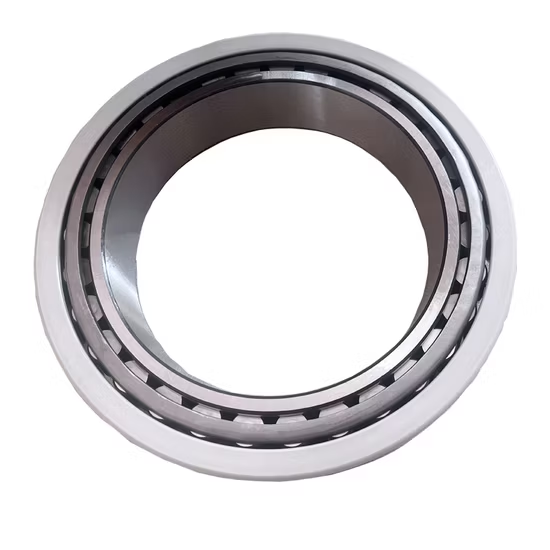
Koyo 5595/5535 Tapered Roller Bearing P4 — Single row inch-series design engineered to manage combined radial and axial loads in heavy-duty drivetrains.
Traceable Batch Origins — Every Koyo 5595/5535 tapered roller bearing ships with manufacturer lot documentation for complete supply chain visibility.
| Parameter | Value |
|---|---|
| Designation | 5595/5535 |
| Product Type | Tapered Roller Bearing |
| Bearing Type | Single Row Inch-Series |
| Inner Ring (Cone) | 5595 |
| Outer Ring (Cup) | 5535 |
| Precision Class | P4 (ISO Class 4) |
| Material | GCr15 High-Carbon Chromium Bearing Steel |
| Cage Material | Available in stamped steel or machined brass variants* |
| Bore Type | Cylindrical |
| Arrangement | Separable Cone and Cup |
*Cage material options depend on specific manufacturer batch configurations; verify exact cage type against the application's speed and vibration requirements prior to procurement.
| Industry | Typical Applications |
|---|---|
| Heavy Vehicle Repair | Truck drive axles and wheel hub assemblies |
| Industrial Power Transmission | Heavy-duty gearbox pinion shafts and output stages |
| Marine Engineering | Propulsion drive shafts and winch gearboxes |
| Material Handling | Port crane hoist drums and slewing drive mechanisms |
Factory P4 tolerances prevent micro-pitting under combined axial and radial loads.
When sourcing replacement components for heavy truck axles or industrial gearboxes, procurement teams often focus solely on the base inch-series numbers. However, overlooking the precision class leads to premature spalling. In demanding drivetrain applications, a standard P0 grade component might introduce slight misalignments that compound under heavy thrust loads, generating localized heat. Upgrading to a Koyo 5595/5535 tapered roller bearing with P4 precision ensures tighter dimensional accuracy, which is critical for maintaining the correct contact ellipse across the roller paths .
The single-row inch-series architecture separates the inner ring and outer ring, allowing technicians to adjust the axial clearance during installation. This specific Koyo 5595/5535 tapered roller bearing configuration handles the complex combined loads found in pinion shafts, where radial weight and axial thrust from gear meshing occur simultaneously. Our technical review ensures the selected precision class aligns with the gearbox's operational speeds, preventing the thermal binding often seen when standard clearance parts are forced into high-speed meshing environments.
Drivetrain and axle environments subject components to severe thermal cycling. As operating temperatures rise, the shaft expands, potentially eliminating the internal clearance if the initial setup was too tight. This interference fit causes the rollers to skid rather than roll, rapidly degrading the lubricant film. Proper adjustment of the cup and cone assembly is essential to accommodate this thermal growth while maintaining sufficient oil film thickness to separate the rolling elements from the raceways .
The P4 designation indicates ISO Class 4 tolerances, providing significantly tighter control over bore diameter, outer diameter, and radial runout compared to standard commercial grades. For the 5595 cone and 5535 cup, this precision minimizes vibration at higher rotational speeds and ensures uniform load distribution across all rollers. The GCr15 high-carbon chromium bearing steel provides the necessary core toughness and surface hardness to resist brinelling under shock loads, while the available cage options—ranging from stamped steel for standard speeds to machined brass for high-vibration environments—ensure structural integrity under varying operational stresses.
Substituting a metric equivalent without verifying the exact inch-series contact angles and roller profiles often results in catastrophic edge loading. When the load zone shifts outside the engineered raceway boundaries, the rollers experience stress concentrations that lead to rapid fatigue cracking. Such failures not only destroy the bearing but can score the shaft journal and ruin the gearbox housing, resulting in extensive unplanned downtime and voided equipment warranties .
Counterfeit inch-series bearings frequently feature soft inner rings that pass visual inspections but collapse under actual drivetrain torque. We supply the Koyo 5595/5535 tapered roller bearing exclusively through authorized channels, ensuring the GCr15 steel meets exact metallurgical specifications. Our cross-reference process verifies not just the base numbers, but the precision suffixes and internal geometries, preventing the installation of metric look-alikes that fail to match the original equipment's thrust capacity.
To ensure optimal performance, please provide the specific radial and axial load profiles, operating speeds, and target end-play settings for your axle or gearbox application. Sharing the original equipment manufacturer part numbers allows our engineering team to perform a comprehensive cross-reference check, verifying that the inch-series geometry and P4 precision class perfectly match your drivetrain's operational demands.
Q: How do I verify the authenticity of the Koyo 5595/5535 tapered roller bearing upon delivery?
A: Authenticity is confirmed by scanning the QR code on the packaging using the manufacturer's official mobile application. Additionally, every shipment includes batch traceability documents and a Certificate of Conformity that link the specific 5595 cone and 5535 cup to their original production lot and heat treatment records, ensuring complete supply chain transparency.
Q: Why is the P4 precision class critical for this inch-series tapered roller bearing?
A: The P4 class provides tighter dimensional and running accuracy than standard grades, which is essential for minimizing vibration and ensuring uniform load distribution in high-speed gearboxes. This precision prevents localized stress concentrations on the rollers, significantly extending the operational life of heavy-duty drivetrain and truck axle assemblies under combined loading conditions.
Q: Can I substitute a metric tapered roller bearing for the 5595/5535 inch-series combination?
A: Substituting metric equivalents is highly discouraged because inch-series and metric tapered bearings utilize different contact angles and roller profiles. Even if the physical dimensions appear similar, the internal geometry differences will cause severe edge loading and premature failure. Always use the exact inch-series designation to maintain the engineered thrust capacity.
Q: What cage material should I select for high-vibration material handling equipment?
A: For applications involving heavy shock loads and high vibration, such as crane hoist drums, a machined brass cage is generally preferred over stamped steel. The brass cage offers superior structural integrity and better guidance for the rollers under extreme dynamic conditions, preventing cage deformation and ensuring reliable operation in demanding material handling environments.
Our 5-step process ensures every order is engineered, validated, and supported for optimal performance.
Technical needs assessment
Custom specifications
Free samples for $50k+
Pre-shipment inspection
On-site & predictive
Our certified engineers respond within 24 hours with detailed technical specifications, pricing, and lead time information.


