01
Consultation
Technical needs assessment

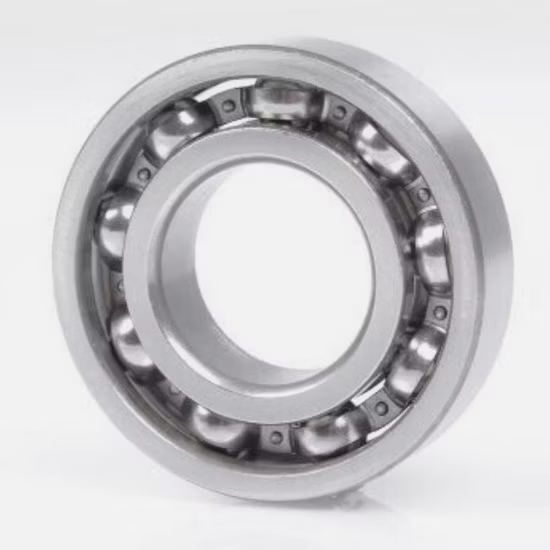


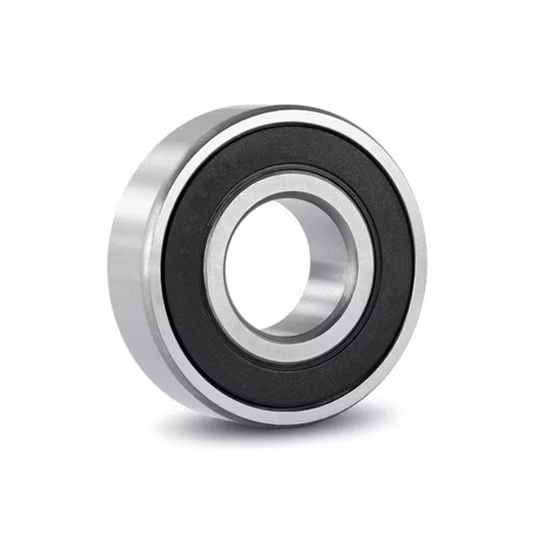
623 624 625 2RS 2zz Deep Groove Ball Bearings — offered in open, rubber-sealed, and steel-shielded variants for miniature applications.
Traceable Miniature Bearings — Every batch includes manufacturer lot numbers for official app verification, ensuring complete supply chain transparency.
| Parameter | Value |
|---|---|
| Designation | 623 624 625 2RS 2zz |
| Product Type | Deep Groove Ball Bearing |
| Bearing Style | Open, Rubber Seals (2RS), Iron Seals (2zz) |
| Noise and Vibration Level | Z1V1, Z2V2, Z3V3, Z4V4 |
| Feature | Low Noise, High Speed, Long Service Life |
| HS Code | 848210 |
| Industry | Typical Applications |
|---|---|
| Electric Motors | Rotor shaft support in fractional horsepower and servo motors |
| Household Appliances | Spindle assemblies in washing machines and high-speed blenders |
| Precision Instruments | Gyroscope gimbals and optical scanning mechanisms |
| Robotics | Joint actuators and miniature gear reducers in collaborative arms |
Matching the base number while ignoring the seal suffix guarantees premature failure in humid environments.
Sourcing teams frequently approve replacements based solely on the inner and outer dimensions, overlooking whether the application demands contact rubber lips or non-contact metal shields. In the Pearl River Delta manufacturing hub, I investigated a batch of burned-out servo motors where the original 2RS seals had been swapped for 2zz shields during maintenance. The metal shields allowed fine conductive dust and moisture to infiltrate the raceway, emulsifying the grease and causing the rotors to seize . When procuring a 623 624 625 deep groove ball bearing 2RS 2zz, treating the seal configuration as an optional detail rather than a critical engineering parameter leads to catastrophic downtime.
Selecting the correct enclosure for a 623 624 625 deep groove ball bearing 2RS 2zz requires analyzing the specific contamination risks of the target equipment. The 2RS configuration utilizes double-sided contact rubber seals that press against the inner ring, providing superior exclusion of moisture and fine particulates, which is essential for washing machine spindles or agricultural robotics. Conversely, the 2zz iron shields maintain a microscopic non-contact gap, drastically reducing frictional heat generation for high-speed precision instruments. Our technical review process cross-references the OEM equipment number to ensure the replacement seal type perfectly matches the original environmental protection strategy.
Miniature deep groove ball bearings operate under strict thermal limits due to their low mass and limited grease reservoirs. The contact friction inherent in 2RS rubber seals generates additional heat, which can degrade standard greases if the rotational speed approaches the bearing's limiting threshold. In contrast, 2zz shields offer minimal friction but provide zero protection against liquid ingress or high-pressure washdowns . Engineers must balance the need for absolute contamination exclusion against the acceptable temperature rise within the motor housing, factoring in ambient conditions and continuous duty cycles.
The Z1V1 through Z4V4 classifications dictate the acoustic and vibrational performance of these miniature bearings, directly impacting the user experience in household appliances and office equipment. A Z4V4 grade ensures exceptionally smooth raceway geometry and precise ball sorting, minimizing high-frequency harmonic vibrations that cause audible whine in high-speed blenders. The 2RS suffix confirms the presence of nitrile or fluorocarbon rubber lips that retain factory-filled lubricant for life, while 2zz denotes pressed steel shields crimped into the outer ring groove. Understanding these exact suffix definitions prevents the accidental installation of open-type bearings into sealed motor housings, which would result in immediate lubricant starvation.
Substituting a 2zz shielded bearing into an application designed for 2RS contact seals rarely causes immediate failure, making it a dangerous hidden cost. Over weeks of operation, microscopic moisture ingress corrodes the raceways, initiating surface fatigue and spalling that eventually destroys the shaft alignment . This unplanned downtime triggers emergency air-freight charges for replacement parts, voids the OEM equipment warranty, and damages the manufacturer's reputation for reliability. The true cost of a mismatched seal suffix vastly exceeds the minimal price difference between the bearing variants.
Procuring genuine miniature bearings requires navigating a market saturated with visually identical counterfeits featuring soft inner rings and cloned packaging. We maintain authorized distribution across all major international brands, ensuring that every 623, 624, and 625 order is fulfilled with verified batch traceability. Our cross-reference protocol strictly aligns the base designation, seal type, and noise grade, preventing the thermal binding caused by incorrect internal clearances. By providing full documentation and application-based selection review, we eliminate the guesswork that typically plagues mixed-brand MRO procurement.
To ensure optimal performance, please provide the exact radial and axial loads, operating RPM, and ambient temperature range of your application. Sharing the OEM equipment model number allows our engineering team to perform a precise cross-reference check, verifying that the seal suffix and internal geometry match the original design intent. We will review your operating parameters to recommend the appropriate Z-level noise grade and confirm the L10 fatigue life calculation before finalizing the specification.
Q: What is the functional difference between 2RS rubber seals and 2zz metal shields?
A: The 2RS configuration uses contact rubber lips that press against the inner ring, offering superior protection against moisture and fine dust, making it ideal for harsh environments. The 2zz shields are non-contact metal covers that minimize frictional heat generation, which is critical for high-speed precision applications where temperature rise must be strictly controlled.
Q: How do I choose the correct Z-level noise grade for my appliance?
A: The Z1V1 to Z4V4 scale measures acoustic and vibrational performance. For standard industrial conveyors, Z1V1 or Z2V2 is typically sufficient. However, for household appliances like washing machines or high-speed blenders where operational quietness is a primary consumer requirement, specifying Z3V3 or Z4V4 ensures the strictest raceway tolerances and minimized harmonic whine.
Q: Can I interchange a 623 2RS with a 623 2zz if the base number matches?
A: While the physical dimensions are identical, interchanging them without engineering approval is risky. Installing a 2zz shield in a wet environment will lead to rapid grease emulsification and failure, while using a 2RS seal in an ultra-high-speed spindle may cause excessive frictional heat and grease degradation. Always match the seal type to the specific environmental and thermal demands.
Q: How can I verify the authenticity of these miniature bearings upon delivery?
A: Every batch we supply includes manufacturer lot numbers and a Certificate of Conformity. You can scan the QR codes on the packaging using the brand's official mobile application to instantly verify the origin, production date, and specific noise grading, ensuring you have received genuine products rather than visually similar counterfeits.
Our 5-step process ensures every order is engineered, validated, and supported for optimal performance.
Technical needs assessment
Custom specifications
Free samples for $50k+
Pre-shipment inspection
On-site & predictive
Our certified engineers respond within 24 hours with detailed technical specifications, pricing, and lead time information.