01
Consultation
Technical needs assessment

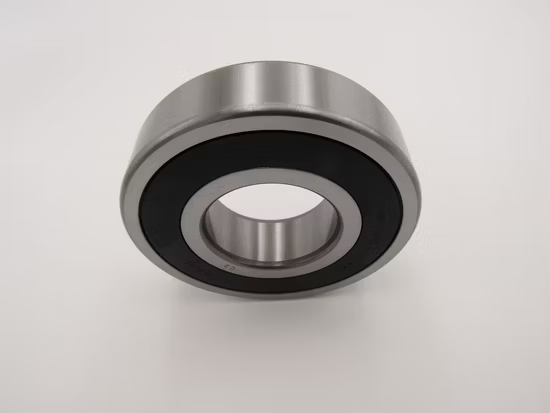


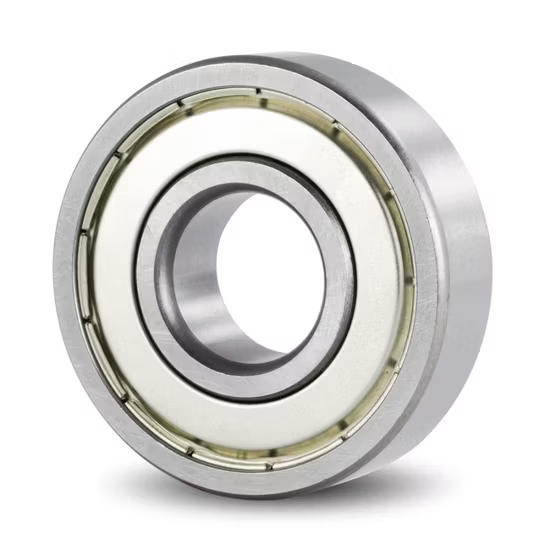
6201 6202 6203 Deep Groove Ball Bearing — authorized multi-brand supply for electric motors, industrial gearboxes, and vehicle repair applications.
Every order includes material certificates and dimensional inspection records confirming exact specification alignment.
Official App QR Verification — Scan the factory-applied QR code on every 6201 6202 6203 deep groove ball bearing box to instantly confirm batch authenticity and traceability.
| Parameter | Value |
|---|---|
| Designation | 6201 6202 6203 |
| Bearing Type | Deep Groove Ball Bearing |
| Seal or Shield Type | Open, Rubber Seals, Iron Seals |
| Noise and Vibration Class | Z1V1, Z2V2, Z3V3, Z4V4 |
| Customization | Available |
| HS Code | 848210 |
| Origin | Germany, Japan, Sweden, Malaysia, China |
| Industry | Typical Applications |
|---|---|
| Automotive and Heavy Vehicle Repair | Alternator pulleys, water pump shafts, transmission idler gears |
| Electric Motors | Cooling fan motors, power steering assist motors, wiper drive mechanisms |
| Industrial Gearboxes | High-speed input shafts, conveyor drive pulleys, pump impeller supports |
Matching the base designation without verifying clearance and seal suffixes guarantees premature thermal binding in high-speed vehicle motors.
I have seen countless alternator and water pump assemblies fail within weeks because a standard clearance unit was forced into an application demanding thermal expansion tolerance. When procurement teams overlook the exact internal geometry and seal friction characteristics, the resulting heat buildup quickly degrades the lubricant and destroys the cage .
Selecting the correct 6201 6202 6203 deep groove ball bearing requires looking past the basic size to evaluate how internal clearances and cage designs handle specific automotive loads. We cross-reference your exact OEM equipment numbers to ensure the supplied unit matches the original thermal and dynamic requirements, preventing the catastrophic downtime caused by superficial part number matching.
Under-hood environments subject components to intense heat cycles and abrasive road debris, making the choice between rubber contact seals and iron non-contact shields critical for longevity. Rubber seals provide superior contamination exclusion but generate friction heat, whereas iron shields minimize friction for high-speed alternator shafts but require a cleaner housing environment. Selecting the wrong noise and vibration class, such as using a Z1V1 grade in a precision electric motor, introduces unacceptable harmonic resonance that accelerates fatigue .
The distinction between rubber and iron sealing arrangements directly dictates the thermal equilibrium of the assembly. Rubber seals maintain a physical barrier against moisture and dust ingress, making them ideal for exposed water pump applications, while iron shields offer minimal rotational resistance for high-RPM electric motors. Furthermore, upgrading from a Z1V1 to a Z4V4 noise and vibration classification ensures smoother operation in sensitive cabin electronics, where micro-vibrations translate into audible hums and accelerated raceway wear.
Substituting a unit based solely on outer dimensions often leads to unplanned downtime when the internal clearance fails to accommodate shaft expansion at operating temperatures. This thermal binding causes* and leading to catastrophic cage failure. Such premature failures not only void equipment warranties but also trigger costly secondary damage to surrounding housings and shafts .
We authorize distribution across all major brands, allowing you to consolidate mixed-brand requirements for 6201 6202 6203 deep groove ball bearing orders into a single shipment. Our cross-referencing process strictly aligns clearance classes and seal types rather than just base numbers, eliminating the thermal binding risks common in generic substitutions. Every shipment includes batch traceability verified through official brand applications, ensuring you receive genuine components with documented material origins. We also provide application-based selection reviews to confirm that your chosen noise class and seal configuration match the actual operating environment.
Share your specific radial and axial load profiles, operating speeds, and thermal ranges so our engineering team can validate the clearance and seal selections. Providing the exact OEM equipment numbers allows us to perform a comprehensive cross-reference check, ensuring the internal geometry perfectly matches your original design intent. This technical review guarantees that the supplied components will deliver optimal L10 life under your exact operating conditions.
Q: How do I verify the authenticity of these components using official brand applications?
A: Scan the unique QR code printed on the individual packaging using the manufacturer's official mobile application. This instantly retrieves the batch traceability data, confirming the production facility, date, and original distribution channel, which effectively eliminates the risk of installing counterfeit units with soft inner rings.
Q: Why do cross-reference errors in clearance cause thermal binding in vehicle motors?
A: Base number matching often ignores the thermal expansion requirements of the specific application. Installing a standard clearance unit in a high-temperature environment eliminates the necessary internal operating gap, causing the rolling elements to bind against the raceways, rapidly generating destructive friction heat and leading to premature seizure.
Q: What are the practical differences between Z1V1 and Z4V4 noise and vibration classifications?
A: These classifications define the strictness of the geometric tolerances and surface finish during manufacturing. A Z4V4 grade undergoes rigorous sorting to eliminate micro-irregularities, ensuring exceptionally smooth rotation required for sensitive electric motors, whereas Z1V1 is suitable for general industrial gearboxes where minor harmonic vibrations are acceptable.
Q: How should I choose between rubber seals and iron shields for automotive applications?
A: Rubber contact seals provide maximum protection against water and dust ingress, making them ideal for exposed under-hood components like water pumps. Iron non-contact shields minimize rotational friction and heat generation, making them the superior choice for high-speed, clean-environment applications such as alternator shafts and internal transmission idlers.
Q: What documentation is provided for customs compliance and batch traceability?
A: Each shipment includes a comprehensive Certificate of Conformity, a detailed material test report, and dimensional inspection records. We also provide precise country-of-origin documentation and HS Code 848210 declarations, ensuring smooth customs clearance while maintaining full traceability back to the manufacturer's original production batch.
Our 5-step process ensures every order is engineered, validated, and supported for optimal performance.
Technical needs assessment
Custom specifications
Free samples for $50k+
Pre-shipment inspection
On-site & predictive
Our certified engineers respond within 24 hours with detailed technical specifications, pricing, and lead time information.