01
Consultation
Technical needs assessment


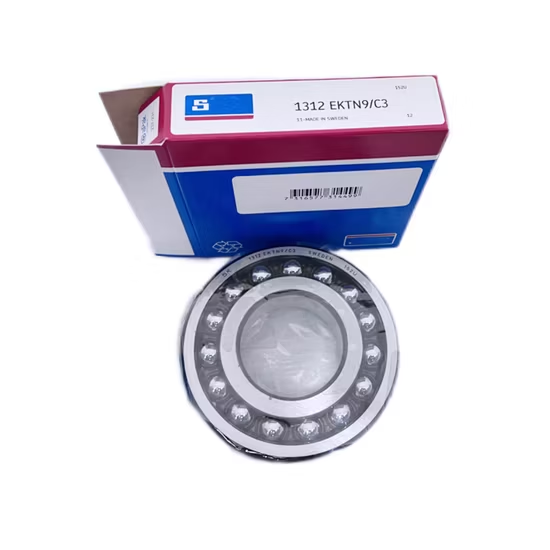


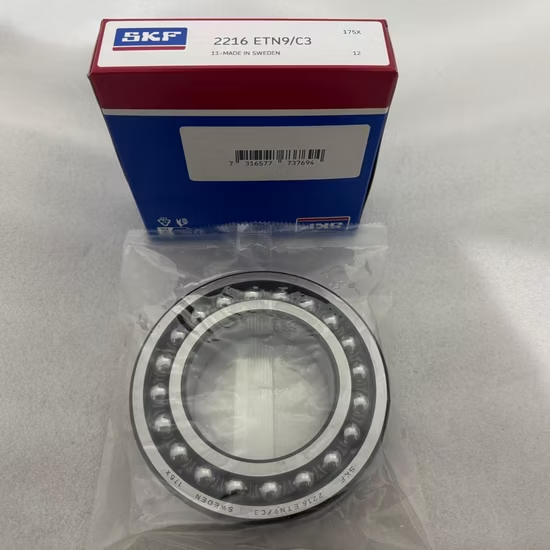
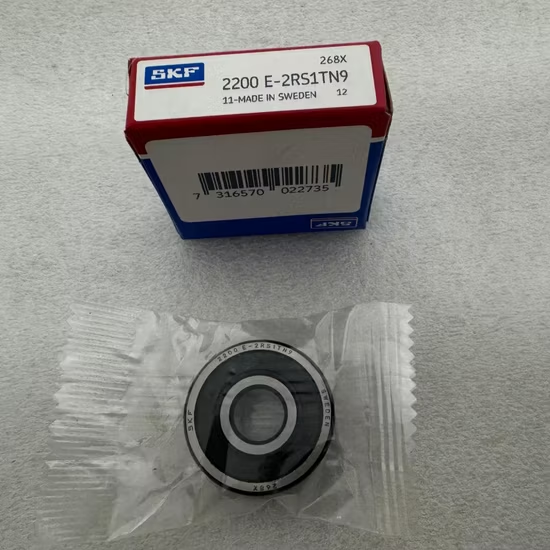
2204 2205 2206 2207 2208 2209 2210-2RS Etn9 M K Self-Aligning Ball Bearings — engineered for mining and material handling.
Every shipment includes material test reports and dimensional inspection certificates for full traceability.
Unified Multi-Brand Sourcing — Procure mixed SKF, FAG, and NSK equivalents for the entire 2204 to 2210 series in a single consolidated order, eliminating the need to coordinate with fragmented suppliers.
| Parameter | Value |
|---|---|
| Designation | 2204 2205 2206 2207 2208 2209 2210-2RS Etn9 M K |
| Product Type | Self-Aligning Ball Bearing |
| Bearing Style | Open, Rubber Seals, Iron Seals |
| Feature | Low Noise, High Speed, Long Service Life |
| Origin | Germany/Japan/Sweden/Malaysia/China |
| HS Code | 848210 |
| Customization | Available |
Note: The Etn9 suffix is an unverified designation requiring manufacturer catalog confirmation, likely representing a variant of the TN9 glass fiber reinforced polyamide cage.
| Industry | Typical Applications |
|---|---|
| Mining and crushing | Vibrating screen exciter mechanisms, jaw crusher toggle plates, conveyor pulley shafts |
| Material handling | Bucket elevator tail shafts, stacker reclaimer pivot points, screw conveyor hanger bearings |
| Industrial gearboxes | Agitator drive shafts, mixer support journals, aerator gear reducers |
Seal mismatch causes more field failures than dynamic overload in dusty environments.
When sourcing a 2204 2205 2206 2207 2208 2209 2210-2RS self-aligning ball bearing, procurement teams often focus solely on the base dimension. However, substituting a required rubber-sealed variant with an open or iron-shielded alternative allows microscopic silica to breach the raceway. This contamination acts as a lapping compound, accelerating wear and causing cage fracture long before the steel reaches its calculated fatigue limit .
Selecting the correct 2204 2205 2206 2207 2208 2209 2210-2RS self-aligning ball bearing requires matching the exact suffix to the machine's operational reality. Our technical review process cross-references not just the base number, but validates cage material, bore taper, and seal type against your specific equipment parameters to prevent catastrophic misapplication.
Mining shafts endure severe radial shock loads combined with heavy particulate exposure. Rubber seals provide essential contact sealing to block dust ingress, though they introduce slight friction. When shaft deflection is high, the self-aligning capability compensates for housing misalignment, but the internal clearance must accommodate thermal expansion to prevent the bearing from binding under continuous heavy load .
The M suffix designates a machined brass cage, which offers superior durability and resistance to cage fracture under the high-vibration conditions typical of crushing equipment. Conversely, the K suffix indicates a 1:12 tapered bore, necessitating precise mounting on adapter sleeves to achieve the correct interference fit and residual internal clearance, ensuring the bearing does not loosen during operation.
Installing an incorrectly cross-referenced bearing leads to unplanned downtime and catastrophic damage to adjacent shaft components. When an open bearing is mistakenly fitted in place of a sealed unit, the resulting contamination voids the warranty and forces premature replacement. Adhering to ISO 281 lifecycle calculations is meaningless if the physical sealing configuration cannot survive the actual site environment .
We prevent the common error of supplying an M brass cage when a polyamide alternative was specified for noise reduction, or vice versa. Our batch traceability ensures every unit is verified through official brand applications, confirming the exact cage material and bore type. We provide comprehensive cross-brand interchange expertise that aligns the base designation with the precise suffix requirements of your mining machinery.
To ensure precise selection, provide the radial and axial load profiles, operating speeds, and ambient temperature ranges for your specific application. Sharing the OEM equipment number or the exact housing dimensions allows our engineering team to perform a thorough cross-reference review and confirm the optimal seal and cage configuration.
Q: How do I choose between machined brass (M) and polyamide cages for vibrating screens?
A: Machined brass cages are generally preferred for high-vibration and high-temperature environments due to their structural rigidity and resistance to fatigue cracking. Polyamide cages are lighter and offer better performance in high-speed, lower-vibration applications. We review your specific vibration amplitude to recommend the correct cage material.
Q: What are the mounting differences for the tapered bore (K) self-aligning ball bearings?
A: Tapered bore bearings must be mounted on adapter sleeves or tapered shaft journals. The mounting process requires measuring the drive-up distance or the reduction in internal radial clearance to achieve the correct interference fit. Over-tightening will eliminate the clearance, causing thermal binding during operation.
Q: How does a seal type cross-reference error impact bearing life in mining?
A: Substituting a required rubber-sealed bearing with an open or iron-shielded variant allows abrasive dust to enter the raceway. This contamination acts as a grinding paste, rapidly accelerating wear and causing premature cage failure, drastically shortening the service life compared to a correctly sealed unit.
Q: What documentation verifies the authenticity of these multi-brand bearings?
A: We provide a Certificate of Conformity, batch traceability records, and QR codes verifiable through the manufacturer's official application. Additionally, dimensional and running accuracy inspection reports are supplied to confirm the bearings meet the specified tolerances before shipment.
Our 5-step process ensures every order is engineered, validated, and supported for optimal performance.
Technical needs assessment
Custom specifications
Free samples for $50k+
Pre-shipment inspection
On-site & predictive
Our certified engineers respond within 24 hours with detailed technical specifications, pricing, and lead time information.