01
Consultation
Technical needs assessment



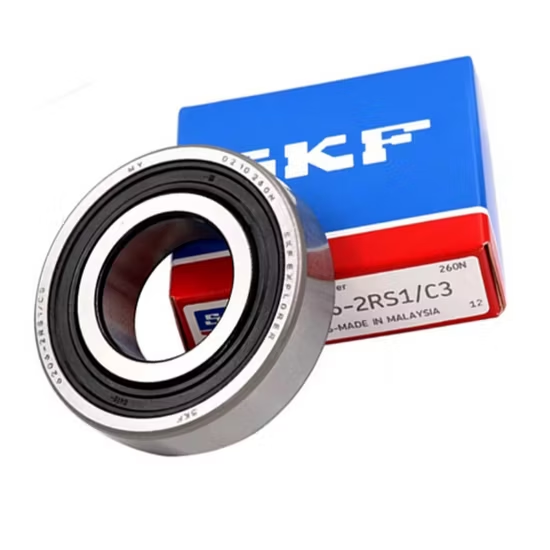
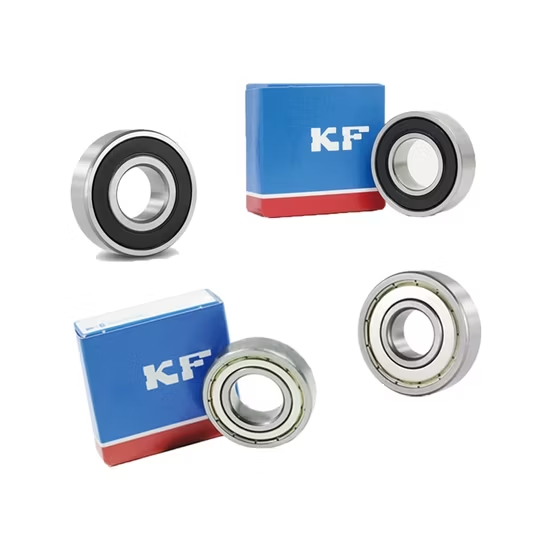

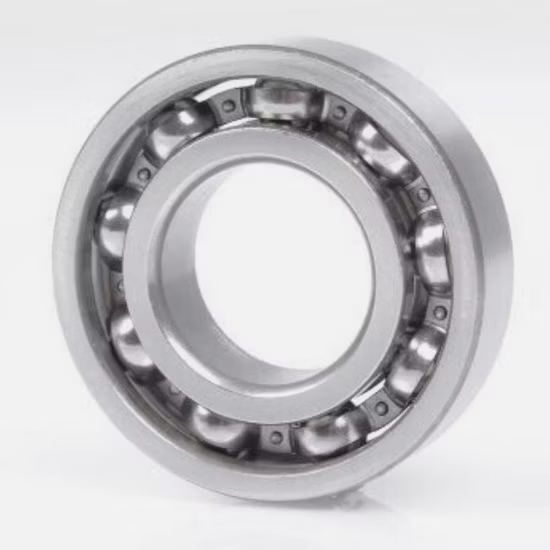
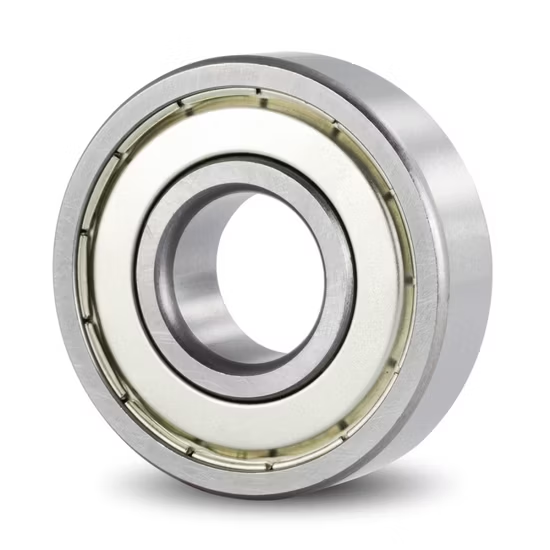
Flange Miniature Deep Groove Ball Bearing for Precision Compact Assemblies — flanged outer ring enables precise axial positioning and simplified housing design in small electric motors, robotics, and medical devices.
Every unit ships with a scannable QR code verifiable through official brand apps, confirming authenticity and full batch traceability from authorized channels.
Factory Batch Traceability — every flange miniature deep groove ball bearing supplier shipment includes verifiable lot records linked directly to the original production run.
| Parameter | Value |
|---|---|
| Product Type | Flange Miniature Deep Groove Ball Bearing |
| Bearing Type | Deep Groove Ball Bearing with Flanged Outer Ring |
| Seal or Shield Type | Open, Rubber Seals, Iron Seals |
| Noise and Vibration Level | Z1V1, Z2V2, Z3V3, Z4V4 |
| Material Options | Standard bearing steel, martensitic stainless steel variants |
| Origin | Germany, Japan, Sweden, Malaysia, China |
| HS Code | 848210 |
| Industry | Typical Applications |
|---|---|
| Small Electric Motors | High-speed spindle drive shafts, cooling fan rotor supports |
| Robotics & Automation | Articulated joint pivot points, miniature linear actuator guides |
| Precision Instruments | Optical scanning mechanisms, laboratory centrifuge rotors |
| Medical Devices | Dental handpiece turbines, surgical power tool spindles |
| Office Machinery | Paper feed roller assemblies, laser printer scanner motors |
Axial positioning relies entirely on the flange face resting flat against the housing shoulder.
When procurement teams source from an unverified flange miniature deep groove ball bearing supplier, they often receive components with soft inner rings or cloned authenticity markers. In compact equipment like high-speed cooling fans, even a microscopic parallelism deviation in the housing shoulder forces the flange to tilt during press-fitting. This induced mounting stress distorts the inner ring geometry, causing immediate noise spikes and premature raceway spalling. Sourcing through authorized channels guarantees the strict dimensional tolerances required to prevent these hidden installation failures .
The outer flange eliminates the need for complex housing shoulders, simplifying machining while providing secure axial retention in space-constrained assemblies. As a flange miniature deep groove ball bearing supplier with deep roots in the Yangtze River Delta motor manufacturing hub, I evaluate cross-brand interchangeability by verifying flange thickness and outer diameter tolerances, not just the basic bore size. This ensures the component seats perfectly without inducing the residual stresses that plague poorly matched replacements.
Miniature motors and dental handpieces operate at extreme rotational speeds, generating significant frictional heat within tiny contact areas. Selecting the correct noise and vibration grading, such as Z3V3 or Z4V4, is critical to maintaining smooth operation and minimizing thermal buildup. Furthermore, the choice between non-contact iron shields and rubber seals dictates the balance between friction reduction and contamination ingress. In environments exposed to moisture or sterilization chemicals, material selection shifts toward stainless options to prevent corrosion-induced binding .
The Z and V suffixes define the strict acoustic and vibration boundaries essential for precision instruments. A Z4V4 rating indicates the component has passed rigorous high-frequency vibration testing, ensuring silent operation in medical turbines. Seal selection requires balancing friction against protection; rubber seals provide excellent exclusion of fine dust but generate drag at high speeds, whereas iron shields offer low-friction protection suitable for sealed motor environments. Material options, including standard bearing steel or stainless variants, must be matched to the specific corrosion and magnetic requirements of the application.
Overlooking the geometric precision of the flange face leads to catastrophic warranty voidance in precision equipment. When the flange does not sit perfectly flush, the resulting axial preload distorts the internal clearance, accelerating fatigue failure far beyond standard L10 life predictions. This unplanned downtime in automated assembly lines or medical devices often costs significantly more than the component itself, highlighting the danger of prioritizing lowest-cost sourcing over verified dimensional accuracy .
Counterfeiters frequently target miniature bearings because visual inspection cannot easily reveal soft inner rings or inferior steel purity. We mitigate this by providing authorized multi-brand coverage, ensuring every unit features full batch and lot traceability back to the manufacturer. Our cross-reference alignment checks verify that the flange dimensions, seal type, and clearance class perfectly match your OEM requirements. We also supply dimensional and running accuracy inspection reports prior to shipment, eliminating the guesswork and protecting your equipment from cloned components.
To ensure optimal performance, please provide your equipment model, available housing dimensions, and specific operating parameters including rotational speed and load profiles. Our engineering team will utilize this data to determine the exact designation, matching the required flange geometry and internal clearance. Additionally, detailing the operating environment allows us to recommend the most appropriate material and seal configuration for your application.
Q: How do I determine the exact miniature bearing designation for my equipment?
A: Provide the equipment model, available housing dimensions, and operating parameters like speed and load. Our engineering team uses this data to calculate the exact designation, ensuring the flange geometry, internal clearance, and seal type perfectly match your specific application requirements without guesswork.
Q: What are the material selection boundaries for miniature bearings?
A: Standard bearing steel suits most dry, indoor electric motors, while martensitic stainless steel variants are necessary for medical devices exposed to sterilization chemicals or moisture. We evaluate your specific corrosion and temperature environment to recommend the optimal material option, ensuring long-term reliability without premature degradation.
Q: How do I prevent common failure modes in high-speed miniature applications?
A: High-speed failures usually stem from thermal expansion or mounting stress. Ensure the housing shoulder is perfectly parallel to the flange face to avoid inner ring distortion during press-fitting. Selecting the correct Z/V noise grade and appropriate low-friction iron shields also minimizes heat generation, extending operational life significantly.
Q: How do you handle cross-brand interchange for discontinued OEM parts?
A: We do not simply match the base bore and outer diameter. Our technical team verifies the exact flange thickness, seal configuration, and internal clearance class across authorized global brands. This strict alignment ensures the replacement unit fits the original housing perfectly and maintains the required axial positioning and rotational smoothness.
Q: What do the Z and V noise and vibration levels mean for electric motors?
A: The Z and V grades classify the acoustic and vibration limits of the bearing. Higher grades like Z3V3 or Z4V4 indicate rigorous high-frequency testing, ensuring exceptionally quiet and smooth operation. This is critical for precision instruments and small motors where excessive vibration causes noise and accelerates wear.
Our 5-step process ensures every order is engineered, validated, and supported for optimal performance.
Technical needs assessment
Custom specifications
Free samples for $50k+
Pre-shipment inspection
On-site & predictive
Our certified engineers respond within 24 hours with detailed technical specifications, pricing, and lead time information.