01
Consultation
Technical needs assessment



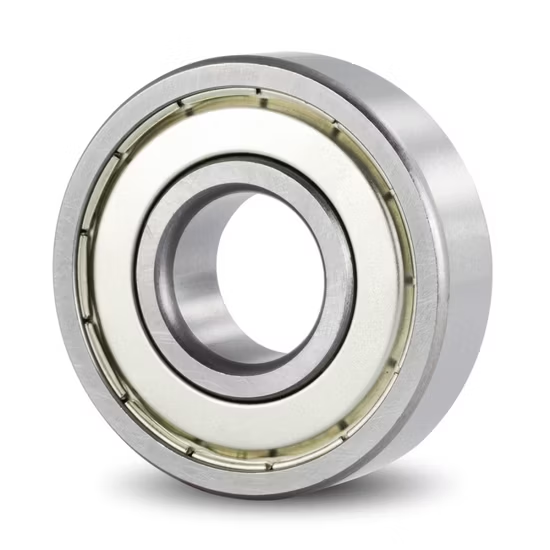
6001 6002 6003 6004 6005 P4p5p6 Deep Groove Ball Bearings deliver reliable chrome steel performance for printing press parts.
Factory Lot Traceability — Every 6001 6002 6003 6004 6005 P4p5p6 unit ships with verifiable batch records linking directly to the original production run.
| Parameter | Value |
|---|---|
| Designation | 6001 6002 6003 6004 6005 P4p5p6 |
| Product Type | Deep Groove Ball Bearing |
| Material | Chrome Steel |
| Seal or Shield Type | Open, Rubber Seals, Iron Seals |
| Noise and Vibration Class | Z1V1, Z2V2, Z3V3, Z4V4 |
| Precision Class | P4, P5, P6 |
| Origin | Germany, Japan, Sweden, Malaysia, China |
Note: The P4p5p6 designation string is an unverified suffix grouping and requires manufacturer catalog confirmation for exact tolerance class mapping.
| Industry | Typical Applications |
|---|---|
| Printing Machinery | Main drive shafts, impression cylinder supports, web guide rollers |
| Electric Motors | High-speed rotor supports, precision spindle drives |
| Industrial Pumps | Impeller shaft alignments, high-RPM centrifugal assemblies |
Matching the base number while ignoring the precision suffix is a direct path to catastrophic spindle failure.
On the workshop floor, swapping a specified high-precision unit for a standard P0 grade just because the base dimensions match is a frequent and costly error. In printing press main drives, this substitution causes severe vibration at operational speeds, rapidly leading to raceway spalling and unplanned downtime. Sourcing a genuine 6001 6002 6003 6004 6005 P4p5p6 deep groove ball bearing ensures the internal geometry and running accuracy actually meet the tight tolerances demanded by high-speed impression cylinders .
Printing machinery requires exceptional rotational accuracy to prevent color misregistration and web tension fluctuations. The 6001 6002 6003 6004 6005 P4p5p6 deep groove ball bearing series provides the strict dimensional control necessary for these sensitive spindle applications. We verify that the supplied precision class aligns perfectly with your OEM equipment requirements, preventing the thermal binding that occurs when internal clearances are mismatched to the operating speed.
Continuous web presses generate significant friction heat, demanding careful consideration of internal clearance and lubrication strategies. If a standard clearance is installed where a C3 was required for thermal expansion, the bearing will bind as the inner ring expands. Furthermore, selecting between rubber-sealed and iron-shielded variants dictates whether the unit can be relubricated during scheduled maintenance or must rely entirely on its initial grease fill .
The Z1V1 through Z4V4 noise and vibration classifications are critical for electric motors and printing rollers where acoustic emissions indicate internal surface quality. A Z4V4 rating guarantees exceptionally smooth raceways and highly uniform rolling elements, minimizing high-frequency vibrations. Simultaneously, choosing between open, rubber-sealed, and iron-shielded configurations balances the need for contamination exclusion against the friction heat generated by contacting seals in high-RPM environments.
Overlooking precision and clearance suffixes during cross-referencing inevitably leads to premature failure. According to ISO 281 framework principles, operating a bearing outside its designed internal geometry parameters drastically reduces its calculated L10 life. In printing presses, this manifests as catastrophic damage to the spindle housing, voiding equipment warranties and causing extensive unplanned downtime that far exceeds the cost of the correct component .
We prevent cross-reference errors by matching clearance, cage material, and precision suffixes, not just the base designation. For the 6001 6002 6003 6004 6005 P4p5p6 deep groove ball bearing, we specifically verify the noise class and seal type to ensure they match your exact application. Our authorized multi-brand coverage means you can consolidate mixed-brand requirements into a single, fully traceable order. We also provide application-based selection reviews to catch potential thermal or load mismatches before the parts ship.
To ensure optimal performance, share your specific radial and axial loads, operational speeds, and ambient temperature ranges with our engineering team. Providing the exact OEM equipment number allows us to perform a comprehensive cross-reference check, verifying that all suffix parameters align perfectly with your printing press or motor spindle requirements.
Q: Why is matching the base number insufficient when cross-referencing these bearings?
A: Base numbers only define outer dimensions. Ignoring precision, clearance, and sealing suffixes leads to severe field failures. For high-speed printing spindles, installing a standard clearance instead of the required thermal expansion clearance causes binding, while dropping from P4 to P0 precision induces destructive vibrations and rapid raceway spalling.
Q: How do Z1V1 to Z4V4 noise levels impact printing press performance?
A: These classifications measure acoustic emissions and vibration amplitude. In printing machinery, high-frequency vibrations translate directly into print defects like banding or misregistration. Specifying Z3V3 or Z4V4 ensures the internal raceway geometry and rolling element uniformity are tight enough to maintain smooth, defect-free operation at high speeds.
Q: What are the selection boundaries between rubber seals and iron shields?
A: Iron shields provide non-contact protection against large debris with minimal friction, suiting very high-RPM applications. Rubber seals offer superior exclusion of fine dust and moisture but generate more friction heat. The choice depends on balancing the contamination risk in your specific press environment against the thermal limits of the grease.
Q: How should I interpret the P4p5p6 designation string in the catalog?
A: This string represents a grouping of high-precision tolerance classes rather than a single standard suffix. It indicates availability across P4, P5, and P6 grades. Always consult the specific manufacturer catalog or request our technical verification to confirm the exact ISO tolerance class required for your spindle application before ordering.
Our 5-step process ensures every order is engineered, validated, and supported for optimal performance.
Technical needs assessment
Custom specifications
Free samples for $50k+
Pre-shipment inspection
On-site & predictive
Our certified engineers respond within 24 hours with detailed technical specifications, pricing, and lead time information.