01
Consultation
Technical needs assessment

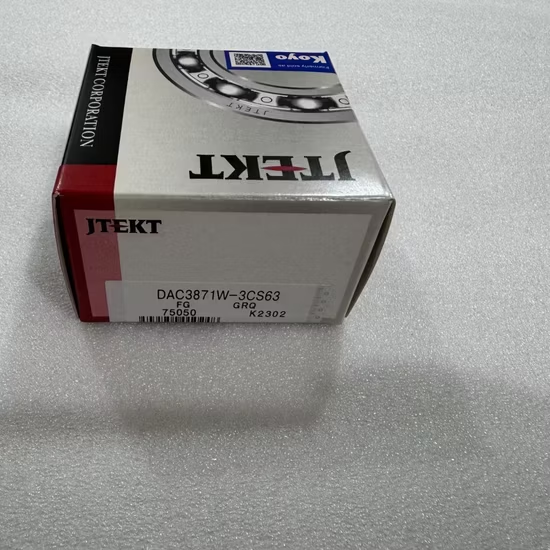


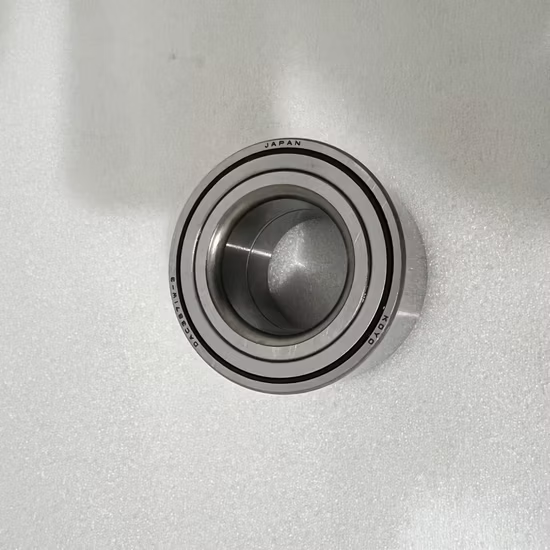

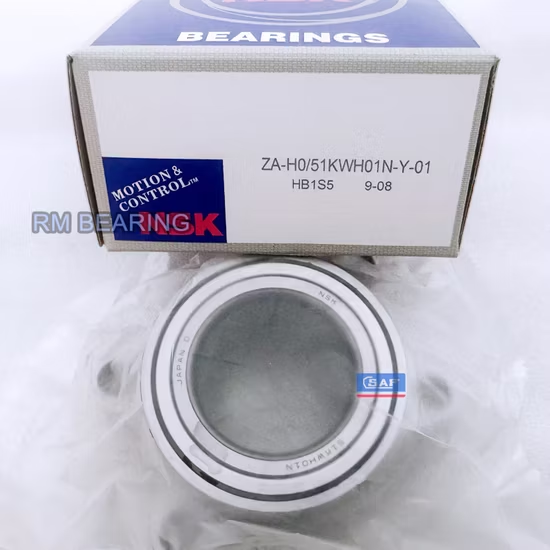
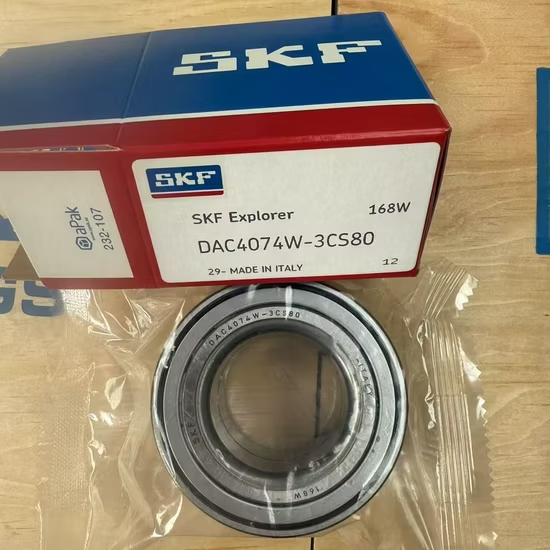
Dac40740042 Front Wheel Hub Bearing 40×74×42 mm P4 C0 — Double row chrome steel construction handles composite steering loads, while the integrated ABS sensor ring ensures precise compatibility with vehicle anti-lock braking systems.
Cross-reference alignment verified — Every Dac40740042 wheel hub bearing cross-check confirms ABS tooth count, seal geometry, and dimensional tolerances match the OEM specification.
| Parameter | Value |
|---|---|
| Designation | Dac40740042 |
| Bearing Type | Wheel Hub Bearing |
| Bore Diameter (d) | 40 mm |
| Outside Diameter (D) | 74 mm |
| Width (B) | 42 mm |
| Number of Rows | Double Row |
| Material | Chrome Steel |
| Precision Class | P4 |
| Clearance Class | C0 |
| Seal Type | Nylon / Brass / Iron Seal options |
| ABS Configuration | With ABS signal ring |
| Certification | ISO9001 |
| Origin | Shanghai |
| Industry | Typical Applications |
|---|---|
| Automotive Repair | Front wheel hub assemblies for passenger vehicles such as Toyota Corolla |
| General MRO | Drivetrain and suspension maintenance requiring integrated ABS sensor compatibility |
Matching the basic designation is never enough when internal clearances and ABS ring configurations differ.
I have seen repair shops install hub units that look identical on the shelf, only to face dashboard warning lights or early thermal binding shortly after the vehicle leaves the bay. Sourcing a Dac40740042 wheel hub bearing requires verifying the exact seal material and ABS tooth count, not just the outer dimensions. Overlooking these internal details leads to premature failures that standard visual inspections completely miss .
Selecting the correct variant ensures the double-row structure handles the combined radial and axial loads generated during cornering. The P4 precision grade maintains smooth rotation under high-speed highway driving, while the integrated ABS ring guarantees accurate wheel speed signal transmission to the vehicle's braking system.
Front wheel assemblies endure intense heat from adjacent brake calipers, which can degrade inferior seal materials and cause lubricant breakdown. Road salt, water, and fine particulate matter constantly threaten the bearing interior, making the choice between nylon, brass, or iron seals critical for long-term contamination exclusion. Proper C0 clearance accommodates the thermal expansion of the chrome steel components without inducing excessive internal preload .
The double-row angular contact design provides the necessary rigidity to support vehicle weight and dynamic cornering forces simultaneously. Operating with C0 normal clearance prevents thermal binding when the bearing reaches elevated temperatures during sustained braking or high-speed travel. P4 precision ensures tight dimensional tolerances, minimizing vibration and noise transfer to the vehicle chassis. The integrated ABS signal ring must perfectly align with the vehicle's magnetic sensor to prevent erratic anti-lock braking system behavior.
Installing a hub unit with mismatched ABS tooth counts immediately triggers dashboard fault codes, rendering the anti-lock braking system inoperative and compromising vehicle safety. Utilizing a bearing with incorrect internal clearance leads to rapid raceway spalling and catastrophic wheel detachment under heavy loads. These premature failures result in severe warranty voidance and costly secondary damage to the steering knuckle and CV joints .
We cross-reference the Dac 407442 and 40bwd12 equivalents by verifying the exact ABS ring tooth count, preventing the signal mismatch errors that plague generic replacements. Our batch traceability ensures the chrome steel material and heat treatment processes meet strict automotive durability standards, eliminating the soft inner rings found in counterfeit units. We review the required seal material against your specific climate and road conditions, ensuring the nylon, brass, or iron seal options provide optimal contamination protection. Every shipment includes dimensional and running accuracy inspection reports confirming the P4 precision grade before dispatch.
Provide the specific vehicle identification number or OEM equipment number so our engineering team can verify the exact ABS tooth count and seal configuration. Share the typical operating environment, including exposure to road salt or extreme brake heat, to determine the most suitable seal material option. Supplying these parameters ensures the cross-referenced replacement perfectly matches the original factory specifications.
Q: Why must the ABS ring parameters be verified during cross-referencing?
A: Even if the outer dimensions match, different vehicle models use varying ABS tooth counts and magnetic encoder designs. Installing a unit with an incompatible signal ring will trigger dashboard warning lights and disable the anti-lock braking system. We verify these specific parameters to ensure seamless electronic integration.
Q: How does P4 precision affect the lifespan of a wheel hub bearing?
A: P4 precision guarantees tighter dimensional and running accuracy tolerances compared to standard grades. This minimizes internal vibration, ensures even load distribution across the double-row rolling elements, and significantly reduces noise transfer to the vehicle cabin, ultimately extending the operational service life under high-speed conditions.
Q: What is the correct procedure for testing the ABS sensor after installation?
A: After pressing the bearing into the knuckle, connect a diagnostic scan tool to read the live wheel speed data while rotating the hub by hand. The signal must be consistent and match the rotational speed of the opposite wheel. Any erratic readings indicate potential damage to the integrated magnetic encoder during mounting.
Q: How should chrome steel wheel hub bearings be stored to prevent rust?
A: Store the units in their original, unopened packaging in a climate-controlled environment with low humidity. Avoid placing them directly on concrete floors or near corrosive chemicals. Do not open the moisture-proof wrapping until the exact moment of installation to preserve the factory-applied rust preventative coating.
Q: How does C0 clearance influence vehicle handling and stability?
A: C0 represents normal internal clearance, which is engineered to accommodate the thermal expansion generated by adjacent brake components. Using a tighter clearance could cause thermal binding and premature seizure, while excessive clearance would introduce wheel play, negatively impacting steering precision and overall vehicle stability.
Our 5-step process ensures every order is engineered, validated, and supported for optimal performance.
Technical needs assessment
Custom specifications
Free samples for $50k+
Pre-shipment inspection
On-site & predictive
Our certified engineers respond within 24 hours with detailed technical specifications, pricing, and lead time information.