01
Consultation
Technical needs assessment


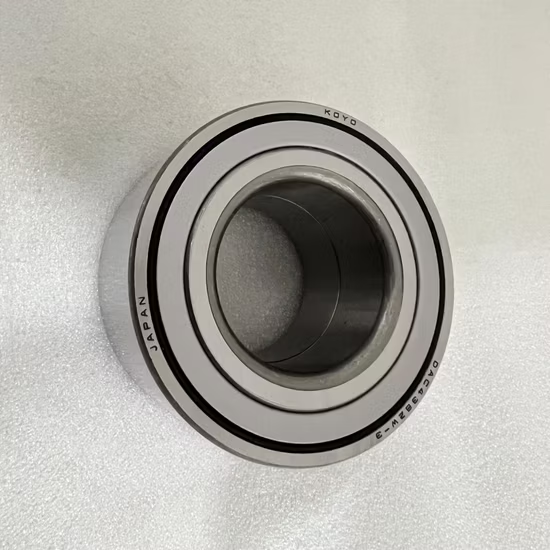
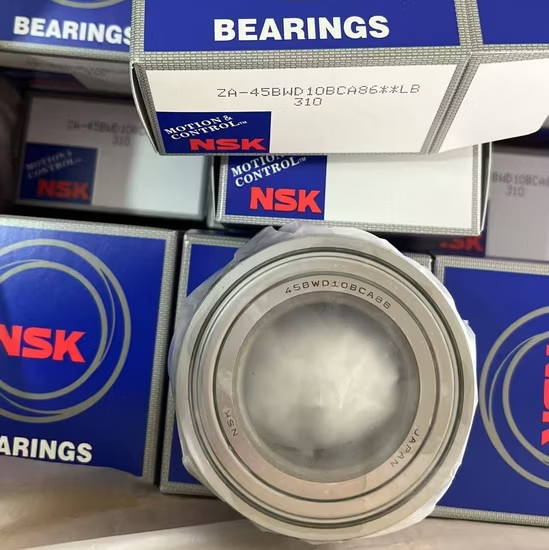
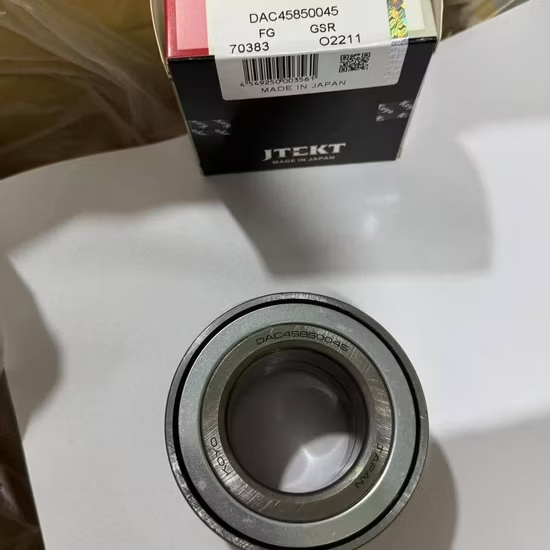
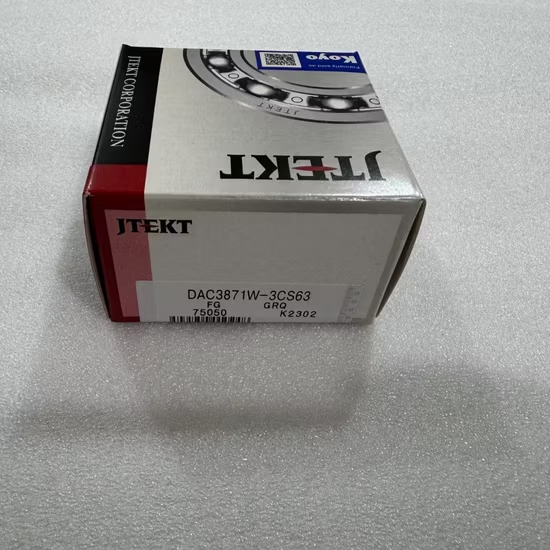
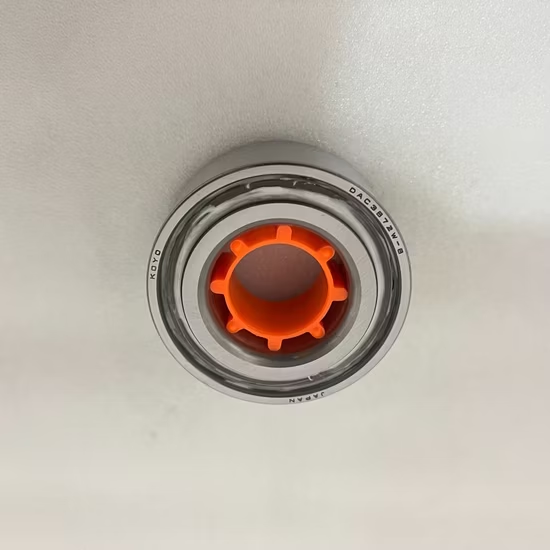
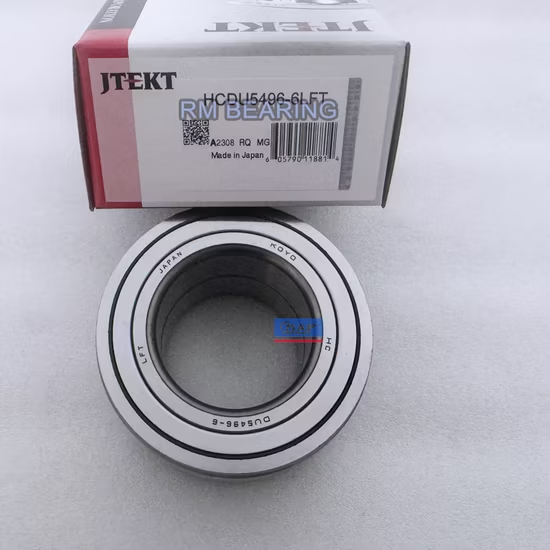
Automotive Wheel Hub Bearing Assemblies for Vehicle Repair — double-row chrome steel units with integrated ABS sensors and P4 precision.
Verified QR Authenticity — Every wheel hub unit ships with scannable QR codes linking directly to the manufacturer's official verification app for immediate counterfeit screening.
| Parameter | Value |
|---|---|
| Product Type | Wheel Hub Bearing Assembly |
| Bearing Type | Double Row Angular Contact |
| Material | Chrome Steel |
| Precision Class | P4 |
| Clearance Class | C0 |
| Sensor Integration | With ABS |
| Seal Options | Nylon / Brass / Iron Seal |
| Certification | ISO9001 |
| Origin | Shanghai |
| Industry | Typical Applications |
|---|---|
| Automotive Repair | Passenger vehicle front and rear wheel ends, integrated ABS tone ring replacements |
| Heavy Vehicle Maintenance | Light commercial truck steering knuckles, trailer axle hub assemblies |
| Construction Machinery | Compact loader steering axles, telehandler drive wheel hubs |
| Agricultural Equipment | Tractor front drive axles, heavy-duty harvester wheel mounts |
Matching the OEM stamp is never enough when internal sensor rings and seal geometries differ.
In the Pearl River Delta aftermarket, I frequently see repair shops install hub units that physically bolt on but trigger dashboard ABS warnings within fifty kilometers. The base reference might align, yet the internal magnetic encoder ring possesses a different pole pitch, or the seal lip creates excessive drag on the tone ring . When sourcing from a reliable Automotive wheel hub bearing assembly supplier, procurement teams must look past the exterior casting numbers and verify the exact electrical interface and internal clearance designed for the specific vehicle chassis.
Selecting the correct assembly requires analyzing the specific axle dynamics rather than just matching a parts catalog. Our engineering review cross-checks the target vehicle's gross axle weight rating and suspension geometry against the hub's internal raceway profile. This ensures the chosen double-row configuration handles the combined radial and thrust loads generated during high-speed cornering without premature raceway spalling.
Wheel ends operate in highly aggressive environments, facing constant exposure to road salt, brake dust, and deep water puddles. The choice between nylon, brass, or iron seals dictates how well the assembly excludes contaminants while managing friction heat . Furthermore, the C0 clearance class is specifically selected to accommodate the thermal expansion of the chrome steel components under heavy braking loads, preventing the internal rolling elements from binding when the hub temperature rises during prolonged mountain descents.
The chrome steel construction provides the necessary core hardness and fatigue resistance required for continuous road impacts. Achieving P4 precision in a hub assembly is not merely about tight machining tolerances; it directly translates to minimized rotational runout, which is critical for maintaining consistent air gaps with the ABS sensor. Depending on the operating environment, buyers can select from various seal materials to balance contamination exclusion with rotational friction, ensuring the assembly meets the specific demands of either daily commuter traffic or severe off-road construction sites.
Installing an assembly with the wrong internal preload or incompatible encoder ring leads to catastrophic downstream consequences. Beyond the immediate return to the workshop for warranty replacement, improper hub units can cause uneven tire wear and compromise the vehicle's electronic stability control systems . Following failure analysis frameworks like ISO 15243, we observe that a significant share of premature hub seizures stems from selecting units where the seal design fails to retain factory grease under high-pressure wash conditions.
We prevent cross-reference errors by validating not just the base OEM number, but the exact ABS sensor configuration and flange geometry. Every batch undergoes strict dimensional and running accuracy inspections to confirm P4 tolerances before dispatch. Our inventory covers mixed-brand requirements, allowing you to consolidate passenger and commercial vehicle hub orders into a single shipment. Furthermore, we provide complete batch traceability, ensuring your workshop can verify the origin and material certifications for every unit installed.
To ensure exact fitment, please provide the target vehicle's VIN, chassis code, or the specific OEM equipment number currently on the defective unit. Sharing the operating environment, such as exposure to heavy road salt or frequent water submersion, allows our engineering team to recommend the optimal seal material. This technical复核 guarantees the replacement hub matches the original electrical and mechanical interfaces perfectly.
Q: How to determine the correct ABS sensor ring configuration when replacing OEM wheel hub units?
A: Never rely solely on the outer casting number. You must verify the number of magnetic poles on the encoder ring and the exact air gap requirements of the vehicle's specific ABS control module. Providing the vehicle VIN or chassis code allows our technical team to cross-reference the precise electrical interface, preventing dashboard warning lights and stability control failures after installation.
Q: What are the common failure modes of wheel hub bearings in heavy-duty automotive applications?
A: Heavy-duty applications frequently suffer from seal lip wear allowing abrasive brake dust and road salt to contaminate the grease. This leads to raceway spalling and eventual seizure. Additionally, improper axle nut torque during installation can alter the internal clearance, causing excessive heat generation and premature cage failure under high radial loads during heavy cornering or load-bearing operations.
Q: How to verify the P4 precision and C0 clearance of aftermarket wheel hub assemblies?
A: Always request the manufacturer's dimensional and running accuracy inspection report for the specific batch. This documentation confirms the tight rotational runout required for P4 precision, which is vital for ABS sensor stability. For clearance, physical verification involves checking the axial play against the vehicle manufacturer's specifications after applying the correct mounting torque to the hub flange.
Q: What are the differences between nylon, brass, and iron seals for wheel hub bearing units?
A: Iron seals offer the highest mechanical strength and protection against large debris impacts, making them suitable for construction machinery. Brass seals provide excellent corrosion resistance and stable friction characteristics in wet environments. Nylon seals offer a lightweight alternative with low friction, reducing rotational drag and heat generation, which is ideal for high-speed passenger vehicle applications where fuel efficiency is prioritized.
Q: How to handle cross-referencing when the original OEM part number has been superseded?
A: Superseded numbers often indicate internal design upgrades, such as improved seal geometries or updated ABS encoder rings. Do not assume backward compatibility. Submit both the original and superseded OEM numbers along with the vehicle production date. Our cross-brand interchange expertise ensures the selected assembly matches the current mechanical and electrical requirements without compromising the vehicle's braking system integrity.
Our 5-step process ensures every order is engineered, validated, and supported for optimal performance.
Technical needs assessment
Custom specifications
Free samples for $50k+
Pre-shipment inspection
On-site & predictive
Our certified engineers respond within 24 hours with detailed technical specifications, pricing, and lead time information.