01
Consultation
Technical needs assessment



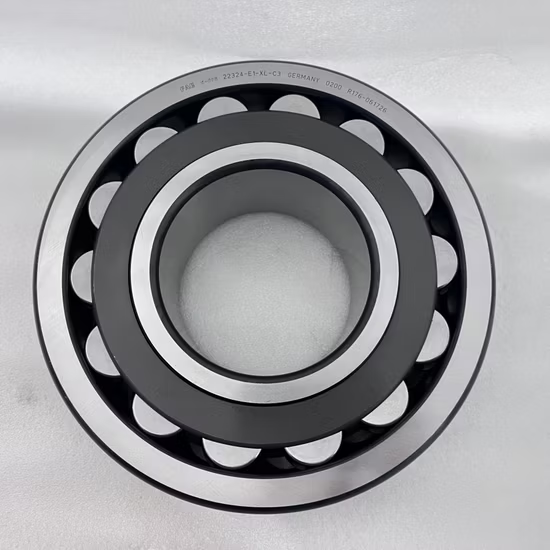


Agricultural Machinery Spherical Roller Bearing — engineered to withstand heavy shock loads, severe dust, and continuous operation in harsh environments.
Instant QR Verification — Scan the manufacturer's official app code on every batch to confirm metallurgical origin before installation.
| Parameter | Value |
|---|---|
| Product Type | Spherical Roller Bearing |
| Bearing Type | Spherical Roller |
| Feature | Low Noise, High Speed, Long Service Life |
| Material Options | Available in standard bearing steel or specialized alloy variants |
| Customization | Available for OEM requirements |
| Origin | Germany / Japan / Sweden / Malaysia / China |
| HS Code | 8482500090 |
| Industry | Typical Applications |
|---|---|
| Agricultural Machinery | Combine harvester threshing drums, tractor PTO shaft supports, tillage equipment gearboxes |
| Mining & Aggregates | Vibrating screen exciter mechanisms, jaw crusher eccentric shafts, conveyor drive pulleys |
| Pulp & Paper | Paper machine dryer cylinder journals, press roll bearing housings |
| Steel & Metallurgy | Continuous caster roll guides, rolling mill work roll chocks |
Seal failure and clearance mismatch cause catastrophic binding long before the rolling elements reach their fatigue limit.
In heavy-duty farming and crushing environments, fine particulate matter infiltrates comp*rinding paste. When procurement teams order base designations without verifying internal clearance or cage materials, the equipment faces thermal binding under heavy shock loads. Field experience shows that a significant share of premature failures stems from these overlooked suffix discrepancies rather than inadequate load capacity . Selecting the right agricultural machinery spherical roller bearing supplier ensures these critical internal geometries align with the actual operating environment.
Finding a reliable agricultural machinery spherical roller bearing supplier means looking beyond the basic outer dimensions. We evaluate the specific shock loads, misalignment angles, and rotational speeds of your threshing drums or vibrating screens to recommend the optimal internal design. This application-based selection review ensures the bearing maintains stable operation even when shaft deflection occurs under peak harvesting or crushing loads.
Agricultural and crushing environments subject components to severe radial shocks combined with heavy axial thrust from uneven material feed. High ambient dust requires robust sealing solutions that prevent ingress without generating excessive friction heat. Furthermore, significant temperature fluctuations during continuous operation demand appropriate internal clearance to accommodate thermal expansion of the shaft and housing . Proper lubrication intervals and grease compatibility are equally critical to prevent cage starvation in high-vibration zones.
The choice of cage material directly dictates performance under heavy vibration and shock. Brass cages offer superior durability and resistance to cage fracture in high-shock applications like crushers, while pressed steel cages may suffice for moderate-duty gearboxes. Depending on the specific exposure to moisture or corrosive fertilizers, components are available in specialized alloy variants or with enhanced surface treatments. Understanding these material options allows engineers to balance initial procurement costs against long-term reliability in harsh field conditions.
Installing a component with standard clearance in a high-temperature vibrating screen often leads to thermal binding and sudden seizure. Such unplanned downtime disrupts entire processing lines and voids equipment warranties due to improper maintenance practices. According to ISO 15243 frameworks, these failures manifest as severe smearing and cage destruction, causing catastrophic damage to adjacent shafts and housings . Preventing these issues requires strict adherence to application-specific selection parameters rather than relying on generic part numbers.
Counterfeit components with soft inner rings frequently pass casual visual inspections but fail rapidly under agricultural shock loads. We provide authorized distribution across major international brands, ensuring every shipment includes verifiable batch documentation. Our cross-reference matching process verifies not just the base number, but the exact cage material and clearance class required for your specific machinery. This eliminates the risk of receiving visually identical but internally incompatible replacements that compromise equipment safety.
Provide your specific equipment model, installation space constraints, and detailed operating parameters including load profiles and rotational speeds. Our engineering team will utilize this data to determine the exact designation, ensuring optimal internal geometry and clearance for your application. Specify any environmental factors such as extreme dust, moisture, or chemical exposure so we can recommend the most appropriate material and sealing configuration.
Q: How do I determine the exact bearing designation for my agricultural equipment?
A: Share your equipment model, shaft dimensions, operating speeds, and typical load conditions with our engineering team. We analyze these parameters to specify the exact internal clearance, cage material, and seal type required, ensuring the selected component withstands your specific field challenges without thermal binding or premature cage failure.
Q: What are the most common failure modes in agricultural applications?
A: Premature failures typically result from dust ingress turning lubricant into an abrasive paste, or thermal binding caused by incorrect internal clearance. High shock loads from uneven terrain or hard materials can also fracture inadequate cages. Proper seal selection and application-specific clearance matching are essential to prevent these catastrophic failure modes.
Q: How should I select the right seal type for dusty farming environments?
A: Dusty environments require heavy-duty contact seals that prevent particulate ingress without generating excessive friction heat. We evaluate your rotational speed and contamination levels to recommend the optimal seal design. This ensures long-term lubrication retention and protects the rolling elements from abrasive wear during continuous harvesting or tillage operations.
Q: What customization options are available for OEM agricultural machinery?
A: We offer customized internal geometries, specialized cage materials, and enhanced sealing solutions tailored to your specific OEM design requirements. By providing your exact load profiles and space constraints, we can source or configure components that optimize performance, reduce maintenance intervals, and ensure reliable operation under your unique equipment specifications.
Q: How can I find a reliable cross-reference for a discontinued original part?
A: Provide the original OEM part number or the existing base designation. We perform a comprehensive cross-reference analysis that matches not only the outer dimensions but also the critical internal clearance, cage material, and precision class. This guarantees the replacement integrates flawlessly and maintains the intended operational lifespan of your machinery.
Our 5-step process ensures every order is engineered, validated, and supported for optimal performance.
Technical needs assessment
Custom specifications
Free samples for $50k+
Pre-shipment inspection
On-site & predictive
Our certified engineers respond within 24 hours with detailed technical specifications, pricing, and lead time information.


