01
Consultation
Technical needs assessment

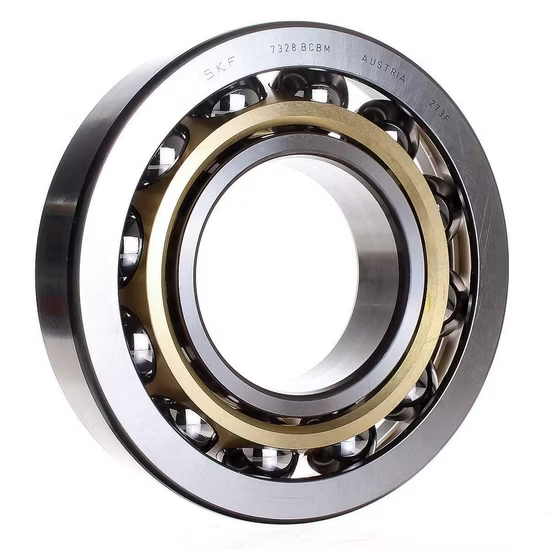
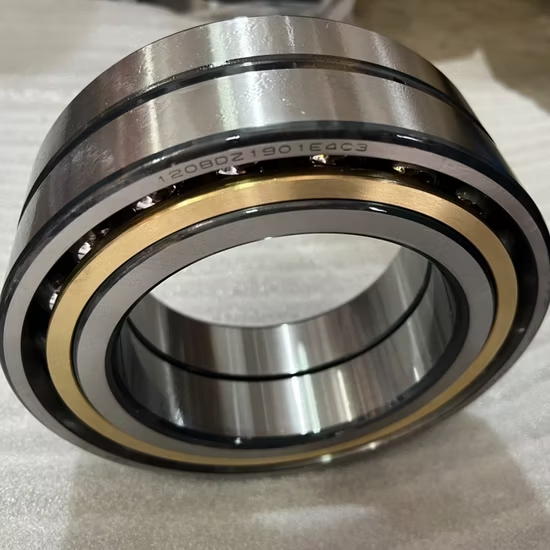
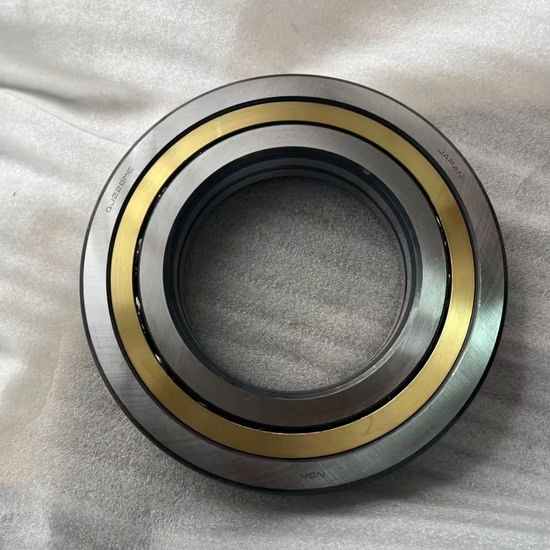
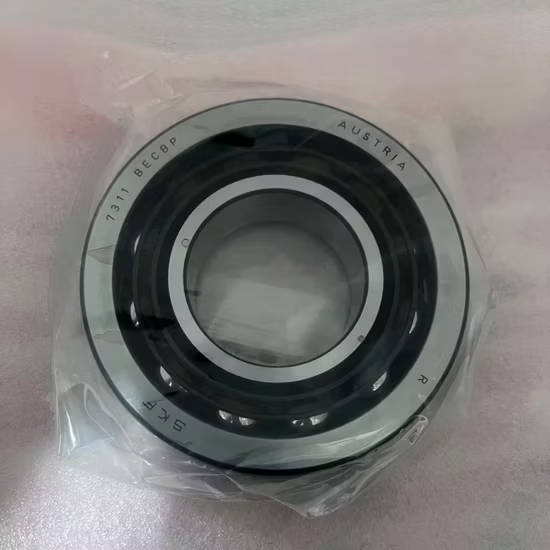
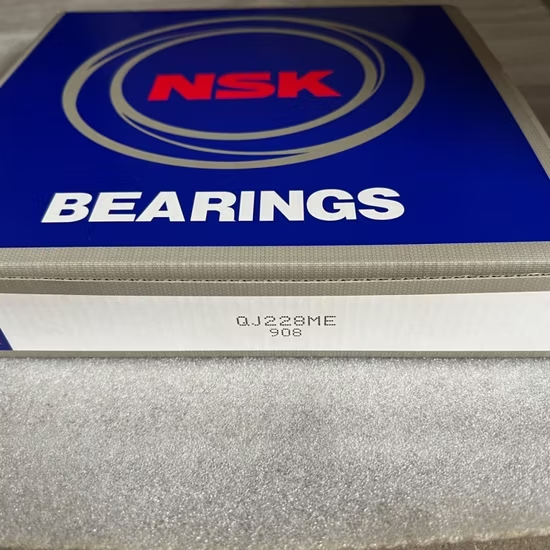
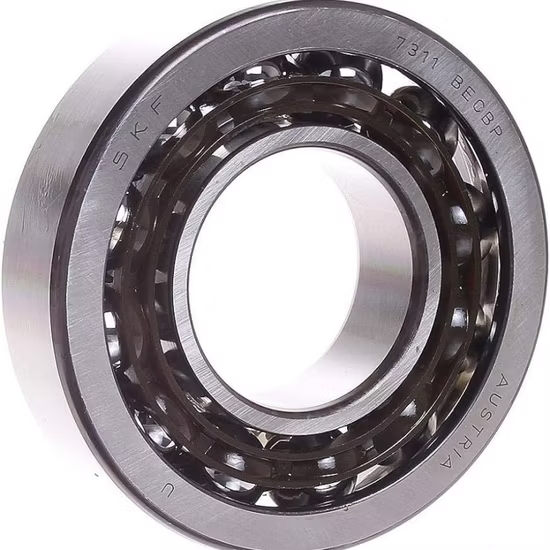
7034 CD/P4a Angular Contact Ball Bearing — engineered for high-speed machine tool spindles and precision equipment. The CD suffix denotes a 15° contact angle that minimizes friction heat, while the P4a precision class guarantees strict dimensional and running accuracy under demanding loads.
Multi-Brand Authorized Coverage — Source the 7034 CD/P4a angular contact ball bearing alongside other spindle components in a single consolidated shipment without juggling multiple vendors.
| Parameter | Value |
|---|---|
| Designation | 7034 CD/P4a |
| Bearing Type | Angular Contact Ball Bearing |
| Contact Angle | 15° optimized design (CD) |
| Precision Class | P4A (Class 4 dimensional and running accuracy) |
| Material | Bearing Steel |
| Vibration Level | Z1V1 / Z2V2 / Z3V3 options |
| Origin | Germany / Japan / Sweden / Malaysia / China |
Note: The suffix 'dga' occasionally appears in alternate catalog listings for this series but remains unverified against primary manufacturer documentation for this specific configuration.
| Industry | Typical Applications |
|---|---|
| Machine Tool Manufacturing | High-speed milling spindle front and rear shaft support |
| Precision Engineering | CNC lathe main spindle precision positioning |
| Fluid Power | High-speed centrifugal pump rotor shaft guidance |
| Robotics | Articulated joint precision rotation and axial restraint |
Thermal binding in high-speed spindles is almost always a suffix mismatch, not a base number error.
I transitioned from the grinding workshop floor to technical sales after seeing too many P0 grade bearings forced into precision spindles, resulting in abnormal temperature spikes and excessive vibration. A 7034 CD/P4a angular contact ball bearing demands strict adherence to its precision and contact angle suffixes. When procurement teams overlook the 'CD' or 'P4a' designators and accept a standard P5 or 25° contact angle alternative, the spindle experiences rapid thermal expansion. This leads to premature cage failure and costly downtime .
High-speed machining requires exceptional rotational accuracy and minimal friction. The 7034 CD/P4a angular contact ball bearing is engineered specifically for these rigorous environments. By supplying exact suffix matches, we ensure the bearing integrates flawlessly into complex spindle assemblies, maintaining the tight tolerances required for superior surface finishes.
Spindle shafts endure combined radial and axial loads while rotating at extreme speeds, generating significant internal heat. This thermal load directly impacts internal clearance and lubrication stability. Oil-air or oil-jet lubrication systems are typically required to manage the heat, demanding a bearing design that minimizes friction. Any deviation in dimensional accuracy exacerbates vibration, compromising the machining process .
The 'CD' suffix signifies a 15° contact angle, an optimized design that reduces friction heat compared to steeper angles, making it ideal for high-speed operations. The 'P4a' designation confirms P4A precision, delivering tighter dimensional and running accuracy than standard grades. This strict tolerance control ensures the inner and outer rings maintain exact alignment under load. Combined with bearing steel construction, these specifications provide the structural integrity necessary for precision machining loads.
Installing a bearing with the wrong contact angle or precision class leads to catastrophic spindle damage. Misaligned contact angles cause uneven load distribution, accelerating raceway fatigue and leading to unplanned downtime. Furthermore, using a lower precision grade introduces excessive runout, voiding the machine tool warranty and ruining expensive workpieces .
We maintain authorized coverage across all major brands, allowing you to fulfill mixed-brand spindle rebuilds in one order. Every 7034 CD/P4a angular contact ball bearing we supply features batch traceability to the manufacturer. We verify cross-references based on clearance, cage material, and the critical P4A precision class, not just the base number. Our technical team reviews your application parameters to confirm the 15° contact angle is optimal for your specific speed and load profile.
To ensure optimal spindle performance, share your specific radial and axial load profiles, maximum operating speeds, and target temperatures. Providing the OEM equipment number allows our engineering team to perform a precise cross-reference check. This technical review guarantees the selected configuration perfectly matches your machinery's exact operational requirements.
Q: How do I verify the authenticity of the P4A precision bearing?
A: Every unit includes a unique QR code scannable via the manufacturer's official application. This provides immediate verification of the bearing's origin, batch number, and production date, ensuring you receive genuine components that meet strict P4A dimensional and running accuracy standards for your spindle.
Q: Why must the cross-reference match the CD suffix exactly?
A: The CD suffix dictates a specific 15° contact angle optimized for high-speed, low-friction applications. Substituting a bearing with a different contact angle alters the internal load distribution and friction characteristics, leading to excessive heat generation and premature failure in precision spindle assemblies.
Q: What is the difference between P4A and standard precision classes?
A: P4A represents a highly restricted tolerance band for both dimensional and running accuracy, far exceeding standard P0 or P5 grades. This tight control minimizes vibration and runout, which is absolutely critical for maintaining surface finish quality and preventing thermal binding in high-speed machine tool spindles.
Q: How does the 15° contact angle affect spindle performance?
A: A 15° contact angle provides an optimal balance between axial load capacity and high-speed capability. It generates significantly less internal friction and heat compared to larger angles, allowing the spindle to maintain higher rotational speeds without suffering from thermal expansion that could compromise machining accuracy.
Our 5-step process ensures every order is engineered, validated, and supported for optimal performance.
Technical needs assessment
Custom specifications
Free samples for $50k+
Pre-shipment inspection
On-site & predictive
Our certified engineers respond within 24 hours with detailed technical specifications, pricing, and lead time information.


![71918 CD/P4a 71918cdga/P4a Angular Contact Bearing High Speed Super Precision [WARN] draft identifier mismatch](https://skfiso.com/wp-content/uploads/2026/09/71918-cd-p4a-71918cdga-p4a-angular-contact-bearing-high-speed-super-precision-warn-draft-identifier-mismatch-f98c45.avif)
