01
Consultation
Technical needs assessment



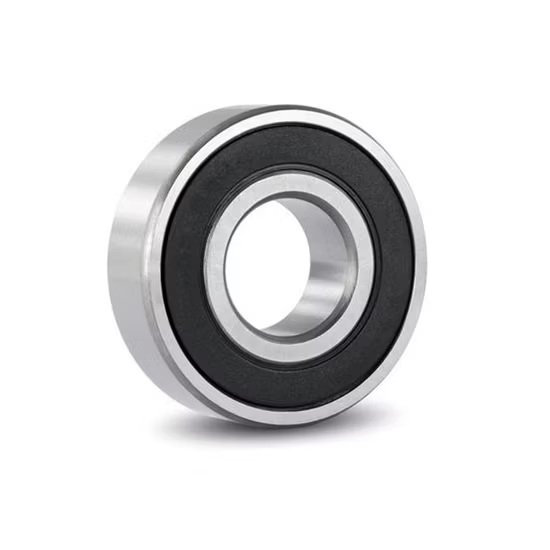
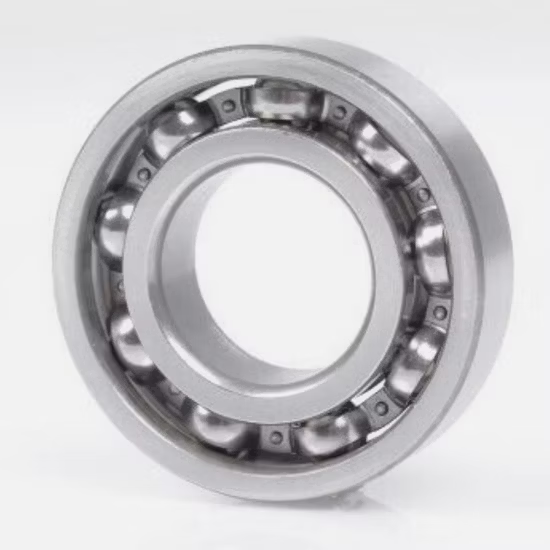
681 682 683 684 685 Deep Groove Ball Bearing —微型深沟球轴承系列,适用于电机、精密仪器与机器人等低噪音运转场景。
Three-point cross-reference alignment — verifying the base number, seal configuration, and noise grade prevents high-speed motor failures across the 681 to 685 series.
| Parameter | Value |
|---|---|
| Designation | 681 682 683 684 685 |
| Bearing Type | Deep Groove Ball Bearing |
| Seal or Shield Type | Open, Rubber Seals, Iron Seals |
| Noise and Vibration Level | Z1V1, Z2V2, Z3V3, Z4V4 |
| Origin | Germany, Japan, Sweden, Malaysia, China |
| HS Code | 848210 |
Note: Z1V1 to Z4V4 noise and vibration classifications are unverified suffixes that require manufacturer catalog confirmation for exact decibel thresholds.
| Industry | Typical Applications |
|---|---|
| Electric Motors | High-speed rotor supports, cooling fan spindle assemblies |
| Household Appliances | Washing machine drain pumps, air conditioner blower motors |
| Robotics | Joint actuators, precision gimbal stabilization mechanisms |
| Precision Instruments | Optical scanner spindles, laboratory centrifuge drives |
Suffix alignment dictates operational survival in miniature precision applications.
In the Pearl River Delta trading hubs, I have seen countless high-speed motors tear themselves apart because procurement teams only matched the base designation. A 681 bearing installed without verifying the internal clearance or cage material will suffer early cage fracture under thermal expansion. Cross-referencing just the numeric prefix ignores critical seal friction and vibration limits, turning a precision component into a catastrophic failure point .
Selecting the correct 681 682 683 684 685 deep groove ball bearing requires looking beyond basic dimensions to the actual operating environment. Our technical review process evaluates the specific radial loads, rotational speeds, and thermal profiles of your equipment. By aligning the exact seal configuration and internal geometry with your application parameters, we ensure the miniature bearing maintains its stability and low-noise profile throughout its service life.
Miniature bearings in electric motors and robotics face intense thermal gradients and strict friction limits. At high rotational speeds, rubber seals generate excessive drag and heat, making iron shields or open configurations with external sealing more appropriate for thermal management. Internal clearance must accommodate the differential expansion between the shaft and housing; a standard clearance will bind and fail when the rotor heats up. Furthermore, achieving Z3V3 or Z4V4 quiet operation demands strict control over raceway surface finish and cage stability to prevent high-frequency harmonic vibrations .
The choice between rubber seals and iron shields fundamentally alters the friction torque and contamination defense of these micro bearings. Rubber seals provide superior exclusion of fine dust and moisture but introduce higher rotational resistance, which is detrimental in low-torque precision instruments. Iron shields offer non-contact protection, preserving the low-friction environment necessary for high-speed motor applications. Meanwhile, the Z1V1 through Z4V4 noise and vibration grades serve as a critical selection gradient, ensuring that the internal geometry and cage dynamics meet the strict acoustic requirements of household appliances and optical scanners.
Ignoring suffix details during procurement leads directly to unplanned downtime and premature failure in critical machinery. When a standard clearance bearing is forced into a high-speed motor application, thermal binding accelerates fatigue, resulting in catastrophic damage to the surrounding housing. Warranty voidance is a common secondary consequence when OEMs discover that the installed components lack the specified vibration grading. Following the failure analysis frameworks outlined in industry standards helps trace these breakdowns back to basic specification mismatches rather than inherent material defects .
We enforce a strict three-point cross-reference check that aligns the base number, seal type, and vibration grade to prevent field failures. Our multi-brand authorization allows us to source the exact 681-685 variant you need from German, Japanese, or Swedish manufacturers in a single consolidated shipment. Every batch is verified for traceability, ensuring the internal clearance and cage materials match the OEM engineering drawings perfectly. We reject surface-level matching, providing application-based selection reviews that account for your specific thermal and speed constraints.
To ensure accurate selection and L10 life calculation, please provide your specific radial and axial loads, operating speeds, and thermal profiles. Sharing the exact OEM equipment number allows our engineering team to perform a comprehensive cross-reference check against the required seal and vibration suffixes. Detailing the environmental exposure helps us confirm whether an open, rubber-sealed, or iron-shielded configuration is optimal for your machinery.
Q: Why must clearance and seal suffixes perfectly match the OEM requirements?
A: Matching only the base number ignores critical operational limits. Incorrect clearance causes thermal binding in high-speed motors, while the wrong seal type introduces excessive friction or fails to block contaminants, leading to premature cage failure and unplanned equipment downtime.
Q: What is the functional boundary between rubber seals and iron shields?
A: Rubber seals provide excellent contamination exclusion but generate higher friction torque, limiting top speeds. Iron shields offer non-contact protection, preserving the low-friction environment essential for high-speed electric motors and precision instruments where acoustic performance is strictly monitored.
Q: How do Z1V1 to Z4V4 grades impact motor and appliance performance?
A: These grades define the acoustic and vibration output of the bearing. Lower grades suffice for general industrial conveyors, while Z3V3 and Z4V4 are mandatory for household appliances and robotics, ensuring high-frequency harmonic vibrations do not disrupt sensitive optical or stabilization mechanisms.
Q: How can I verify the authenticity of miniature bearings?
A: Authenticity is confirmed through batch traceability documents and scanning the manufacturer's QR code via their official mobile application. This process detects cloned codes and verifies that the internal metallurgy and dimensional tolerances meet the original factory specifications.
Q: What are the lubrication rules for sealed micro bearings?
A: Rubber-sealed and iron-shielded miniature bearings are pre-lubricated for life and must not be washed or re-lubricated. Attempting to force grease past the seals damages the internal geometry and introduces contaminants, severely compromising the Z-grade vibration performance and overall operational lifespan.
Our 5-step process ensures every order is engineered, validated, and supported for optimal performance.
Technical needs assessment
Custom specifications
Free samples for $50k+
Pre-shipment inspection
On-site & predictive
Our certified engineers respond within 24 hours with detailed technical specifications, pricing, and lead time information.