01
Consultation
Technical needs assessment

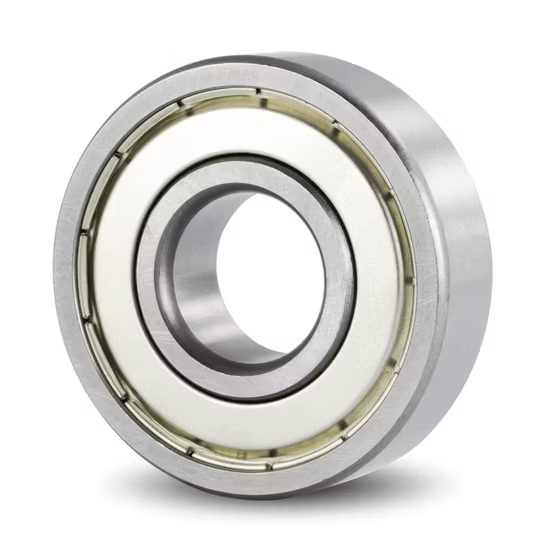


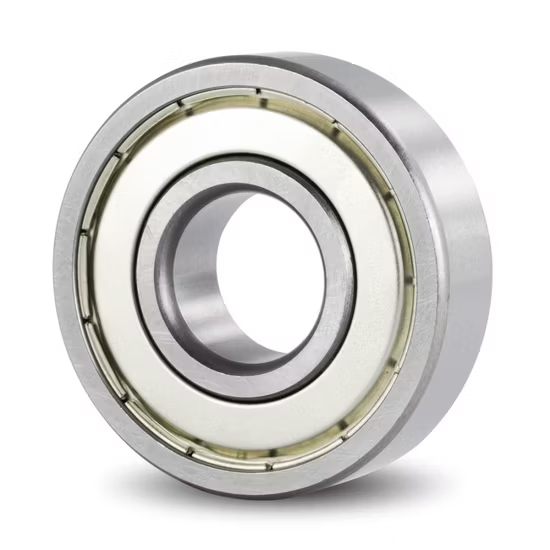
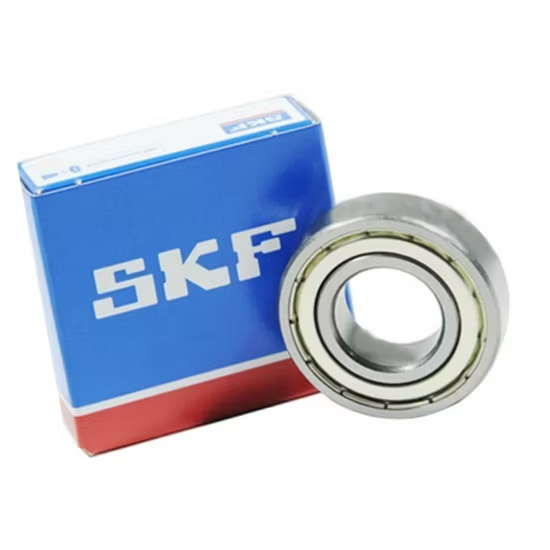
6216 6217 6218 6219 6220 Deep Groove Ball Bearings feature standard CN clearance and P0 precision for general industrial applications.
Unified Multi-Brand Procurement — Consolidate your mixed-brand requirements for the 6216 6217 6218 6219 6220 deep groove ball bearing series into a single traceable shipment without juggling multiple vendors.
| Parameter | Value |
|---|---|
| Designation | 6216 6217 6218 6219 6220 |
| Bearing Type | Deep Groove Ball Bearing |
| Seal or Shield Type | Open, Rubber Seals, Iron Seals |
| Noise and Vibration Level | Z1V1, Z2V2, Z3V3, Z4V4 |
| Clearance Class | Normal (CN) |
| Precision Class | Normal (P0) |
| Origin | Germany, Japan, Sweden, Malaysia, China |
| Customization | Available |
| HS Code | 848210 |
| Industry | Typical Applications |
|---|---|
| Electric Motors | Rotor shaft support requiring low noise and vibration |
| Industrial Gearboxes | High-speed input shafts and intermediate gear supports |
| Agricultural Machinery | Conveyor drive pulleys and seed metering mechanisms |
| Pumps & Compressors | Impeller shaft stabilization under continuous radial loads |
| General MRO | Standard replacement for legacy OEM drive assemblies |
Thermal expansion turns standard clearance into a mechanical trap.
During emergency breakdowns at cement plants across West Africa, I repeatedly saw equipment seize simply because procurement matched the base number but ignored the thermal reality of the site. A standard clearance bearing installed in a high-ambient-temperature environment will expand until the internal clearance vanishes, leading to catastrophic thermal binding. Counterfeit units make this worse; soft inner rings with inadequate hardness fail rapidly under these compounded stresses . True reliability requires verifying both the correct clearance suffix and authentic batch traceability before installation.
Selecting the right 6216 6217 6218 6219 6220 deep groove ball bearing goes far beyond matching the outer dimensions to the housing. Electric motors demand strict vibration control to prevent resonance, while industrial gearboxes require robust sealing to keep abrasive particulates away from the raceways. Our technical review process evaluates your specific operational parameters to ensure the selected seal type and noise grade perfectly align with the equipment's continuous duty cycle.
Continuous operation in dusty or humid conditions rapidly degrades unprotected bearing internals. Open designs require meticulous external lubrication schedules, whereas rubber-sealed variants provide superior contamination exclusion but introduce slight frictional heat. In applications experiencing heavy radial loads combined with elevated ambient temperatures, standard lubricants can oxidize or bleed out. Selecting the appropriate shield configuration and verifying the internal clearance accommodates thermal shaft expansion is critical to preventing premature seizure .
The absence of a clearance suffix defaults to Normal (CN), which is suitable for standard temperature applications but highly risky for hot-running motors. Similarly, the base designation tells you nothing about the acoustic quality; a Z3V3 or Z4V4 grade is mandatory for precision spindle or quiet HVAC motor applications to minimize structural vibration. Iron shields offer non-contact protection ideal for high-speed gearboxes, while rubber seals provide the tightest defense against moisture in agricultural conveyors. Understanding these suffix variations prevents the costly mistake of installing a mechanically compatible but environmentally unsuited component.
Installing a bearing with substandard heat treatment might pass initial visual inspections but will inevitably lead to unplanned downtime. Soft inner rings exhibit accelerated spalling and brinelling under normal operational loads, violating the fatigue life expectations outlined in standard engineering frameworks. When a critical drive component fails prematurely due to counterfeit materials, the resulting secondary damage to shafts and housings vastly exceeds the initial savings .
Sourcing the 6216 through 6220 series from an authorized multi-brand distributor eliminates the guesswork of cross-referencing. We match not just the base number, but the exact seal configuration, clearance class, and precision grade required by your OEM specifications. Every shipment includes verifiable batch traceability, ensuring the steel metallurgy meets original factory standards. This rigorous application-based selection review prevents the field failures caused by mismatched internal geometries and protects your maintenance budget from the hidden costs of premature replacements.
To ensure the selected bearing perfectly matches your application, provide our engineering team with your specific radial and axial load profiles, operating speeds, and ambient temperature ranges. Sharing the original OEM equipment numbers allows us to perform a comprehensive cross-reference check, verifying that the seal type and internal clearance align exactly with the manufacturer's design intent. This technical validation guarantees you receive a component engineered for your specific operational reality.
Q: What is the functional difference between rubber seals and iron shields for these bearings?
A: Rubber seals provide excellent exclusion of fine dust and moisture but generate slightly higher frictional heat due to contact with the inner ring. Iron shields offer non-contact protection, making them ideal for high-speed gearbox applications where minimizing friction and heat buildup is critical, though they offer less defense against liquid ingress.
Q: How do Z1V1 through Z4V4 noise grades impact electric motor selection?
A: These grades define the strictness of the vibration and acoustic testing. While Z1V1 is acceptable for general industrial conveyors, high-efficiency electric motors and precision equipment require Z3V3 or Z4V4 grades to prevent structural resonance, reduce operational noise, and ensure smooth, long-term rotor shaft stability.
Q: Why is verifying the clearance suffix critical for tropical or high-heat environments?
A: Standard CN clearance is designed for normal operating temperatures. In high-heat environments, the shaft and inner ring expand significantly. If a C3 or C4 clearance is not specified to compensate for this thermal expansion, the internal clearance drops to zero, causing severe friction, overheating, and eventual thermal seizure of the bearing.
Q: How can I ensure the bearings I receive are genuine and not counterfeit?
A: Always demand verifiable documentation. We provide a Certificate of Conformity, original batch traceability records, and a QR code that can be scanned via the manufacturer's official application. This multi-layered verification confirms the metallurgy and heat treatment match the original factory specifications.
Q: What information is needed to cross-reference an OEM part number accurately?
A: Beyond the basic OEM number, we need the operating environment details, including ambient temperature, exposure to contaminants, and load characteristics. This ensures our cross-reference matches not just the physical dimensions, but also the correct seal type, cage material, and internal clearance required for your specific application.
Our 5-step process ensures every order is engineered, validated, and supported for optimal performance.
Technical needs assessment
Custom specifications
Free samples for $50k+
Pre-shipment inspection
On-site & predictive
Our certified engineers respond within 24 hours with detailed technical specifications, pricing, and lead time information.


