01
Consultation
Technical needs assessment


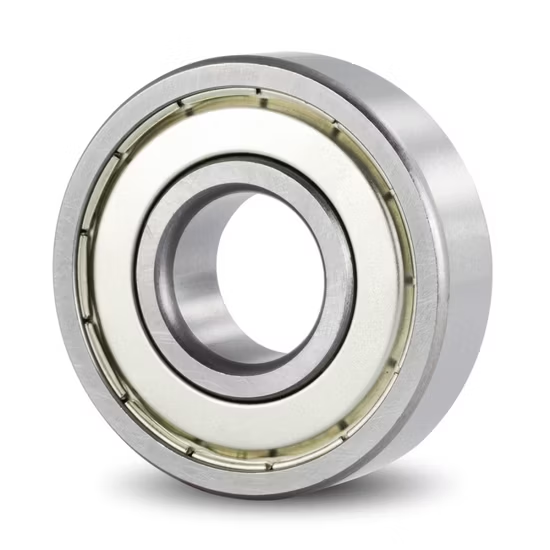


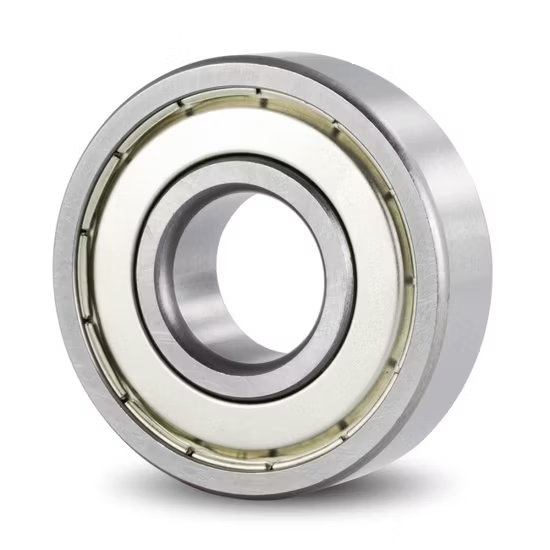
6214-2z Deep Groove Ball Bearing features double steel shields to retain lubrication and block particulate ingress during medium-speed operations. Manufactured from GCr15 high carbon chromium steel, it delivers reliable load capacity and wear resistance for heavy machinery applications.
Three-way cross-reference alignment — verifying base number, thermal clearance, and 2Z shields prevents binding in heavy machinery.
| Parameter | Value |
|---|---|
| Designation | 6214-2z |
| Bearing Type | Deep Groove Ball Bearing |
| Bore Diameter (d) | 70 mm (Bore code 14) |
| Outside Diameter (D) | 125 mm |
| Width (B) | 24 mm |
| Seal or Shield Type | 2Z (Double steel shields) |
| Material | GCr15 (High carbon chromium bearing steel) |
| Origin | Shanghai |
| Industry | Typical Applications |
|---|---|
| Heavy Machinery | Crusher drive shafts, vibrating screen eccentric blocks |
| Building Material Shops | Cement kiln drive gearboxes, conveyor pulley bearings |
| Manufacturing Plants | Industrial electric motor shafts, heavy-duty pump assemblies |
Matching the base number is never enough when thermal expansion is ignored.
Sourcing a standard replacement often leads to catastrophic thermal binding when the internal clearance does not match the operating temperature. In heavy machinery environments, overlooking the difference between standard and expanded clearances causes the rolling elements to jam under load. .
Selecting the right enclosure is critical for dusty environments. The 6214-2z deep groove ball bearing utilizes non-contact steel shields to retain factory grease while blocking particulate ingress, making it ideal for cement plants and crushing equipment where rubber seals would rapidly wear out from abrasive dust.
Heavy machinery subjects components to intense radial loads and moderate axial forces, often accompanied by significant vibration. Elevated ambient temperatures in processing plants cause the inner ring to expand faster than the outer ring, reducing internal clearance and generating excess friction. . Proper clearance selection and non-contact shielding are essential to maintain lubrication integrity without introducing seal drag.
The 2Z suffix indicates double steel shields, providing a physical barrier against large contaminants while maintaining low friction at higher rotational speeds compared to rubber contact seals. For deep groove ball bearings operating in high-temperature zones, specifying a C3 or C4 clearance class is critical to accommodate thermal expansion and prevent the rolling elements from binding. The GCr15 high carbon chromium steel construction ensures the raceways achieve the necessary surface hardness to resist spalling under heavy radial loads.
Installing a standard clearance bearing in a high-heat application leads to unplanned downtime as the internal gap closes and friction spikes. Using a rubber-sealed variant in an abrasive environment causes rapid seal degradation, allowing grit to destroy the raceway. These misalignments result in premature failure and catastrophic damage to adjacent shaft components, voiding equipment warranties and halting production. .
We perform a three-way alignment check on the base number, clearance class, and seal type to ensure the exact suffix combination matches your equipment requirements. Our multi-brand distribution allows us to fulfill mixed-brand orders from a single source, eliminating the need to coordinate with multiple suppliers. Every batch is fully traceable to the manufacturer, and we provide cross-reference expertise that accounts for internal design variations often missed by standard catalogs.
Share your specific radial and axial load profiles, operating speeds, and ambient temperature ranges so our engineering team can verify the optimal clearance class. Providing the OEM equipment number allows us to execute a precise cross-reference check, ensuring the shield type and internal geometry perfectly match your heavy machinery requirements.
Q: How do I verify the authenticity of the 6214-2z deep groove ball bearing?
A: We provide full batch traceability and support QR verification through the manufacturer's official application. This ensures the steel shields and internal geometry are genuine, protecting your heavy machinery from the premature failures caused by counterfeit bearings with soft inner rings and cloned packaging codes.
Q: Why is matching the base number insufficient for cross-referencing?
A: A base number match often ignores critical suffixes like clearance and seal type. Installing a standard clearance unit where a C3 is required for thermal expansion causes binding. We verify the base designation, clearance class, and 2Z shield configuration to ensure exact equipment compatibility.
Q: Shielded (2Z) vs. Sealed (2RS): which is better for my application?
A: The 2Z steel shields provide excellent contamination exclusion with minimal friction, making them ideal for high-speed or dusty environments like cement plants. Rubber 2RS seals offer better moisture protection but generate more friction heat, which can be detrimental in heavy machinery operating at elevated temperatures.
Q: How does clearance class affect heavy machinery performance?
A: Standard CN clearance may close completely under heavy loads and high heat, causing thermal binding. Selecting a C3 or C4 clearance provides the necessary internal gap to accommodate thermal expansion, ensuring the rolling elements operate smoothly without excessive friction or premature cage failure.
Our 5-step process ensures every order is engineered, validated, and supported for optimal performance.
Technical needs assessment
Custom specifications
Free samples for $50k+
Pre-shipment inspection
On-site & predictive
Our certified engineers respond within 24 hours with detailed technical specifications, pricing, and lead time information.