01
Consultation
Technical needs assessment

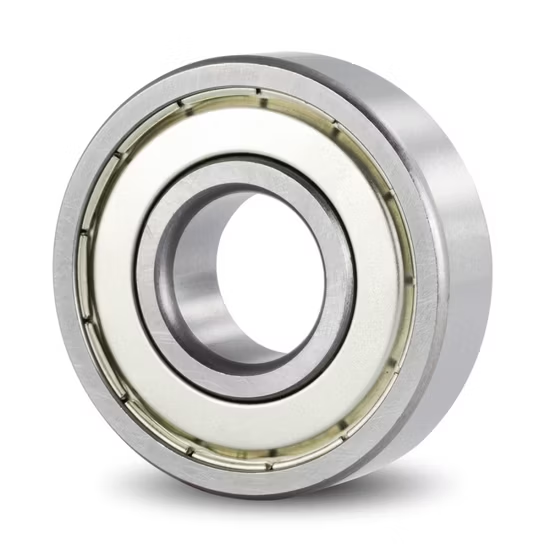
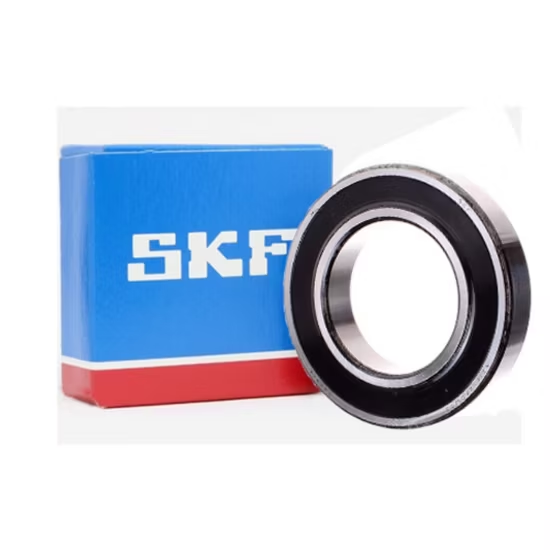


6204 6205 6206 6207 6208 6209 Deep Groove Ball Bearing ZZ 2RS P4 P5 P6 — chrome steel construction with ZZ double steel shields for medium-speed dust protection and 2RS contact rubber seals for contamination-free operation. Precision grades P4, P5, and P6 cover requirements from standard industrial gearboxes to high-accuracy electric motor spindles, with Z1V1 through Z4V4 noise and vibration classifications available.
Three-way cross-reference alignment — verifying base number, clearance, and precision suffixes prevents thermal binding across the entire series.
| Parameter | Value |
|---|---|
| Designation | 6204 6205 6206 6207 6208 6209 |
| Bearing Type | Deep Groove Ball Bearing |
| Material | Chrome Steel |
| Seal or Shield Type | Open, Iron Seals (ZZ), Rubber Seals (2RS) |
| Precision Class | P4, P5, P6 |
| Noise and Vibration Level | Z1V1, Z2V2, Z3V3, Z4V4 |
| Origin | Germany, Japan, Sweden, Malaysia, China |
| Industry | Typical Applications |
|---|---|
| Electric Motors | High-speed rotor shafts requiring strict acoustic limits |
| Industrial Gearboxes | Intermediate shafts exposed to internal oil splash and metallic debris |
| Automotive and Heavy Vehicle Repair | Alternator pulleys and tensioner assemblies demanding high rotational accuracy |
Matching the base number without verifying the internal clearance and precision suffix is a direct path to thermal seizure.
I have seen too many standard clearance units installed in high-temperature motor housings, only to bind and fail within weeks because the thermal expansion of the shaft eliminated the internal operating gap. Procurement teams often focus solely on the basic designation, overlooking that a P0 grade unit cannot survive in a precision spindle application, just as a standard CN clearance will cause catastrophic cage failure when the operating temperature rises .
Sourcing the correct 6204 6205 6206 6207 6208 6209 deep groove ball bearing requires looking beyond the catalog number to evaluate the actual operating environment. Our technical team reviews your specific load, speed, and temperature parameters to ensure the selected suffix configuration perfectly matches the equipment requirements. This application-based selection review eliminates the guesswork and prevents the installation of under-specified components in critical machinery.
Radial loads in electric motors and gearboxes are often accompanied by high rotational speeds that generate significant internal friction heat. When ambient temperatures rise, the inner ring expands faster than the outer ring, rapidly consuming the internal clearance if the correct class was not specified initially. Furthermore, industrial environments introduce abrasive dust and moisture, making the choice between non-contact steel shields and contact rubber seals critical for balancing contamination exclusion with friction limits .
The distinction between ZZ iron shields and 2RS rubber seals dictates the maintenance strategy; shields offer low-friction protection for high-speed oil splash environments, while rubber seals provide superior exclusion of fine particulates at the cost of higher rotational drag. Precision classes P4, P5, and P6 define the dimensional and running accuracy, directly influencing the vibration signature and operational lifespan in sensitive spindle or motor applications. Additionally, the Z1V1 through Z4V4 noise and vibration grading ensures that units deployed in household appliances or precision electric motors meet strict acoustic thresholds, preventing the transmission of structural noise through the equipment housing.
Installing a unit with incorrect internal geometry or inadequate precision leads to unplanned downtime and accelerated wear patterns that are often misdiagnosed as lubrication failures. According to ISO 281 and ISO 15243 frameworks, premature fatigue and surface distress frequently originate from improper mounting fits or clearance loss due to thermal gradients, rather than material defects . These hidden costs manifest as voided equipment warranties, secondary damage to adjacent shaft components, and lost production revenue that far exceeds the initial component savings.
We execute cross-reference matching that aligns clearance, cage material, and precision suffixes, ensuring that a requested C3 equivalent from another brand truly matches the thermal requirements of your specific motor application. Every shipment includes batch traceability to the manufacturer, allowing you to verify authenticity and production origin through official brand applications, effectively eliminating the risk of counterfeit units with soft inner rings. Our documentation package provides dimensional and running accuracy inspection reports, giving MRO managers absolute confidence that the P4 or P5 tolerances are physically verified before the components reach the workshop floor.
To ensure optimal performance, please share your specific radial and axial load profiles, operating speeds, and steady-state temperature ranges so we can validate the internal clearance and L10 life calculations. Providing the original OEM equipment numbers allows our engineering team to perform a comprehensive cross-reference review, confirming that the seal type and precision grade perfectly align with the factory design intent.
Q: Why must clearance and precision suffixes align during cross-referencing?
A: Base numbers alone do not dictate thermal behavior or running accuracy. A standard clearance unit will seize in high-temperature motor applications due to shaft expansion, while a standard precision grade will cause unacceptable vibration in precision spindles. We verify all suffixes to ensure the replacement matches the exact operational demands of the original design.
Q: How do ISO precision classes relate to the P4, P5, and P6 grades offered?
A: The P4, P5, and P6 designations correspond to strict ISO tolerance limits for dimensional and running accuracy. P4 represents the highest precision among these three, essential for minimizing runout and vibration in high-speed electric motors and machine tool spindles, whereas P6 is suitable for general industrial gearboxes and automotive assemblies where extreme acoustic limits are not required.
Q: What is the operational boundary between ZZ shields and 2RS seals?
A: ZZ iron shields provide non-contact protection ideal for high-speed applications where minimizing friction heat is critical, such as in oil-splashed gearboxes. Conversely, 2RS rubber seals offer superior exclusion of fine dust and moisture but introduce higher friction limits, making them better suited for moderately paced conveyors or agricultural machinery exposed to harsh environmental contaminants.
Q: How can I verify the authenticity of the delivered bearings?
A: Every unit we supply features batch traceability that can be verified using the manufacturer's official mobile application. By scanning the QR codes on the packaging, procurement engineers can instantly confirm the production origin, material specifications, and authenticity, effectively eliminating the risk of installing counterfeit components with compromised metallurgical properties.
Our 5-step process ensures every order is engineered, validated, and supported for optimal performance.
Technical needs assessment
Custom specifications
Free samples for $50k+
Pre-shipment inspection
On-site & predictive
Our certified engineers respond within 24 hours with detailed technical specifications, pricing, and lead time information.