01
Consultation
Technical needs assessment


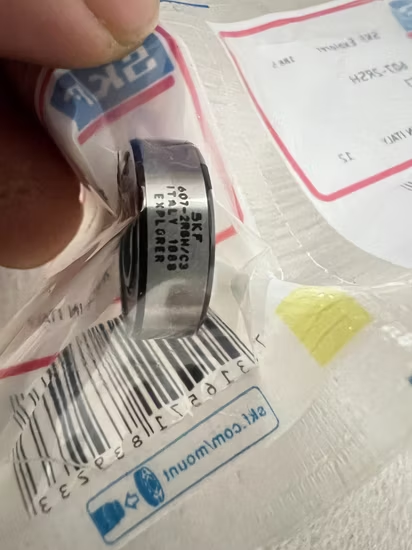
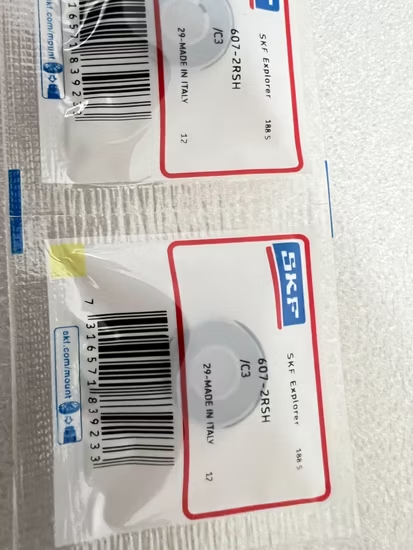
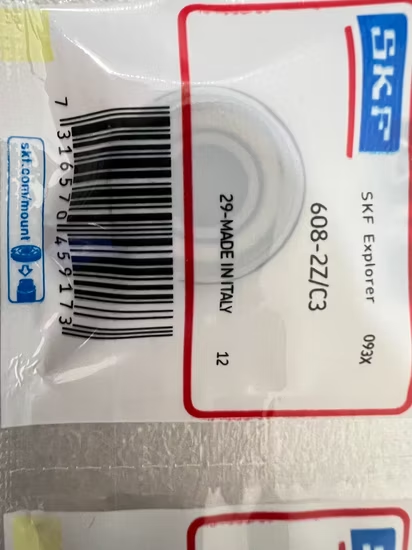
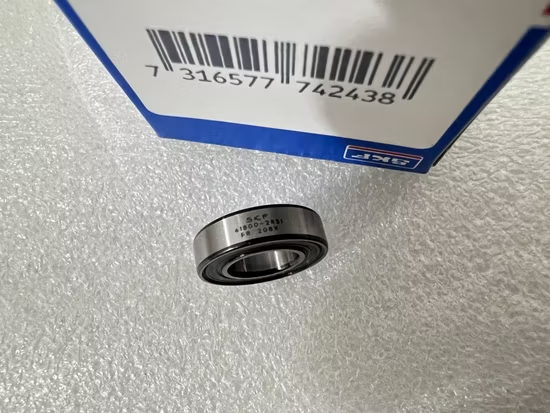
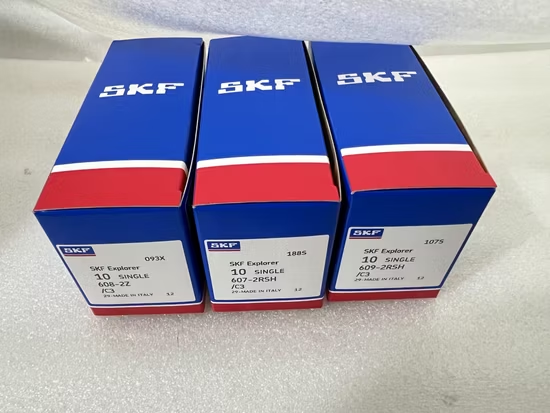
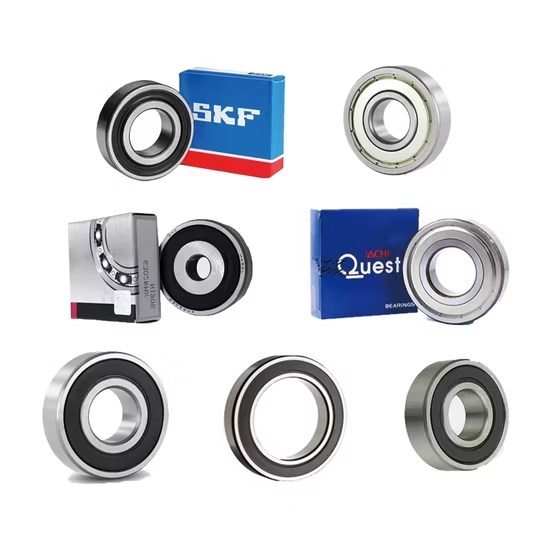
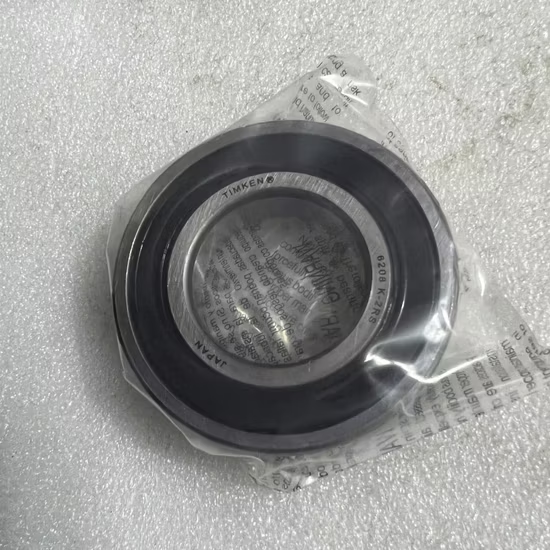
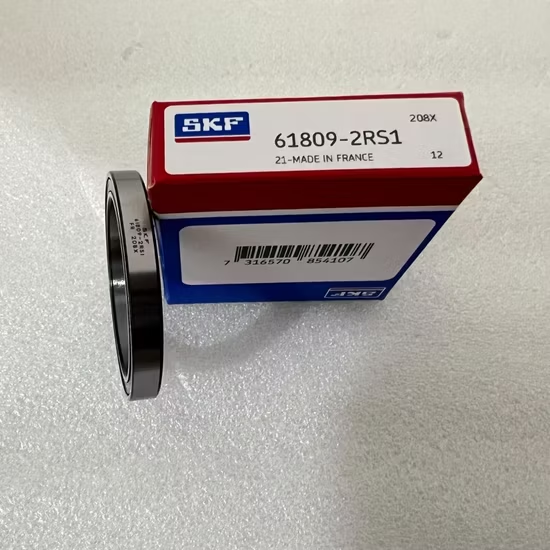
61800/61801/61802/61803/61804 Stainless Steel Deep Groove Ball Bearings — engineered for wind power and precision applications with enhanced corrosion resistance.
Traceable Manufacturer Batches — Every 61800/61801/61802/61803/61804 unit includes verifiable lot documentation to eliminate the risk of counterfeit inner ring spalling in critical wind turbine gearboxes.
| Parameter | Value |
|---|---|
| Designation | 61800/61801/61802/61803/61804 |
| Bearing Type | Deep Groove Ball Bearing |
| Material Options | Available in stainless steel or standard bearing steel variants |
| Seal or Shield Type | Open, Rubber Seals, Iron Seals |
| Vibration and Noise Level | Z1V1, Z2V2, Z3V3, Z4V4 |
| Origin | Germany, Japan, Sweden, Malaysia, China |
| Industry | Typical Applications |
|---|---|
| Wind Power | Gearbox planetary stage supports, pitch control mechanism sensors |
| Electric Motors | High-speed rotor shaft supports, cooling fan drive assemblies |
| Industrial Gearboxes | Precision auxiliary shaft positioning, low-torque transfer stages |
Base designation matching is entirely insufficient when internal clearance and material grades dictate operational survival.
Procurement engineers frequently source replacements by matching the basic number alone, only to discover that a standard clearance bearing installed in a high-temperature gearbox zone suffers thermal binding within weeks. In wind power applications, the thin cross-section of these components makes them highly sensitive to housing deformation and shaft misalignment. When cross-reference errors overlook the specific cage material or precision suffixes required by the OEM, the resulting friction generates excessive heat, ultimately leading to premature cage failure and catastrophic drivetrain downtime .
Selecting the correct 61800/61801/61802/61803/61804 stainless steel deep groove ball bearing requires a comprehensive review of the application's specific environmental and mechanical stresses. Our technical team evaluates not just the basic dimensions, but the exact sealing configuration and vibration class needed to maintain operational smoothness in sensitive equipment. By cross-referencing OEM equipment numbers against actual operating conditions, we ensure the supplied components match the original design intent perfectly.
Thin-section bearings operate with minimal radial space, meaning any thermal expansion of the shaft or housing directly impacts internal clearance. If a standard clearance class is used where expanded clearance was specified, the rolling elements will skid under load. Furthermore, environments like wind turbine nacelles expose components to severe moisture and particulate ingress. Selecting between contact rubber seals for maximum contamination exclusion or non-contact iron shields for reduced friction heat is a critical decision that dictates the service interval and overall reliability of the assembly .
The Z1V1 through Z4V4 vibration and noise classifications indicate the strictness of the geometric tolerances and surface finish achieved during manufacturing. Higher classes like Z4V4 are mandatory for precision electric motors where operational smoothness prevents resonance-induced fatigue in adjacent components. Equally important is the sealing strategy; rubber seals provide robust protection against moisture and dust but introduce frictional heat, whereas iron shields offer low-friction protection suitable for high-speed, clean environments. Understanding these trade-offs ensures the selected configuration aligns with the specific speed and contamination profile of the machinery.
Substituting a bearing based solely on outer dimensions while ignoring internal design parameters inevitably leads to unplanned downtime. A mismatched seal type can cause rapid lubricant degradation, while an incorrect clearance class triggers localized overheating and raceway spalling. According to failure analysis frameworks like ISO 15243, these installation and selection errors account for a significant share of premature bearing failures, resulting in warranty voidance and expensive secondary damage to gears and shafts .
Sourcing thin-section bearings requires navigating a market flooded with visually convincing counterfeits that fail under load. We provide authorized coverage across all major international brands, allowing mixed-brand requirements to be fulfilled in a single, fully documented order. Our cross-reference process verifies clearance, cage material, and precision suffixes simultaneously, preventing the subtle mismatches that cause field failures. Every batch is traceable to the manufacturer's production facilities, ensuring the metallurgical integrity required for demanding wind power and precision applications.
To ensure the selected components perfectly match your operational requirements, please provide detailed application parameters including radial and axial loads, operating speeds, and ambient temperature ranges. Supplying OEM equipment numbers or original part designations allows our engineering team to perform accurate cross-reference checks and L10 life recalculations. This technical validation ensures the supplied bearings meet the exact clearance and sealing specifications demanded by your machinery.
Q: How can we verify the authenticity of these thin-section bearings upon delivery?
A: Every unit is supplied with batch traceability documentation and a unique identifier that can be scanned using official brand applications. This digital verification confirms the manufacturing origin and metallurgical specifications, eliminating the risk of installing counterfeit components with compromised inner ring hardness that frequently cause spalling in wind power gearboxes.
Q: What cross-reference checks are necessary beyond matching the base designation?
A: Matching the base number is insufficient; procurement must verify internal clearance classes, cage materials, and precision suffixes. Overlooking these parameters often results in thermal binding or cage failure, as the internal geometry must accommodate the specific thermal expansion and load characteristics of the target application.
Q: How do we choose between rubber seals and iron shields for motor applications?
A: Rubber seals offer superior protection against moisture and dust ingress but generate higher frictional heat, making them suitable for moderate-speed environments. Iron shields provide low-friction operation ideal for high-speed electric motors where heat generation must be minimized, assuming the surrounding environment remains relatively clean.
Q: What distinguishes the Z1V1 from the Z4V4 vibration classifications?
A: These classifications denote the strictness of geometric tolerances and surface finish achieved during manufacturing. Higher grades like Z4V4 exhibit significantly reduced vibration and noise, which is critical for precision electric motors and sensitive instruments where operational smoothness prevents resonance-induced fatigue.
Q: Which mounting practices are recommended for thin-section 618 series bearings?
A: Due to their thin cross-sections, these bearings are highly susceptible to deformation. Induction heating must be precisely controlled to expand the inner ring without distorting the outer ring. Furthermore, mounting forces must be applied strictly to the press-fit ring to prevent brinelling of the raceways and rolling elements.
Our 5-step process ensures every order is engineered, validated, and supported for optimal performance.
Technical needs assessment
Custom specifications
Free samples for $50k+
Pre-shipment inspection
On-site & predictive
Our certified engineers respond within 24 hours with detailed technical specifications, pricing, and lead time information.